Last Updated:

Deepak Singla

IN this article
Explore how AI support agents enhance customer service by reducing response times and improving efficiency through automation and predictive analytics.
Your resolution rate is stuck, and adding more knowledge base snippets isn't moving it. That's a common place to land with Fin. It works for teams that live entirely in Intercom's chat stack, but the gaps show up fast once your support spans voice and email or needs to stop relying on a human to catch every wrong answer. This breaks down the Intercom Fin alternatives that actually close those gaps.
TLDR:
Intercom Fin is chat-only with $0.99-per-outcome pricing that compounds fast at volume.
Fin has no self-detecting knowledge gap system, so your ops team owns the QA loop indefinitely.
Most alternatives lack published resolution benchmarks, deployment timelines, or compliance certs, making procurement a blind commitment.
Fintech and healthcare teams need BAA eligibility and SOC 2 from the start, not as an add-on.
Fini resolves 90% of tickets at 99% accuracy across voice, chat, and email, live in 14 days, at $0.49 per resolution on Enterprise, backed by a Zero Pay Guarantee.
What is Intercom Fin and how does it work?
Intercom Fin is an AI support agent built into Intercom's helpdesk. It targets businesses already running Intercom as their primary support tool, giving them a way to automate a share of incoming chat conversations without switching vendors.
Fin ingests a connected knowledge base, generates responses to incoming chat queries, and escalates to a human agent when it can't resolve. It is, by design, a chat-first product. Voice and email resolution are not part of the core offering.
On Fin vs Zendesk AI vs Fini pricing, Intercom mixes per-seat plan fees with per-outcome AI pricing. As Featurebase's 2026 Intercom pricing breakdown notes, Intercom now pairs $0.99-per-outcome AI pricing on top of its base seat plans, making the real bill hard to predict at volume. For teams whose support spans channels beyond chat, or who have outgrown Intercom's KB-driven resolution model, that pricing structure and those coverage gaps are where the friction shows up.
Why teams look for Intercom Fin alternatives
Fin works for teams already deep in the Intercom stack who need to automate a slice of chat volume. If that describes you, and chat is your only channel, Fin is a reasonable place to start. But several specific gaps push teams to look elsewhere.
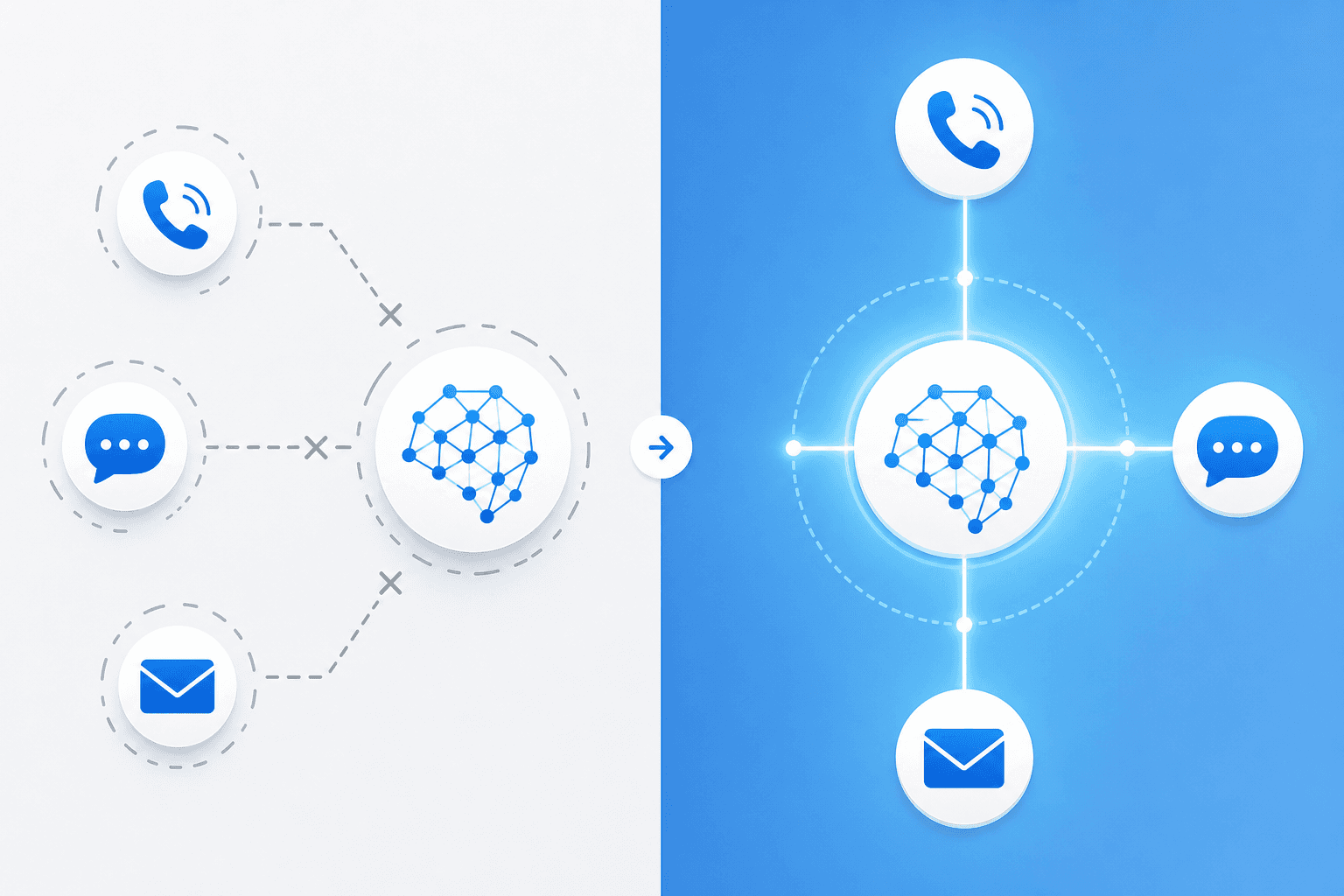
The channel coverage problem comes up first. Fin is chat-first by design, so teams handling voice and email end up stitching together separate vendors. That creates fragmented reasoning, duplicate ops work, and audit trails that live in three places instead of one.
Error correction is the second friction point. When Fin gives a wrong answer, fixing it requires manual QA and patching through a snippets workaround. There is no self-detecting knowledge gap system. The ops team owns the maintenance loop indefinitely.
Pricing is the third flag. Per-interaction rates above $0.50 sound manageable until you run the math on volume. The true cost per resolved ticket climbs well past the headline number once you account for deflection vs. true resolution rate differences.
Compliance-heavy industries carry one more concern on top of all that, and AI support platforms for compliance-heavy fintech handle it differently. Fin's compliance architecture was built for a general SaaS audience. Teams in fintech and healthcare routinely find that it was not designed around their audit, data residency, or BAA requirements from the start.
Best Intercom Fin alternatives in September 2026
Each alternative below is scored on resolution rate, deployment timeline, self-learning capability, compliance posture, and pricing transparency, since those are the gaps that matter most when Intercom Fin is leaving tickets unresolved.
1. Fini: best overall alternative
Fini resolves 90% of tickets at 99% accuracy across voice, chat, and email on one reasoning layer, with zero tuning required after deployment.
Resolution Rate 90% at 99% accuracy, voice, chat, and email unified on one audit trail
Knowledge Atlas auto-detects knowledge gaps and learns from real resolutions without manual input
Live in 14 days, fully autonomous in 30
SOC 2 Type II · PCI DSS Level 1 · ISO 27001 · GDPR · HIPAA-compliant · BAA-eligible · CCPA built in by design
Best suited for AI support platform evaluation guide for CX at fintech and healthcare companies running 50K to 10M tickets per year. Pricing starts at $0.49 per resolution at the Enterprise tier, backed by a Zero Pay Guarantee: 90% resolution in 90 days, or you pay $0.
2. Decagon
Decagon covers enterprise CX automation but deployments are services-heavy with no published autonomy timeline. It does not learn from human-resolved escalations, so the tuning burden stays with your team.
3. Ada
Ada serves retail, DTC, and travel teams well with broad conversational coverage. For a broader look, see the best AI customer service agents compared across 9 platforms. Its self-reported resolution rate is 84%, voice capability is limited, and its self-improvement loop requires manual admin work instead of automatic gap detection.
4. Lorikeet
Lorikeet targets fintech and healthcare industries and can follow complex, multi-step company procedures. As aiagentslist.com notes, it is designed for finance and healthcare use cases. No published pricing, resolution benchmarks, or deployment timelines are available, which creates procurement risk.
5. eesel AI
eesel AI is pay-as-you-go at $0.40 per ticket with no seat caps. It suits smaller teams needing lightweight helpdesk deflection. Voice is not a documented capability, and no HIPAA, SOC 2, or ISO 27001 certifications are published. Teams in compliance-heavy industries or running multi-channel support will outgrow it fast.
Feature comparison: Intercom Fin vs top alternatives
The table below compares each tool on the capabilities that matter most when Fin's resolution rate has stopped improving. A broader review of AI customer service platforms covers the full field. "Not published" means no verifiable public information was found at the time of writing, not that the feature doesn't exist.
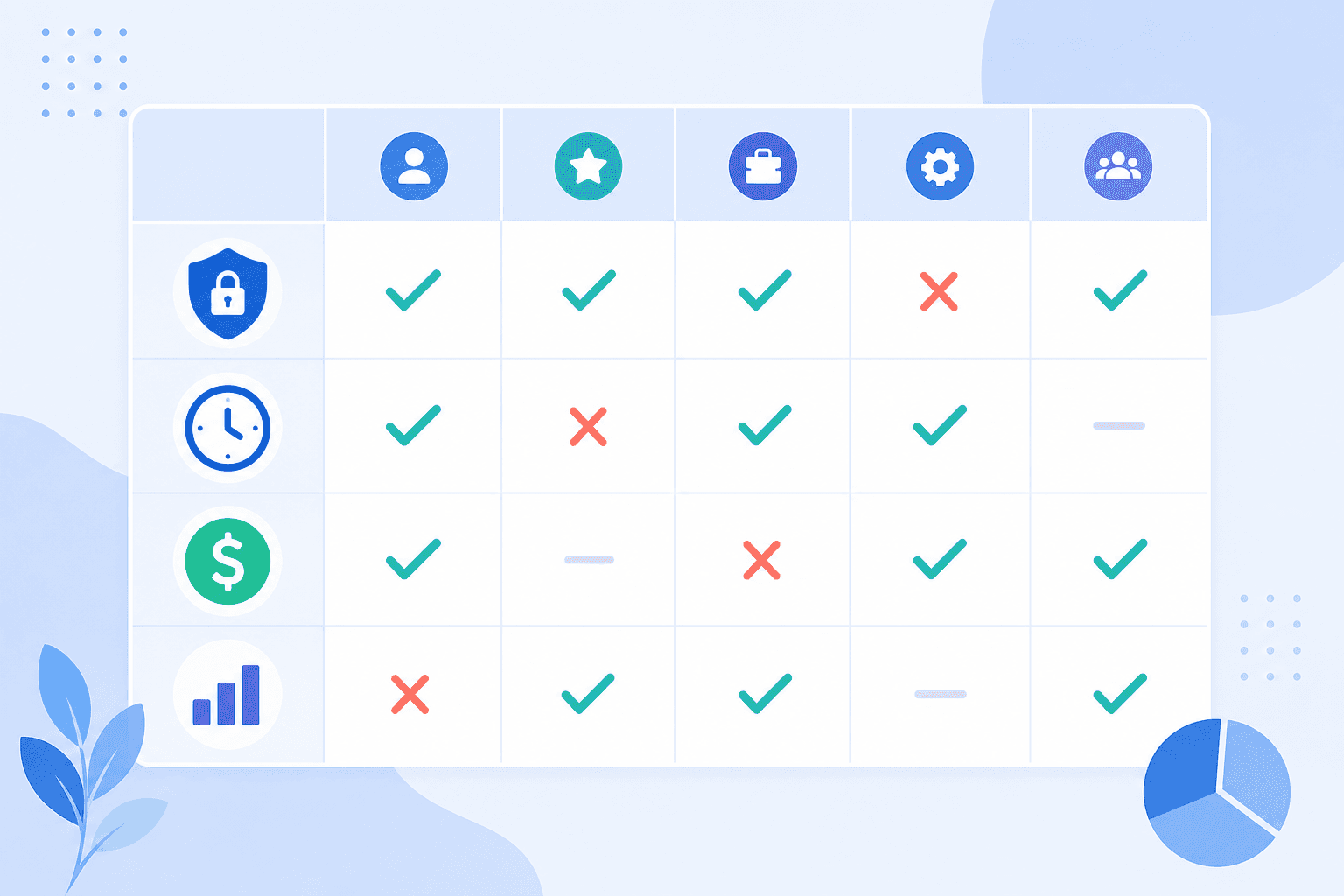
Capability | Intercom Fin | Fini | Decagon | Ada | Lorikeet | eesel AI |
|---|---|---|---|---|---|---|
Voice, chat, and email unified | No | Yes | No | Partial (chat-first) | Not published | No |
Self-maintaining knowledge (auto-learning) | No (manual snippets QA) | Yes | No | No (manual admin tooling) | Not published | No |
Outcome-based pricing (public) | Yes ($0.99+/resolution) | Yes ($0.49-$0.89/resolution) | Not published | Not published | Not published | Yes ($0.40/ticket) |
Deployment timeline | Not published | Live in 14 days, full autonomy Day 30 | Services-heavy, not published | Not published | Not published | Not published |
Bidirectional AI-human handoff | No | Yes | No (one-way only) | Not published | Not published | Not published |
HIPAA-compliant, SOC 2 Type II, ISO 27001 | Partial | Yes (all three, plus PCI DSS, GDPR, CCPA) | Not published | Yes (SOC 2, HIPAA, GDPR) | Not published | No |
Resolution guarantee | No | Yes (90% in 90 days or $0) | No | No | No | No |
The compliance and pricing rows are where most buying decisions actually get made in fintech and healthcare. A tool that won't publish its deployment timeline or resolution benchmark is asking you to commit budget on faith. See how AI support platforms rank on accuracy guardrails before deciding.
Why Fini is the best Intercom Fin alternative
Fini resolves those gaps directly. See how leading AI customer service software handles automation and handoff. Resolution Rate 90% at 99% accuracy, voice, chat, and email on one reasoning layer, and a self-maintaining knowledge system that eliminates the snippets loop entirely.
For fintech and healthcare teams, the compliance case is decisive on its own. The full compliance stack, SOC 2 Type II through CCPA, is built in from day one, with HIPAA-compliant and BAA-eligible included.
The Zero Pay Guarantee removes procurement risk: 90% resolution in 90 days, or you pay $0. Send 1,000 real tickets and see the resolution rate on your own data before committing.
How to choose an Intercom Fin alternative
Intercom Fin does one job well: deflecting chat volume inside an existing Intercom setup. Once your needs go past that, the cracks start to show. Voice, email, compliance, and self-maintaining knowledge are where the comparison above separates the tools from each other. If you want to see how any of this plays out on your own ticket data, book an intro call.
FAQ
Why do teams hit a resolution ceiling with Intercom Fin?
Fin's resolution rate plateaus because it relies on manual snippets QA to catch errors and has no self-detecting knowledge gap system. When the knowledge base goes stale, the ops team owns the maintenance loop, and resolution stops improving without that manual input.
What should you look for in an Intercom Fin replacement?
Look for three things: unified voice, chat, and email resolution on one reasoning layer; a self-maintaining knowledge system that learns from escalations automatically; and published compliance certifications like SOC 2 Type II, HIPAA-compliant, and BAA-eligible if your team operates in fintech or healthcare.
When should you move away from Intercom Fin?
If your resolution rate has stopped improving, your ops team is spending hours each week on manual knowledge QA, or your support spans voice and email alongside chat, Fin's architecture is the constraint. Those gaps compound at volume.
How does Fini's pricing compare to Intercom Fin's $0.99-per-outcome model?
Fini prices per resolved ticket at $0.89 on Growth, $0.69 on Scale, and $0.49 on Enterprise, with no per-seat fees and escalations free. Intercom Fin layers $0.99-per-outcome pricing on top of base seat plan costs, making the true per-resolved-ticket number harder to predict at volume.
Can Fini go live fast enough to replace Intercom Fin without a long migration?
Fini connects to your existing helpdesk via one-click OAuth with no migration required. The Knowledge Agent goes live on Day 1, agentic workflows are active by Day 14, and full autonomy across voice, chat, and email is reached by Day 30.
Backed by a Zero Pay Guarantee: 90% resolution in 90 days, or you pay $0. Send 1,000 real tickets and see the resolution rate on your own data before committing.
Related guides
Explore the guide topics to find more reading.
Co-founder