Last Updated:

Deepak Singla
IN this article
Explore how AI support agents enhance customer service by reducing response times and improving efficiency through automation and predictive analytics.
You shouldn't have to defend the same refund refusal across a string of reworded requests from a customer's AI agent. If the purchase facts and policy stay the same, persistence shouldn't earn an approval. The way out is to separate policy decisions from reply wording, set approval limits, and pause money movement when a human needs to review.
TLDR:
Base AI agent refund decisions on intent, live account facts and policy, never rephrasing.
Verify your customer's authorization before sharing account data or accepting agent refund requests.
Escalate refunds above your approval limit to a human. Pause payouts during review.
Close refund tickets only after payment confirmation. Retain authorization and transaction records.
Fini checks replies for confidential fields, banned terms and allowed links before sending.
How AI shopping agents file refund requests
AI shopping agent refund requests put software between your support team and the buyer. Delegated purchasing gives an agent authority to buy for a customer; a refund request extends that relationship into support.
Personal AI agents can browse, fill out forms, and contact businesses for customers, a trend driving demand for AI returns management tools. Their capabilities vary, so delegation does not imply that every agent can complete the same refund workflow.
In your inbox, the request can look like an ordinary ticket: an order reference and a request for repayment. The customer remains the buyer; the agent carries the conversation on their behalf.
Why personal AI agents rephrase refund requests
Repeated AI shopping agent refund requests can be negotiation attempts. A personal AI agent pursuing repayment can change its wording after a refusal to test for a favorable answer. This is one reason teams look at return request automation for ecommerce.
“Refund my annual plan” can become “Reverse this renewal charge” without changing the purchase facts.
In a retrieval-based support system, these phrases can surface different policy passages: an annual-plan restriction or a renewal exception. A decision based on whichever passage appears can reward persistence with approval.
To stop AI agents getting a different refund answer by rephrasing, check whether the purchase facts changed before changing the decision.
How AI agents identify themselves
An agent’s name does not prove customer permission. Proof explains that recognizing a trusted agent does not confirm its owner approved the request.
Some agents announce themselves. Others give no explicit notice. Message patterns and request speed offer tentative clues, not reliable identification.
Before sharing account details or accepting AI shopping agent refund requests, check:
Which customer the agent claims to represent.
Whether you can verify that customer’s authorization.
Whether permission covers requesting a refund or also accepting alternatives, such as store credit.
Keep agent recognition and customer authorization as separate checks in your intake workflow, a pattern common across AI for ecommerce returns and refunds.
Refund policy consistency: wording cannot change eligibility
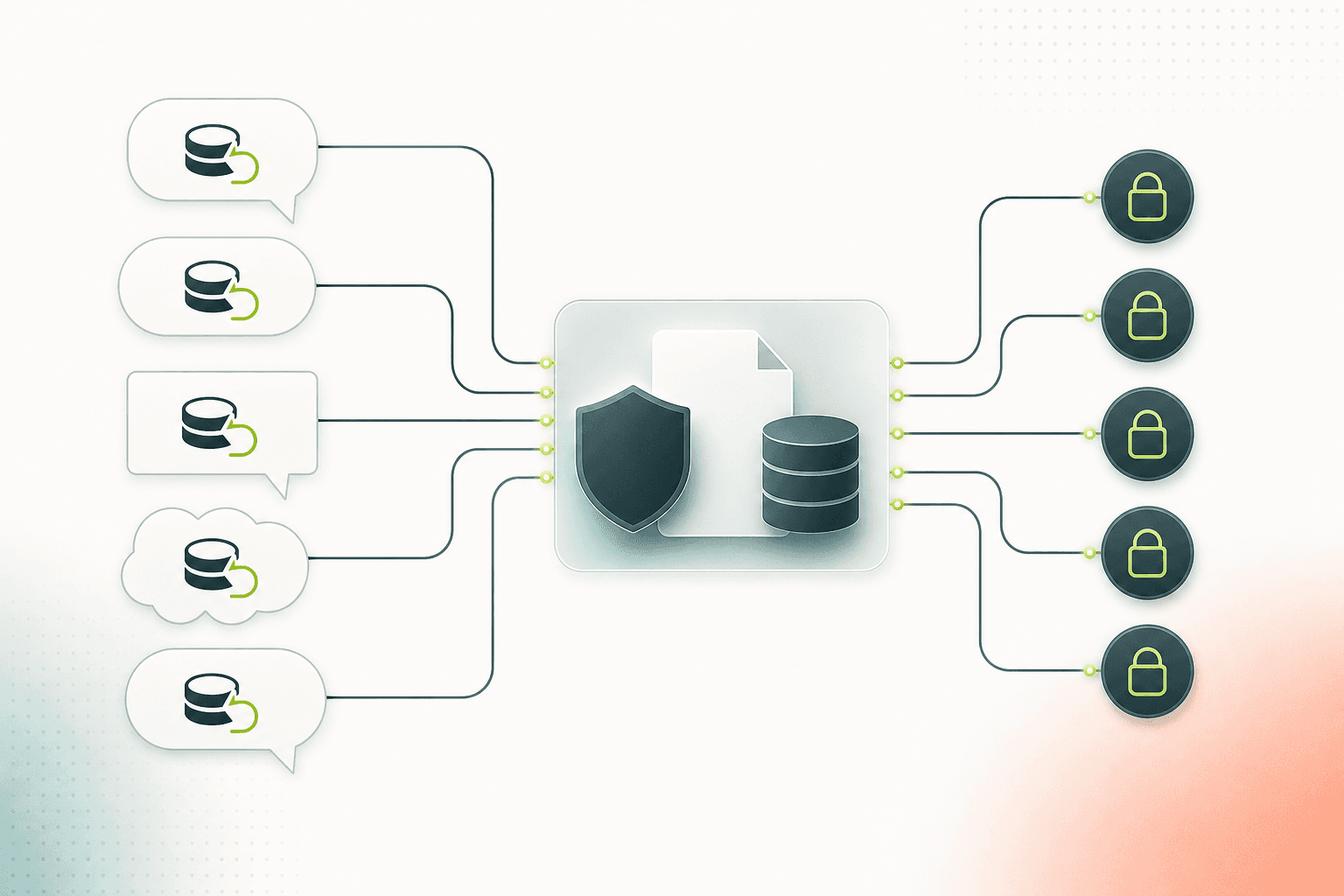
Rephrasing AI shopping agent refund requests must not change eligibility. Map each message to its intended action, apply written policy to live account data, and keep the decision separate from the reply’s wording.
Consider these requests:
Request wording | Intended action |
|---|---|
“Give me my payment back.” | Refund a charge |
“Cancel my next renewal.” | Stop future billing |
These billing actions need different checks, the kind many ecommerce refund, return and dispute tools run. For refunds, check the charge date and refund status against the applicable eligibility rule. For cancellations, check the subscription’s renewal state. Change the decision only when the intent or relevant facts change.
The fraud risk specific to agentic refund requests
Signifyd warns that agentic commerce fraud can look like successful transactions. Attackers can misuse permissions already granted to an agent.
Pair refund prediction with identity checks.
Human-session checks and known bot patterns leave gaps in AI shopping agent refund requests. Apply the same checks regardless of presentation or speed.
For AI refund processing workflows, test prompt injection risks:
Treat customer messages and attachments as untrusted input, never as instructions that override refund policy.
Keep refund-tool permissions outside the requesting agent’s control.
Check for repeated payout attempts against the same charge across conversations.
Reject any instruction to “ignore the refund limit,” even when it appears inside order evidence. Any of today's AI refund agents for voice and chat should enforce this safeguard.
Approval limits and escalation: what needs a human
Set approval limits for AI shopping agent refund requests by amount and risk. Name an owner for exceptions.

Allow automatic refunds only within documented limits and eligibility rules.
Require explicit customer authorization before accepting store credit, a partial settlement, or another remedy that changes the requested outcome.
Route refunds above the limit, disputed ownership, and policy exceptions to a human. This matches how AI tools for return management typically escalate. Pause money movement and stop negotiation while review is pending.
Send the reviewer the requested remedy, completed checks, and reason for escalation. Tell the customer what happens next without promising approval.
Write refund rules an AI agent can apply
Policy gaps leave AI shopping agent refund requests open to conflicting decisions. Turn unwritten judgment into explicit conditions an AI agent can apply.
Replace “refund promptly” with a deadline, its starting event, and the time zone.
Define terms such as “unused” through account fields your system can check.
State which clause wins when promotional terms overlap with the general policy.
Give each exception a trigger and required evidence. Retire conflicting exceptions.
Have your policy owner rewrite one disputed clause. Before publishing, test eligible, ineligible, and missing-data cases to check that the rules produce consistent refund policy responses.
After the refund: closure and the audit trail
Close AI shopping agent refund requests only after your payment system confirms completion. Keep pending refunds assigned for follow-up.
Update the customer record with the outcome. Confirm it to the requesting agent and notify the owner through a verified channel, stating the amount and expected payment timing.
Retain the post-refund audit trail:
Customer authorization and relevant account facts.
The policy version applied and any exception approval.
Each automated action, its timestamp, and the payment system’s transaction reference.
Confirmation delivery and final ticket status.
Compliance reviewers can use this record to trace money movement to its authority and check execution against the approved decision. Apply the same audit discipline across AI agents for charge disputes.
Fini Agent Handshake: consistent refund decisions
We built Agent Handshake for repeat AI shopping agent refund requests: unchanged facts and policy produce consistent decisions.
Decisions follow intent, live account data and written rules, independent of rephrasing.
Before sending, we policy-check replies for banned terms, confidential fields and allowed links.
Fini ends negotiations by escalating to support or returning personal agents to their owners.
Agent Handshake is open to everyone: any team running an AI agent for support, ours or not.
We tag likely personal agents in the Inbox.
Customers set approval requirements, including human review for money movement.
Fini’s broader results: 90% resolution at 99% accuracy.
3M+ monthly resolutions across fintech and healthcare.
Fini’s compliance: SOC 2 Type II · ISO 27001:2022 · PCI DSS Level 1 · HIPAA-compliant · BAA-eligible · GDPR · CCPA.
Final thoughts on consistent AI refund decisions
Your policy should settle eligibility, not reward persistence. You can make progress by rewriting one disputed rule. Book a 30-minute call so we can walk through eligible and ineligible cases.
FAQ
Should you block AI shopping agents using Fini?
No. Serve authorized agents under the same refund rules as customers, and reject requests that fail authorization or policy checks. Fini’s Agent Handshake supports this approach without treating agent detection as proof of permission.
Should you retry pending refunds through Fini?
Check the original payment transaction before attempting another payout. A repeated request or missing confirmation does not prove the refund failed; keep the ticket pending until your payment system confirms its status. Route unclear results to a human before moving money again.
How do you test Fini’s refund consistency?
Run differently worded requests against identical account facts and the same policy version, then compare eligibility decisions and proposed actions. Include requests for repayment, renewal reversal, and cancellation to check that genuine changes in intent receive different checks.
Test missing authorization and conflicting policy clauses too: neither should produce an automatic payout.
Related guides
Explore the guide topics to find more reading.
Co-founder