Last Updated:

Deepak Singla

IN this article
Explore how AI support agents enhance customer service by reducing response times and improving efficiency through automation and predictive analytics.
The support tool that worked at 10,000 tickets a year often stops making sense at 100,000. Intercom is a reasonable fit for a lot of teams, but the pricing structure, the compliance posture, and the fragmented voice setup push compliance-driven or fast-scaling teams to look elsewhere. Here’s a clear look at the strongest alternatives and where each one actually fits.
TLDR:
Intercom mixes per-seat costs with $0.99-per-outcome AI pricing, making budgets hard to predict at volume
Intercom’s compliance posture is partial, and voice runs on a separate product with its own audit trail
Zendesk AI resolves 15-20% of tickets; Ada and Decagon publish no deployment commitment or outcome price
Fintech + healthcare teams need SOC 2, HIPAA-compliant, BAA-eligible before AI touches customer data
Pricing starts at $0.49 per resolution, with no per-seat fees
What is Intercom and how does it work?
Intercom is a customer service software company that combines a help desk, live chat, and AI automation into one product. It’s primarily used by B2B SaaS companies and growth-stage tech businesses managing customer conversations across web, mobile, and email.
Its AI agent Fin sits at the center of Intercom’s current offering. According to Faye Digital, Fin autonomously resolves 50-70% of support conversations without human involvement, operating across chat, email, and multiple languages.
Pricing is layered and gets complicated fast. As Featurebase notes, Intercom mixes per-seat plans with $0.99-per-outcome AI pricing, making the real bill hard to predict at volume. You pay for seats regardless of whether resolutions happen, then again per resolution when Fin closes a ticket.
Intercom covers chat and email well. Voice support is handled separately and not natively unified with the rest of the product. For teams running high-volume support across channels, or those in compliance-heavy industries that need audit trails and compliance certifications, that fragmentation is where the product starts to show its limits.
Why consider Intercom alternatives?
Intercom works well for horizontal SaaS teams with moderate ticket volume, straightforward chat needs, and no regulatory pressure. For that buyer, it’s a reasonable fit.
The gaps show up in specific situations:
Fintech, banking, and healthcare teams hit a wall quickly. Intercom’s compliance posture is partial. They often need SOC 2 Type II, HIPAA-compliance, and a BAA available before they can go live with AI handling customer data. Intercom doesn’t fully clear that bar.
Voice is not natively unified. Chat and email sit on one product; voice is handled separately. Teams expanding into phone support end up managing multiple vendors and multiple audit trails.
There’s no published deployment SLA. You won’t find a committed timeline from Intercom for getting to full AI autonomy. That matters when a new COO is asking why support costs aren’t bending.
None of these are fatal if the fit is right. But if your team is scaling fast, operating in a compliance-driven vertical, or needs voice and chat on the same reasoning layer, Intercom’s architecture starts working against you.
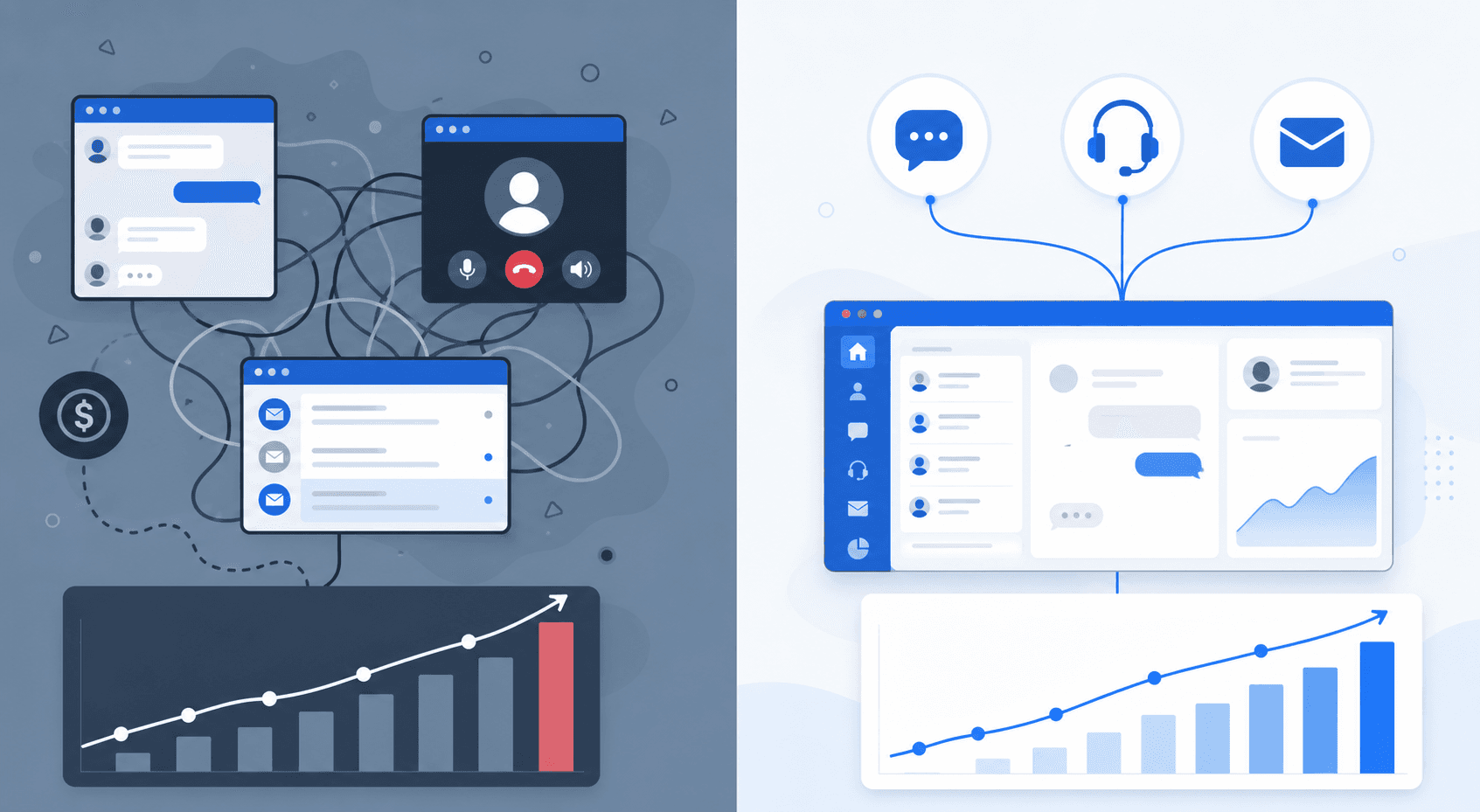
Best Intercom alternatives in September 2026
Fini resolves tickets; Intercom deflects them. The Resolution Rate is 90% at 99% accuracy across voice, chat, and email, all on one reasoning layer with one audit trail. The three-stage rollout gets you to full autonomy in 30 days. The self-maintaining knowledge loop means no manual retuning after go-live.
For enterprise fintech and healthcare teams running 100K+ tickets per year, the compliance posture matters as much as the resolution rate: SOC 2 · ISO 27001 · HIPAA-compliant · BAA-eligible · GDPR · CCPA, built in by default.
At $0.49 per resolution with a 90-Day Money-Back Guarantee (90% resolution in 90 days or you pay $0), the commercial comparison is easy to run.
Zendesk AI
Zendesk AI is an add-on tier designed to make human agents faster, not to replace ticket volume. Resolution rates field-reported at 15-20% reflect that design choice. Compliance for compliance-heavy workloads routes through professional services and not the product itself. Good for teams already deep in the Zendesk ecosystem; limited for teams trying to reduce headcount dependency.
Ada
Ada covers broad enterprise markets in retail and DTC refund workflows with a self-reported 84% automated resolution rate. Pricing is opaque, with no published per-resolution figure and no free trial. Voice is widely flagged as underdeveloped, and the knowledge improvement loop requires manual admin work. Fintech and healthcare teams will find the compliance posture thin.
Decagon
Decagon vs Fini shows overlap in positioning but Decagon leans heavily on services-led deployments. No documented equivalent of Day 1 · Day 14 · Day 30 exists, and pricing transparency is limited. Engineering-led teams willing to commit substantial time and services budget can get results, but time-to-autonomy is longer and the commercial commitment is harder to pin down.
Tidio
Tidio is a chat-focused SMB tool with an AI component called Lyro. As Featurebase notes, it suits small e-commerce teams that need basic chat automation. It lacks SOC 2 Type II, HIPAA compliance, and BAA eligibility, has no outcome-based pricing model, and does not unify voice or email. Teams in compliance-driven industries will outgrow it before they finish onboarding.
Feature comparison: Intercom vs top alternatives
Capability | Fini | Intercom (Fin) | Zendesk AI | Ada | Decagon | Tidio |
|---|---|---|---|---|---|---|
Autonomous ticket resolution | Yes, 90% resolution rate | Partial, 50-70% resolution reported | No, agent-assist focus | Partial, 84% self-reported | Partial, services-dependent | No, basic automation only |
Voice + chat + email unified | Yes, one reasoning layer | No, voice separate | No | No | No | No |
Self-maintaining knowledge | Yes, auto-detects gaps nightly | No | No | No, manual admin required | No | No |
Built-in compliance (SOC 2, HIPAA, BAA-eligible) | Yes, SOC 2 · ISO 27001 · HIPAA-compliant · BAA-eligible · GDPR · CCPA | Partial | Partial | Partial | Partial | No |
Outcome-based pricing | pricing starts at $0.49 per resolution, with custom pricing for enterprise volume | No, per-seat plus $0.99 per outcome | No, per-seat | No, opaque contract pricing | No | No |
Published deployment SLA | Yes, fully live in 14 days, fully autonomous in 30 | No | No | No | No | No |
Languages supported | 130+ | 45 | Varies by plan | Not published | Not published | Limited |
A few cells here tell the whole story. Intercom’s Fin splits voice into a separate product, so you get fragmented conversation history and separate pricing. Zendesk AI stays in agent-assist territory and stops short of resolving tickets autonomously. Ada and Decagon both report resolution numbers, but neither publishes a deployment commitment or outcome-based price for fintech.
Fini is the only entry in this table with a published resolution rate, a unified voice, chat, and email layer, self-maintaining knowledge, a full compliance stack, and a price tied to outcomes, not seats.
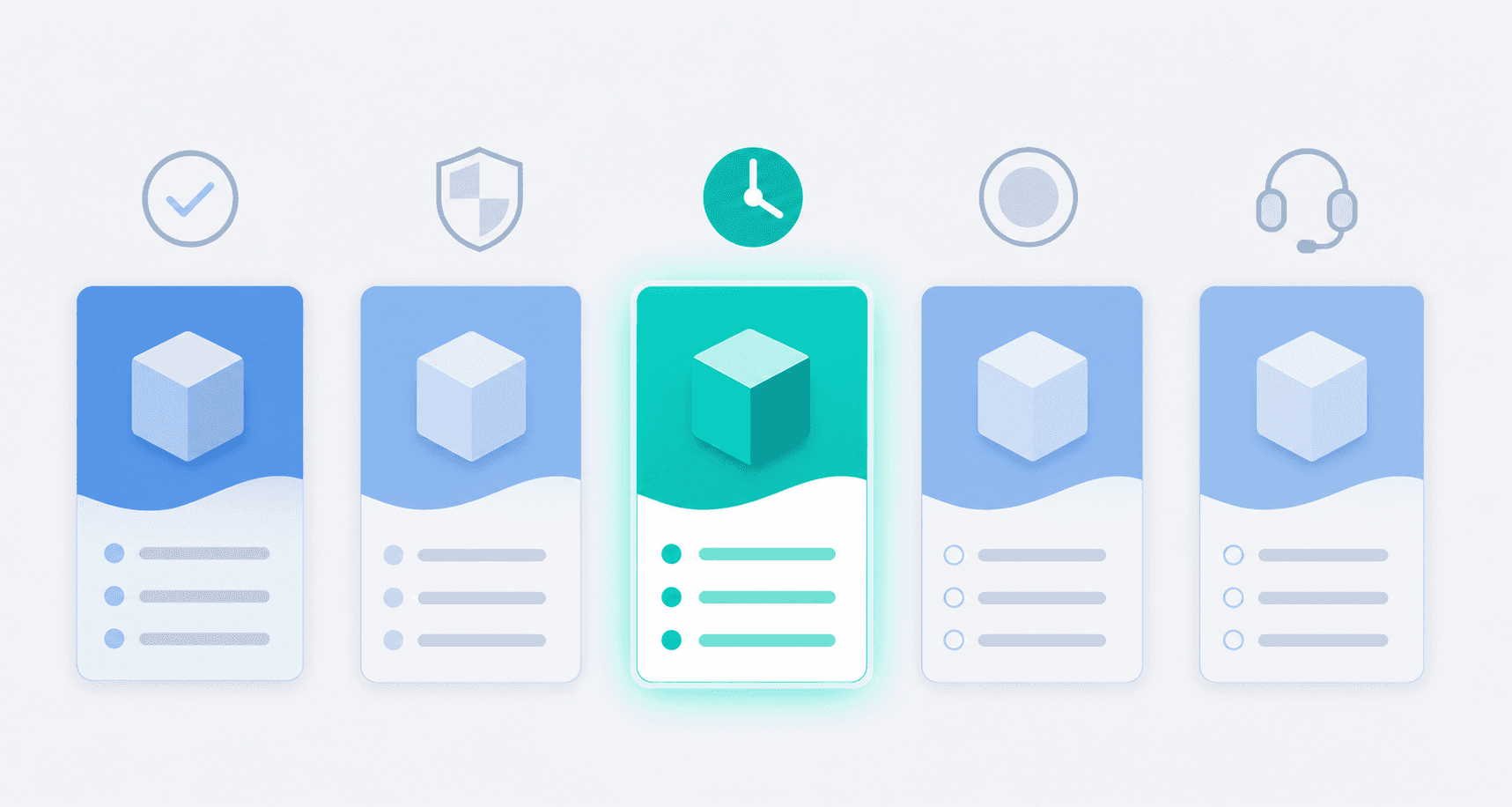
Why Fini is the best Intercom alternative
Intercom is a solid product for horizontal SaaS teams with moderate volume and no regulatory exposure. If that’s your situation, it works. But if you’re running 100K+ tickets a year in fintech or healthcare, need voice and chat on the same audit trail, and can’t afford a bot that requires quarterly retuning, Intercom’s architecture stops serving you.
Fini resolves where Intercom deflects. Voice, chat, and email run on one reasoning layer with clean automation and handoff. The self-maintaining knowledge loop detects gaps and updates playbooks without your team touching it. The full compliance stack is built in by default. Fini pricing starts at $0.49 per resolution, with no per-seat fees. Custom pricing is available for high-volume needs. Plans include the platform and implementation. That’s a commitment Intercom doesn’t make.
Final thoughts on picking the right Intercom alternative
Your support operation is not generic, and neither is the right tool for it. If chat deflection and per-seat pricing work for your volume and your risk profile, Intercom is a reasonable choice. But if you need voice and chat on one audit trail, built-in compliance, and pricing tied to outcomes, the comparison here points somewhere else. Set up an intro call and bring your ticket numbers.
FAQ
Why do teams in fintech and healthcare look for Intercom alternatives?
Intercom’s compliance posture is partial: it doesn’t fully clear SOC 2 Type II, HIPAA-compliance, or BAA-eligibility requirements that fintech and healthcare teams need before an AI agent handles customer data. Voice support is also handled separately from chat and email, which creates fragmented audit trails and vendor sprawl for teams that need everything on one reasoning layer.
When should you move away from Intercom Fin to a solution like Fini?
If your ticket volume is above 100K per year, you operate in fintech or healthcare, or you need voice and chat on the same audit trail, Intercom’s architecture starts working against you. The per-seat plus $0.99-per-outcome pricing model also becomes hard to budget at scale, making the real cost difficult to forecast quarter over quarter.
What should you look for in an Intercom replacement for enterprise support?
Look for a published resolution rate (beyond a deflection or containment figure), a committed deployment timeline, outcome-based pricing, and a full compliance stack that includes SOC 2, ISO 27001, HIPAA-compliance, and BAA-eligibility. Any tool missing a deployment SLA or a self-maintaining knowledge loop will require manual retuning after go-live.
How does Fini’s Resolution Rate compare to Intercom Fin’s reported numbers?
Intercom Fin reports 50-70% autonomous resolution. Fini holds a Resolution Rate of 90% at 99% accuracy across voice, chat, and email on one reasoning layer. Atlas moved from 15% to 70% automation on key support journeys after deploying Fini, and Fini processes 3M+ monthly resolutions across fintech and healthcare customers in production.
Can Fini go live faster than a typical Intercom deployment?
Fini commits to a three-stage rollout. Knowledge Agent goes live on Day 1, agentic workflows connect by Day 14, and full autonomy follows at Day 30. Intercom publishes no equivalent deployment SLA. The 90-Day Money-Back Guarantee backs it: if we don’t achieve 90% resolution in 90 days, you pay $0.
Related guides
Guides
Understanding Fini's 90-Day Money-Back Guarantee October 2026
Oct 15, 2026

Guides
Reg E Error Resolution: AI Workflow Guide 2026
Oct 13, 2026
Guides
30-Day AI Support Pilot Scorecard, October 2026
Oct 13, 2026

Guides
Knowledge Base Audit Checklist for AI Launch, 2026
Oct 13, 2026

Guides
How a Self-Updating Knowledge Base Flags Stale Docs
Oct 13, 2026

Guides
Full Guide to AI Support Resolution, Oct 2026
Oct 13, 2026

Co-founder