Last Updated:

Deepak Singla

IN this article
Explore how AI support agents enhance customer service by reducing response times and improving efficiency through automation and predictive analytics.
Finding alternatives for Intercom usually starts with one of three frustrations: the cost structure doesn’t scale the way you expected, voice and email don’t share the same reasoning layer as chat, or your compliance requirements aren’t covered out of the box. If any of those sound familiar, here’s what the real options look like right now.
TLDR:
Intercom Fin averages 76% resolution and is chat-primary; voice and email require separate configuration with no unified audit trail.
Intercom charges $19 per seat plus $0.99 per AI outcome, so costs stack even when AI handles the bulk of your volume.
Intercom has no published HIPAA, BAA-eligibility, or SOC 2 Type II posture, making it a non-starter for fintech and healthcare teams.
Alternatives range from Zendesk AI (agent workflow optimization, 15-20% autonomous resolution) to Ada (chat-first, 84% self-reported) to Forethought (avg $74K/year, 30-90 day setup).
Fini resolves 90% of tickets at 99% accuracy across voice, chat, and email in 30 days at $0.49 per resolution; if we don’t achieve 90% resolution in 90 days, you pay $0.
What Is Intercom and How Does It Work?
Intercom is a customer messaging and helpdesk tool used by 30,000+ businesses, from early-stage startups to larger enterprise teams. Its core product combines a shared inbox, ticketing, and live chat into one workspace, with Fin, its AI agent, built natively into that stack.
Fin handles front-line queries and reports a 76% average resolution rate across 12,000+ customers. It performs best when your team already lives inside the Intercom ecosystem, since it’s trained on Intercom’s own knowledge base and conversation history.
Pricing follows a two-part structure: seat-based access starts at $19 per seat per month, with AI outcomes priced separately at $0.99 each. For teams with high AI-handled volume, those outcome costs add up fast.
The product works well for SMB and mid-market teams that want a single tool for messaging, ticketing, and basic AI deflection. Where it gets complicated is when teams need voice, multi-system action-taking, or support outside the Intercom environment.
Why Consider Intercom Alternatives?
Teams that run lean, chat-heavy support and already live inside the Intercom inbox often find the product sufficient. Setup is fast, the shared inbox is genuinely good, and Fin handles routine deflection without much configuration.
The gaps show up when volume grows or the use case gets more complex.
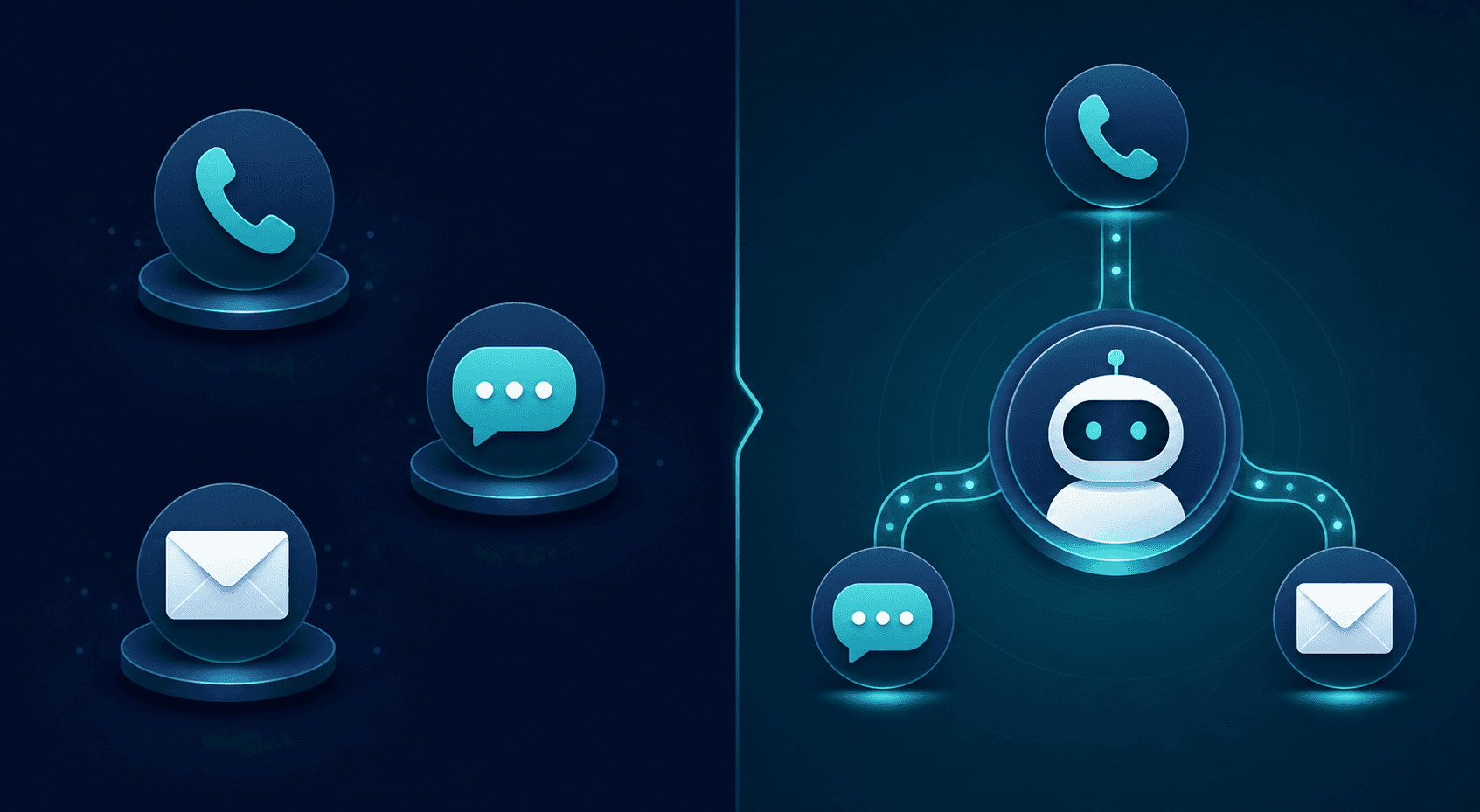
Per-seat pricing at $19/seat/month applies regardless of how much of your volume Fin handles. If AI is resolving the bulk of tickets, you’re still paying for every human seat on top of the $0.99 per AI outcome.
Fin’s reasoning is chat-native. Voice and email don’t share the same policy layer, meaning you’re effectively running separate agents with no unified audit trail across channels.
API connections to billing systems, CRMs, and internal tools frequently go unconfigured during onboarding, leaving customer data siloed from the agent at the exact moment it needs to take action.
Fintech and healthcare teams face a harder problem: Intercom has no published compliance posture covering HIPAA, BAA-eligibility, or SOC 2 Type II. For those teams, that’s a deal-stopper.
None of this makes Intercom a bad product. For an SMB team running chat support with no compliance obligations, it fits well. But for teams scaling into voice, operating in fintech or healthcare, or trying to get cost-per-resolution below what seat-plus-outcome pricing allows, the fit breaks down quickly.
Best Intercom Alternatives in September 2026
Fini resolves 90% of tickets across voice, chat, and email at 99% accuracy. Purpose-built for enterprise fintech and healthcare, it ships with compliance by default and goes fully live in 14 days and fully autonomous in 30 days without manual tuning. We process 3M+ monthly resolutions across our fintech and healthcare customer base.
Resolution Rate 90% at 99% accuracy across voice, chat, and email on one unified reasoning layer
Self-maintaining: auto-detects knowledge gaps, trains on real resolutions, surfaces edge cases for human review only
SOC 2 Type II, ISO 27001, HIPAA-compliant, BAA-eligible, GDPR, CCPA built in by default
$0.49 per resolution, 90-day risk-free trial, 90-Day Money-Back Guarantee: if we don’t achieve 90% resolution in 90 days, you pay $0
Best for teams running 100K+ tickets per year in fintech or healthcare that need autonomous resolution across all three channels.
Zendesk AI
Zendesk AI sits on top of an existing Zendesk subscription as an add-on. It accelerates human agent workflows through AI-assisted suggestions, triage, and macros, but requires manual tuning and does not function as a standalone resolution engine. Compliance requirements like BAA eligibility route to professional services and are not built into the product. Field-reported autonomous resolution rates run 15-20%.
Best for teams optimizing agent workflows inside an existing Zendesk deployment.
Ada
Ada serves 350+ businesses across retail, DTC, and travel with chat-first AI automation, reporting an 84% automated resolution rate. It has added multi-channel delivery and multi-LLM orchestration, but voice is widely flagged as underdeveloped. Its improvement loop requires admin-driven optimization cycles, not automated self-maintenance. Pricing is not published.
Best for retail and DTC teams that need broad CX automation with a wide integration ecosystem.
Forethought
Zendesk acquired Forethought in March 2026. It runs a 5-agent architecture for resolution and triage, but requires 20,000+ tickets and a 30-90 day setup window before operating. Average contract value runs approximately $74,000 per year with no published per-resolution rate.
Best for large Zendesk-centric enterprises with high ticket volume and complex multi-agent workflow needs.
Tidio
Tidio is a chat and live messaging tool for SMB and ecommerce teams. Its Lyro AI handles chat-based queries with conversation-based pricing and a free tier entry point. It has no native voice or email resolution layer, no published SOC 2 Type II or HIPAA certifications, and is not built for enterprise compliance requirements.
Best for small ecommerce businesses that need accessible live chat with basic AI automation and no compliance requirements (see our guide to AI customer support platforms for e-commerce).
Feature Comparison: Intercom vs Top Alternatives
This table compares the features that matter most to support teams comparing Intercom and its alternatives: autonomous resolution, unified reasoning across channels, self-maintaining behavior, compliance posture, pricing model, and time to full autonomy.
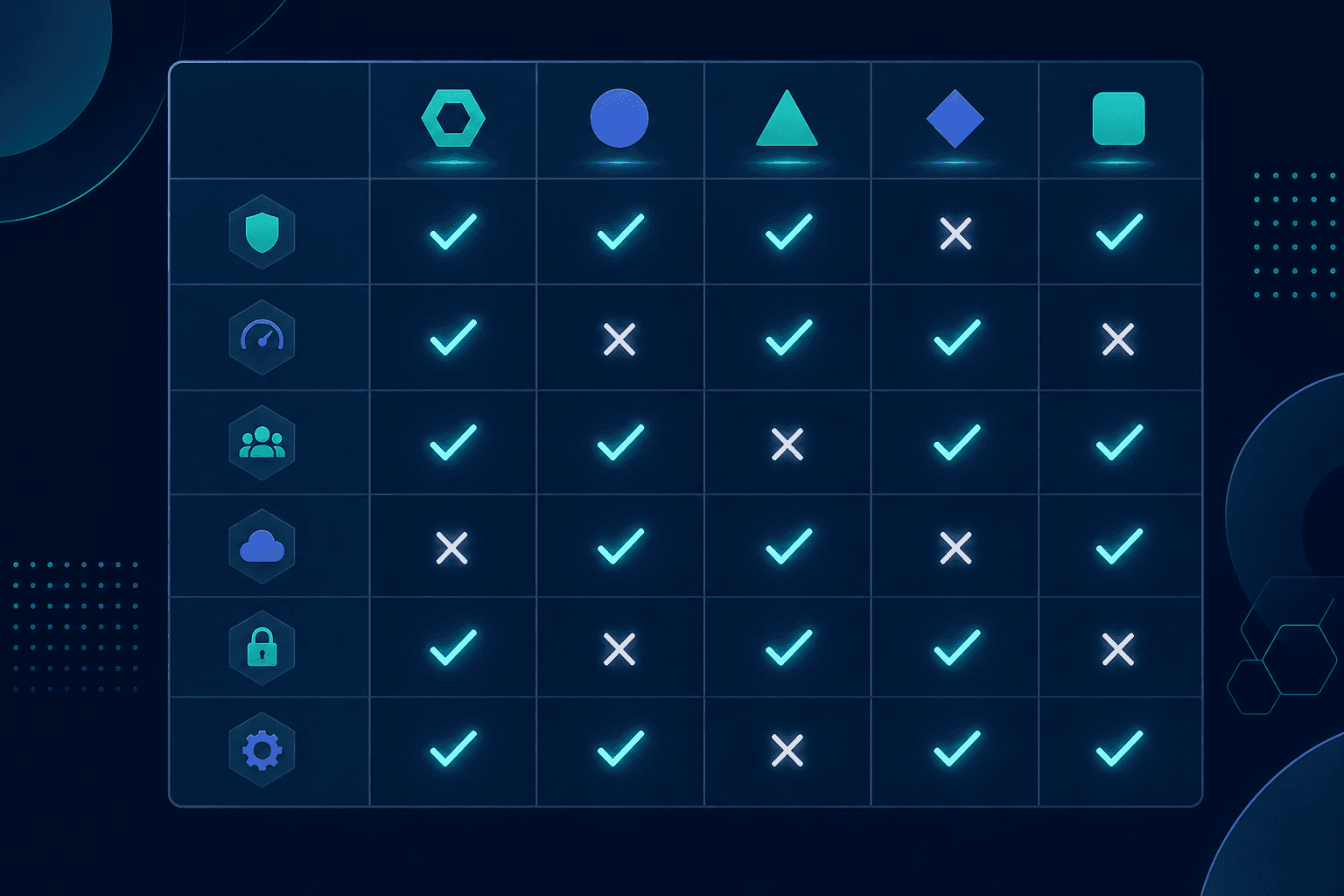
A few numbers worth holding onto as you read across the rows. Intercom Fin vs Zendesk AI vs Fini cost comparisons show Intercom Fin averages 76% resolution and is chat-primary, with voice and email requiring separate configuration. Ada self-reports 84% resolution but is also chat-first. Zendesk AI is built around agent workflow optimization, not autonomous resolution.
That distinction is covered in our comparison of autonomous support software automation and handoff. Tidio is limited to basic chat automation. Teams comparing options at scale can see how these tools stack up in our guide to autonomous support platforms for enterprise.
Fini hits 90% resolution at 99% accuracy across voice, chat, and email through one reasoning layer, goes fully live in 14 days, fully autonomous in 30, and is HIPAA-compliant and BAA-eligible by default. At $0.49 per resolution with no seat fees, and a 90-Day Money-Back Guarantee of 90% resolution in 90 days or $0, the commercial terms are structured around outcomes, not usage volume.
Feature | Intercom Fin | Fini | Zendesk AI | Ada | Forethought | Tidio |
|---|---|---|---|---|---|---|
Autonomous resolution | Partial (76% avg, chat-primary) | Yes (90% resolution, 99% accuracy) | No (agent workflow optimization) | Partial (84% self-reported, chat-first) | Partial (multi-agent, Zendesk-centric) | No (basic chat automation only) |
Unified voice, chat, and email reasoning | No (chat primary; voice and email require separate config) | Yes (one reasoning layer across all three) | No (primarily chat; email and voice need integrators) | No (omnichannel delivery, not unified reasoning) | Partial (multi-channel but Zendesk-dependent) | No (chat only) |
Self-maintaining | No (requires manual review and manager action) | Yes (auto-detects gaps, trains on real resolutions) | No (manual tuning required) | No (admin-driven optimize loop) | No (30 to 90 day setup plus ongoing config) | No (manual management) |
HIPAA-compliant and BAA-eligible | Not specified in public sources | Yes (built in by default) | No (routes to professional services) | Listed as certification, not design center | Not specified post-acquisition | No |
Outcome-based pricing | Partial ($0.99 per outcome plus $19 per seat) | Yes ($0.49 per resolution, no seat fees) | No (per-seat plus per-message add-on) | No (opaque enterprise pricing) | No (custom contract, avg ~$74K per year) | No (conversation and visitor-based) |
Time to full autonomy | Not published | 30 days (proven at enterprise scale) | Dependent on Zendesk setup | Not published | 30 to 90 days | Not applicable |
90-Day Money-Back Guarantee | No | Yes (90% resolution in 90 days or $0) | No | No | No | No |
Why Fini Is the Best Intercom Alternative
Intercom Fin is a strong product for teams whose support volume lives primarily in chat and whose inbox is already built around the Intercom workspace. For that buyer, the bundled inbox and AI combo makes sense.
The ceiling shows up in three places: multi-channel resolution across voice, chat, and email on a single reasoning layer; compliance requirements like HIPAA and SOC 2 Type II; and pricing that ties cost to outcomes, not seat count. Teams looking at autonomous customer service platforms will find the same three gaps across most incumbent tools. Those are the gaps that pushed teams like Atlas toward Fini.
We resolve 90% of tickets at 99% accuracy across all three channels, self-maintain without manual tuning, and ship with SOC 2 Type II, ISO 27001, HIPAA-compliant, BAA-eligible, GDPR, and CCPA compliance by default.
At $0.49 per resolution with a 90-Day Money-Back Guarantee (if we don’t achieve 90% resolution in 90 days, you pay $0), there are no seat fees running alongside your AI costs.
Atlas went from 15% to 70-80% automation on key support journeys in under 30 days. That is the benchmark we run for every team that wants to see the number before committing.
Final Thoughts on Choosing an Intercom Alternative
The comparison above should give your team a clear picture of where each tool fits and where it falls short. If you’re in fintech or healthcare and need resolution across all three channels, the gap between Intercom and what your team actually needs is concrete, not theoretical. Talk to us and we’ll show you the benchmark numbers before you commit to anything.
FAQ
Why do support teams look for Intercom alternatives?
Intercom Fin averages 76% resolution and runs chat-primary, meaning voice and email require separate configuration with no shared policy layer. For teams in fintech or healthcare, the absence of published HIPAA, BAA-eligibility, or SOC 2 Type II compliance is a hard stop before the conversation gets further.
When should you move away from Intercom Fin and consider tools like Fini or Ada?
If your ticket volume is scaling past chat-only, you’re operating in a compliance-sensitive vertical, or your cost-per-resolution math breaks under Intercom’s $0.99 per outcome plus $19 per seat structure, the fit breaks down. That’s the moment to run a benchmark against alternatives before renewing.
What features matter most when comparing Intercom alternatives for enterprise support?
Look for autonomous resolution rate with a published number, unified reasoning across voice, chat, and email on one layer, a compliance posture that names SOC 2 Type II and HIPAA-compliant BAA-eligible status as defaults, and outcome-based pricing with a performance guarantee attached.
How does Fini’s pricing compare to Intercom Fin for high-volume support teams?
Fini charges $0.49 per resolution with no seat fees and a 90-Day Money-Back Guarantee (see pricing section above). Intercom charges $0.99 per AI outcome on top of $19 per seat per month, so as AI-handled volume grows, both cost lines run simultaneously.
How long does it take to go from zero to full autonomy with Fini versus Forethought?
Fini goes fully live in 14 days and reaches full autonomy in 30 days (see the Atlas case study for proof). Forethought requires 30 to 90 days of setup, 20,000+ tickets to operate, and averages approximately $74,000 per year before you see autonomous resolution numbers.
Related guides
Guides
Understanding Fini's 90-Day Money-Back Guarantee October 2026
Oct 15, 2026

Guides
Reg E Error Resolution: AI Workflow Guide 2026
Oct 13, 2026
Guides
30-Day AI Support Pilot Scorecard, October 2026
Oct 13, 2026

Guides
Knowledge Base Audit Checklist for AI Launch, 2026
Oct 13, 2026

Guides
How a Self-Updating Knowledge Base Flags Stale Docs
Oct 13, 2026

Guides
Full Guide to AI Support Resolution, Oct 2026
Oct 13, 2026

Co-founder