
Voice-first configurability vs. a published enterprise track record
Before the details, here is the shape of the decision. Giga and Fini both sell AI agents for customer support, but they are built for different buyers: Giga for a large enterprise that wants to build a bespoke, voice-first agent with a well-funded partner, and Fini for a team that wants a productized agent with a published rate card and a results guarantee. In this comparison: What each is · How they differ · Capabilities · Feature by feature · Ease of use · What customers say · The full side-by-side · Which to choose · Compliance · FAQ
What is Fini?
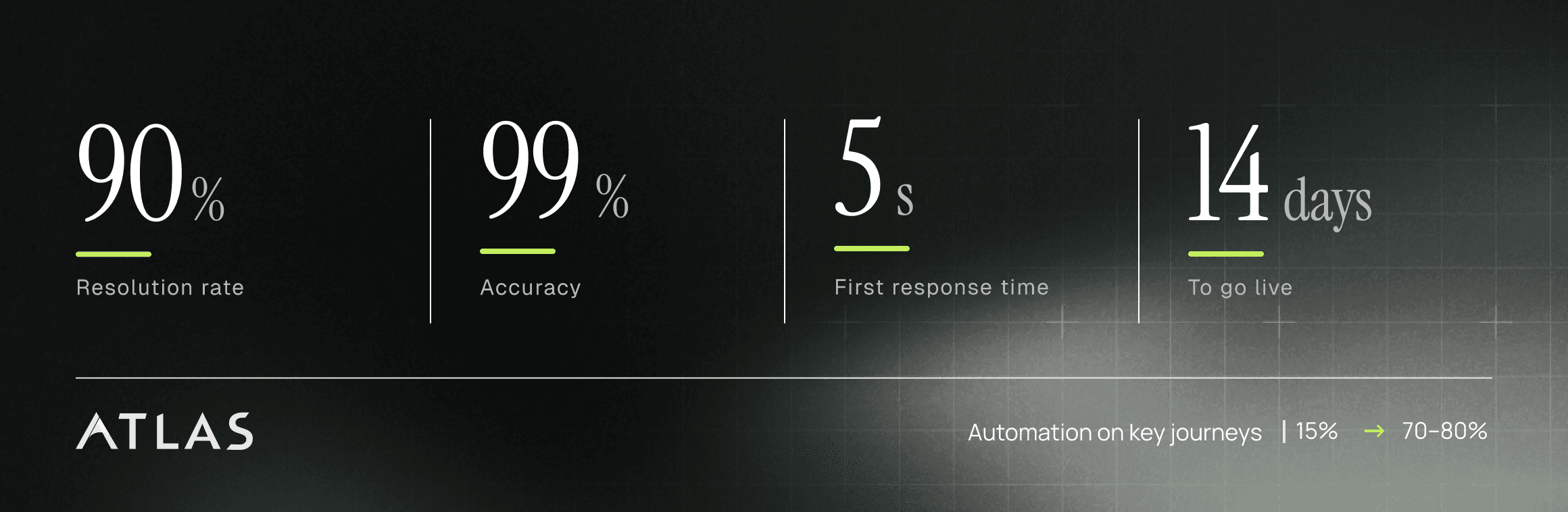
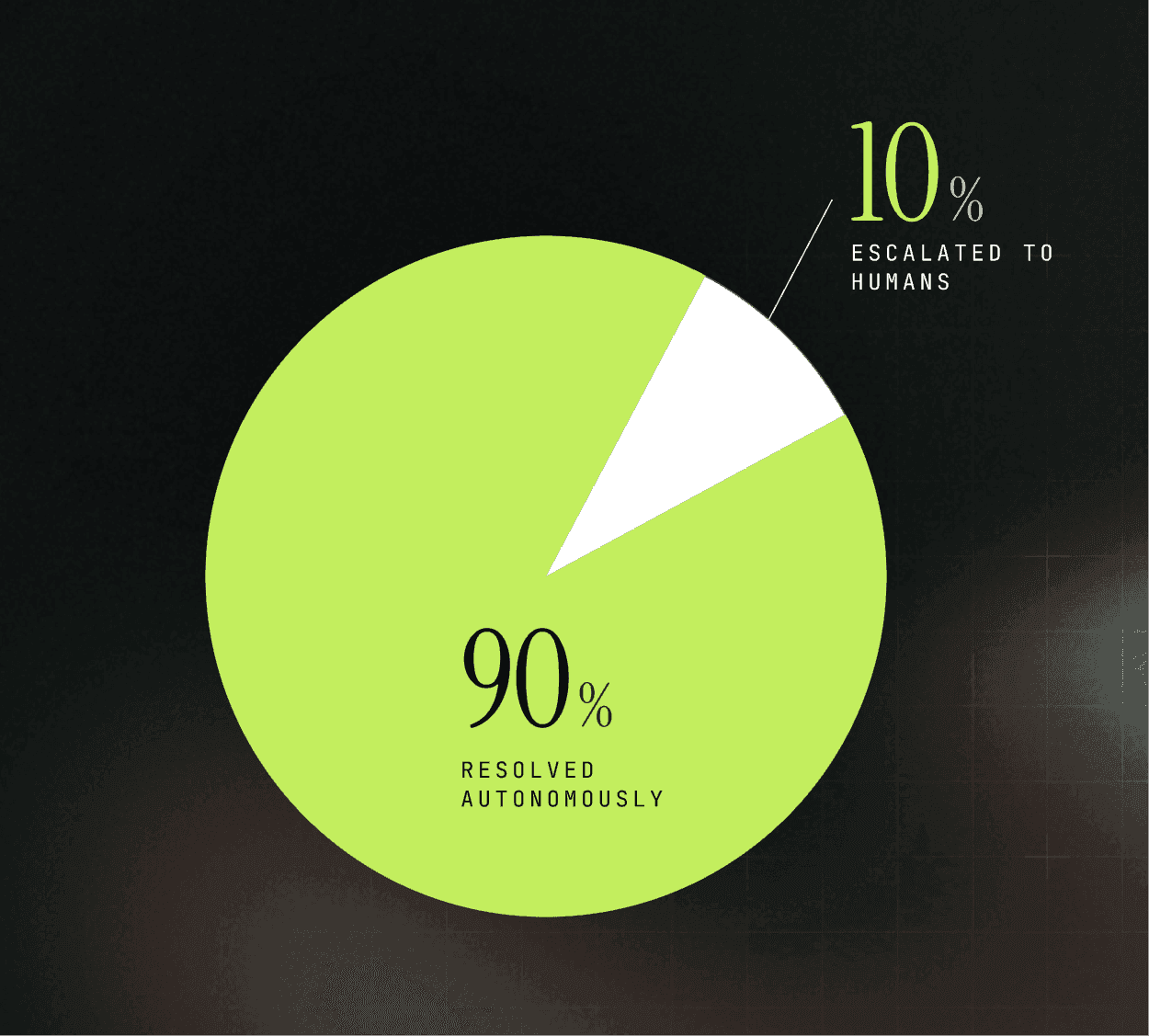
Fini is an AI customer-support agent priced per resolution, backed by Y Combinator and Matrix Partners. It connects natively to your helpdesk, knowledge base, CRM, billing, claims, and EHR systems, reaches a 90% resolution rate at 99% accuracy, and is built to go live in 30 days. Across its customer base, Fini handles more than 3 million monthly resolutions in fintech and healthcare. The agent works across voice, chat, and email, answers in 130+ languages, and returns a first response in about five seconds.
What is Giga?
Giga, also referenced as GigaML in funding databases, is a voice-first AI agent platform for enterprise customer support, built around emotionally intelligent, low-latency conversations across voice, chat, and email. It was founded in 2023 by Esha Dinne, who serves as Co-Founder and CTO, and Varun Vummadi, and is headquartered in San Francisco. Giga’s product is organized around a handful of named modules rather than a single monolithic agent, and each one targets a distinct part of standing up and running an enterprise agent. Scout drafts an initial agent by reading a company’s policies and historical tickets, so a team isn’t starting from a blank canvas, the idea is that the raw material for a first working agent already exists in a support team’s own ticket history and documentation, and Scout’s job is to turn that archive into a working starting configuration rather than have a human write rules from scratch. Agent Canvas is the low-code builder that sits on top of that starting point, letting an admin adjust logic, add conditions, and reshape how the agent responds without writing full application code, a middle ground between a fully coded custom build and a fixed, non-configurable template. Browser Agent executes actions inside browser-based systems the way a human operator would click through them, which matters specifically for teams whose backend tools don’t expose a clean API: an internal ops console, a decades-old vendor portal, or any system where the only reliable integration path is driving the actual screen. An Insights Dashboard tracks resolution and performance KPIs in real time, giving an enterprise operations team a live view into how the agent is actually performing rather than a monthly report. And an automated experimentation framework runs live A/B tests on agent behavior, letting a team try a change: a new response pattern, a different escalation rule, on a slice of real traffic and measure the effect before rolling it out everywhere, which is the kind of controlled-rollout tooling large organizations typically expect from any system touching live customer interactions. Giga closed a $61 million Series A led by Redpoint Ventures in November 2025, with Y Combinator and Nexus Venture Partners also participating, bringing its total raised to $65.1 million across three rounds. Its publicly named customers include DoorDash, Postman, Capital.com, Afriex, Toast, Remedy Meds, Flex, ShiftSmart, and Rio, with DoorDash’s own published case study reporting a 90%-plus resolve rate and fewer escalations after deployment. Giga’s own materials describe its target buyer as large enterprises across a specific list of high-compliance sectors: fintech, banking, retail, telecom, healthcare, freight and logistics, hospitality, and ecommerce. That is a deliberately broad industry list but a narrow company-size one, since Giga is explicit that it is built for organizations with the scale and internal resources to run a customized deployment rather than a small support team looking for something to turn on this week. The Insights Dashboard sits alongside the core agent as a management layer, tracking resolution rate, escalation rate, and other performance KPIs in real time, so an enterprise operations team can watch the agent’s behavior directly rather than take Giga’s word for it after the fact.
Giga pricing in 2026
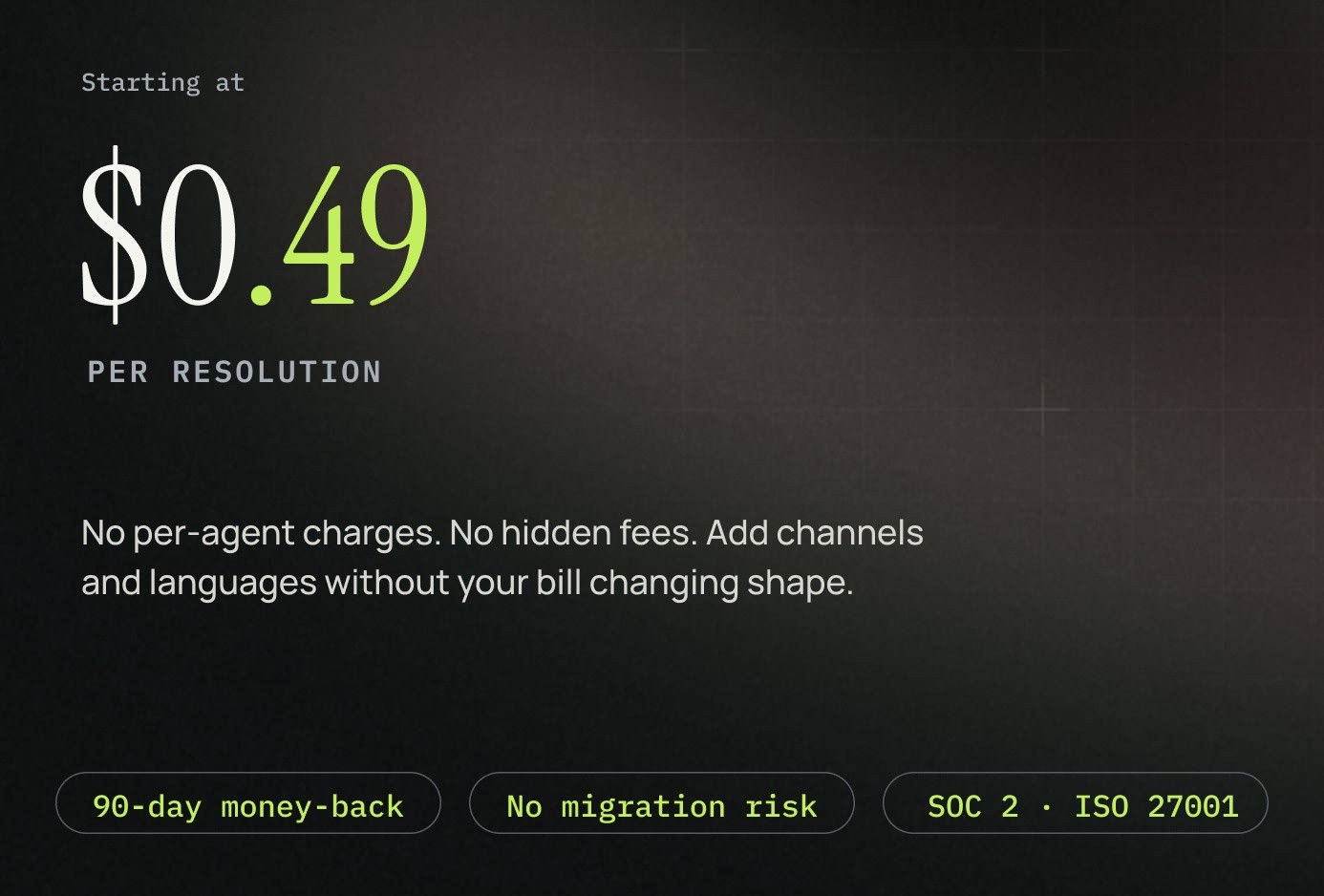
Giga does not publish a rate card. Every deal is priced as a custom enterprise quote, based on agent complexity, the number of channels deployed, whether the deployment runs on-premise or in the cloud, and expected volume. Independent pricing analysis from eesel, a smaller AI support vendor that publishes transparent breakdowns of pricing across this category, warns that buyers \”won’t know if GigaML is even in your price range until you’re weeks or months into discussions,\” and flags additional setup, implementation, training, and premium-support costs that can sit on top of whatever the base quote turns out to be. That combination, no published starting point, plus a sales cycle measured in weeks or months before a number even appears, is the single biggest practical difference between the two vendors for anyone trying to build a budget. Fini charges a starting rate of $0.49 per resolution, with the platform and implementation included and no per-seat fees.
What buyers ask | Giga | Fini |
|---|---|---|
Published price list | ✗ | ✓ |
Price | Quoted per account | $0.49 per resolution |
Rate for additional resolutions | Not published | N/A, flat rate |
Hidden-cost risk | Setup, implementation, training, and premium support can add to the quoted price | Included in the published plan |
Can you model cost before a sales call? | No | Yes |
See Fini’s full pricing breakdown for plan details, add-ons, and a resolution calculator.
How Fini and Giga differ
Giga leads with a highly configurable, voice-first agent-building platform: Agent Canvas for building and customizing agent behavior, Scout for drafting an initial agent from existing tickets and policy documents, and Browser Agent for executing actions inside third-party systems the way a human would click through them. That toolkit is aimed at large enterprises willing to invest engineering time in a bespoke build, in exchange for deep control over exactly how the agent reasons and acts. Fini leads with a productized, per-resolution-priced agent that connects natively to the systems a support team already runs: helpdesk, CRM, billing, claims, and EHR, and is largely usable out of the box, backed by a published rate card and a results guarantee. Where Giga asks a buyer to help build the agent, Fini asks a buyer to plug in existing systems and go live on a fixed timeline. Neither approach is wrong; they’re built for different appetites for engineering involvement and different tolerances for an open-ended sales process. The two companies are also at different points in their own growth. Giga is younger, having only closed its defining funding round in November 2025, and its go-to-market still reads like an early-stage enterprise vendor: consultative, quote-driven, light on independent third-party validation so far. Fini’s per-resolution model and published guarantee are built to remove exactly that kind of uncertainty from a buyer’s evaluation, at the cost of the deep, ground-up customizability Giga’s Agent Canvas offers to a team willing to invest in it.
Capabilities side by side
Giga covers voice, chat, and omnichannel deployments, with native: not machine-translated: support claimed across 99 languages, a Browser Agent for executing actions in-browser, a real-time Insights Dashboard for tracking KPIs, and a live experimentation framework for A/B testing agent behavior directly against production traffic. Fini covers voice, chat, and email across 130-plus languages, with native connections into helpdesk, CRM, billing, claims, and EHR systems, a self-writing Knowledge Atlas that keeps its own knowledge base current without manual upkeep, and the 90-Day Money-Back Guarantee tying payment directly to results. Both platforms take real actions rather than only answering questions, but they get there through different mechanisms: Giga’s Browser Agent drives existing interfaces the way a person would, clicking and typing through screens, while Fini connects natively into the underlying systems of record through direct integrations. The practical difference shows up when a backend system changes: a UI-driven approach can break when a vendor redesigns a screen, while a native integration tends to be more stable but requires that integration to exist for the specific system in question. Neither approach is universally better; it depends on whether the systems a team runs expose clean APIs or not. The management layer around each agent also differs in emphasis. Giga’s Insights Dashboard and automated experimentation framework are built for an operations team that wants to actively tune agent behavior over time: watching KPIs, running A/B tests, and iterating through Agent Canvas as patterns emerge. Fini’s Knowledge Atlas takes a different angle on the same underlying problem of an agent going stale: rather than giving admins more dials to turn, it aims to keep the agent’s own knowledge base accurate automatically, so less of that iteration burden falls on the buyer’s team in the first place.
Feature by feature
Feature | Fini | Giga |
|---|---|---|
Published pricing | ✓ | ✗ |
Outcome guarantee | ✓ (90-Day Money-Back Guarantee) | ✗ |
Voice support | ✓ | ✓ |
Action execution in third-party systems | ✓ native | ✓ via Browser Agent |
Live experimentation / A-B testing tooling | Not marketed as a standalone feature | ✓ dedicated feature |
Independent review base | Active reviews | 0 ratings on G2 as of this research |
AI-governance-specific certification | Not stated | ✓ ISO 42001 |
Named agent-building modules | Not marketed as separate named modules | ✓ Scout, Agent Canvas, Browser Agent, Insights Dashboard, automated experimentation |
Deployment model | Cloud, native integrations | Cloud or on-premise (on-premise priced higher) |
Target company size | Budgetable across mid-market to enterprise | Large enterprise specifically |
The pattern that stands out: Giga wins on a couple of specialist features, live experimentation tooling and an AI-governance certification most competitors in this category don’t state, while Fini wins on the two things that determine whether a deal can even be evaluated quickly: published pricing and a stated outcome guarantee.
Ease of use and admin experience
Giga markets Agent Canvas as a low-code way to build and customize an agent, which appeals to teams that want deep configurability over exactly how the agent behaves in edge cases. That flexibility comes with a trade-off: more setup investment than a plug-and-play tool, and independent pricing analysis suggests the real-world rollout is more consultative than a simple \”weeks\” framing implies, particularly for on-premise or highly customized deployments. Fini connects natively to a team’s existing systems and follows a fixed, staged 30-day go-live, without requiring the buyer to build or configure an agent from scratch. For a team without spare engineering capacity to dedicate to an agent-building project, that difference in setup model is often the deciding factor well before pricing enters the conversation. There is a real reason Agent Canvas exists rather than a fully automated setup: some enterprise workflows genuinely need custom logic that a generic template can’t anticipate, and Giga is betting that large accounts will pay for that flexibility in engineering hours rather than a bigger monthly invoice. That’s a defensible bet for a buyer with a dedicated implementation team, and a much harder one for a support organization that just wants the agent to work against its existing helpdesk and CRM without a multi-week build phase first. Day-to-day admin work also looks different once each agent is live. A Giga admin spends ongoing time in Agent Canvas and the Insights Dashboard, watching KPIs and running experiments to keep tuning behavior, which is a feature for a team that wants that level of control, and an ongoing time cost for one that doesn’t. A Fini admin’s ongoing workload is lighter by design: the Knowledge Atlas keeps the agent’s own knowledge current automatically, so less of the maintenance burden depends on someone remembering to update a rule or retrain a workflow after launch.
Fini’s differentiators
Published, forecastable pricing
Three plans a buyer can model against their own ticket volume before a sales call.
The 90-Day Money-Back Guarantee
Ties payment to whether resolutions actually happen.
A fixed, staged 30-day go-live
Instead of an open-ended enterprise sales and implementation cycle.
Native systems integrations
Helpdesk, CRM, billing, claims, and EHR systems, covering the specific workflows regulated industries run on.
A published track record
More than 3 million monthly resolutions inside fintech and healthcare specifically, rather than a generalized enterprise claim.
Giga’s recognized strengths
Giga’s voice-AI specialization is genuinely well capitalized and well regarded: the company claims sub-second latency and native: not machine-translated: support across 99 languages, and it can point to a real enterprise logo in DoorDash, backed by a published case study showing a 90%-plus resolve rate and fewer escalations after rollout. Giga also holds ISO 42001, an AI-governance-specific certification that most vendors in this category don’t state at all, alongside the more standard SOC 2 Type II and ISO 27001. ISO 42001 specifically certifies how an organization manages the risks of an AI system over its lifecycle: documentation, oversight, and change control around the model itself, not just the infrastructure around it: which is a more specialized bar than the general-purpose SOC 2 and ISO 27001:2022 certifications most competitors in this category, including Fini, currently lead with. Its live experimentation tooling is a real differentiator too, for teams that want to A/B test a change in agent behavior against production traffic rather than ship it blind and hope, and its Browser Agent gives it a path into systems that never exposed a clean API in the first place, which is a common wall other agent vendors hit in older enterprise tech stacks.
What customers say
Giga shows zero ratings on G2 as of this research, which is worth stating plainly rather than skipping over. The company only closed its major funding round in November 2025 and is still building an independent review track record the way longer-established vendors in this category have. The strongest public proof point currently available is Giga’s own DoorDash case study, which reports a 90%-plus resolve rate and fewer escalations after deployment, a real result, but a vendor-published one rather than an independently verified one. That gap matters for how a buyer should read the rest of Giga’s marketing: names like Postman, Capital.com, Afriex, Toast, Remedy Meds, Flex, ShiftSmart, and Rio are genuine, named customers, but without a body of independent reviews behind them, evaluating Giga today largely means relying on Giga’s own case studies rather than cross-checking claims against a public review base the way a buyer could with a more established vendor. That isn’t a reason to dismiss Giga, plenty of strong enterprise vendors spend their first few years building exactly this kind of proof, but it does mean a prospective buyer should ask Giga directly for reference customers willing to speak candidly, rather than relying on the case-study page alone, and should factor the absence of a public review trail into how much weight to give any single metric Giga publishes. For scale, Fini has processed more than 3 million monthly resolutions in live production, a volume of real usage data that has no equivalent published counterpart from Giga to weigh it against.
The full side-by-side
Dimension | Fini | Giga |
|---|---|---|
Pricing | $0.49 per resolution | Custom enterprise quote, not published |
Outcome guarantee | 90-Day Money-Back Guarantee, 90% in 90 days | None published |
Go-live | 30 days, staged | Claimed roughly two weeks; consultative in practice per third-party reports |
Channels | Voice, chat, email | Voice, chat, omnichannel |
Languages | 130+ | 99, natively supported |
Compliance | SOC 2 Type II, ISO 27001, GDPR, HIPAA-BAA-eligible, CCPA under agreement | SOC 2 Type II, ISO 27001; GDPR/HIPAA referenced in enterprise contexts |
Backing | Y Combinator, Matrix Partners | $65.1M raised; $61M Series A (Redpoint, Nov 2025), with YC and Nexus Venture Partners |
Named customers | 3M+ monthly resolutions across fintech and healthcare | DoorDash, Postman, Capital.com, Afriex, Toast, Remedy Meds, Flex, ShiftSmart, Rio |
Independent review base | Active reviews | 0 ratings on G2 as of this research |
Which should you choose?
Choose Fini if you want published, forecastable pricing, a results guarantee, and a fixed go-live timeline backed by proven volume in regulated fintech and healthcare workflows. Choose Giga if you’re a large enterprise that wants a highly customizable, voice-first agent built through a consultative, well-funded partner, and you’re comfortable trading a published price for deep configurability and a longer sales cycle. In practice, that split tends to track company size and internal resourcing more than industry: a team with engineering headcount to dedicate to Agent Canvas, an appetite for an open-ended enterprise sales process, and a genuine need for the kind of bespoke, on-premise-capable build Giga offers is a much better fit for Giga than for a productized, per-resolution tool. A team that wants to know its cost, its go-live date, and its guarantee before the first sales call is a much better fit for Fini. If you’re also weighing other vendors in this category, see how Fini compares to Zendesk AI or Sierra, another well-funded, enterprise-oriented voice-capable platform.
Compliance
Fini publishes SOC 2 Type II, ISO 27001:2022, GDPR, HIPAA-compliant BAA-eligible contracting, and CCPA available under agreement. Giga publishes SOC 2 Type II, ISO 27001, an AI-governance-specific standard that goes beyond what most competitors in this category state, with GDPR and HIPAA referenced in enterprise-context materials, though not with the same independently verifiable specificity as Fini’s public trust page. Treat Giga’s GDPR and HIPAA posture as directionally true but lower-confidence until confirmed directly with their team during a sales process. For a buyer in a regulated industry, the practical takeaway is to ask Giga for the same level of documentation Fini already publishes on its trust page, specific attestations, not just a sentence in enterprise marketing copy, before treating compliance as settled either way.
Ready to compare on your own data?
The fastest way to know which fits is to run it against your own tickets, not a vendor’s demo script. See how a 30-day, published-price rollout with Fini compares to Giga’s custom quote for your actual volume, and decide from real numbers instead of a sales deck. See Fini’s published plans, or talk to the team directly. If you’re also weighing another smaller, less-established agent platform, see our Parahelp vs Fini comparison, and our note on agentic AI for how we define the category both platforms compete in.
Does Giga publish its pricing?
No. Giga prices every deal as a custom enterprise quote based on agent complexity, channel count, deployment type, and volume, there’s no public rate card. Fini charges a starting rate of $0.49 per resolution, with the platform and implementation included and no per-seat fees.
How much funding has Giga raised?
Giga has raised $65.1 million across three rounds, most recently a $61 million Series A led by Redpoint Ventures in November 2025, with Y Combinator and Nexus Venture Partners also participating.
What channels does Giga support?
Giga supports voice, chat, and omnichannel deployments, with native, not machine-translated, support claimed across 99 languages. Fini covers voice, chat, and email across 130+ languages.
Is Giga compliant for regulated industries?
Giga publishes SOC 2 Type II, ISO 27001 certifications, with GDPR and HIPAA referenced in enterprise contexts. Fini publishes SOC 2 Type II, ISO 27001:2022, GDPR, and HIPAA-compliant BAA-eligible contracting, with CCPA available under agreement.
How long does it take to go live with Giga?
Giga states deployment can happen in as little as two weeks, though independent analysis describes a hands-on, consultative setup process in practice. Fini publishes a fixed three-stage, 30-day rollout.
Who are Giga’s customers?
Giga’s publicly named customers include DoorDash, Postman, Capital.com, Afriex, Toast, Remedy Meds, Flex, ShiftSmart, and Rio, with a featured case study showing DoorDash reaching a 90%-plus resolve rate.
Is Giga a good fit for a small or mid-size support team?
Not really by design: Giga is positioned for large, resource-rich enterprises with complex, sometimes on-premise deployment needs, and third-party pricing analysis specifically flags it as a poor fit for smaller teams without a dedicated procurement process.
Can I estimate what Giga will cost before a sales call?
No, there’s no published rate card, and independent reviewers note it can take weeks or months of discussion to learn whether Giga is even in a buyer’s price range. Fini’s pricing is published, so cost can be modeled directly from expected ticket volume.
Does Giga have independent user reviews?
As of this research, Giga shows zero ratings on G2, reflecting that it’s a young company founded in 2023 that only closed its major funding round in late 2025, it hasn’t yet built up a public review track record the way longer-established vendors have.
What’s the core product difference between Fini and Giga?
Giga leads with a highly configurable, voice-first agent-building platform: Agent Canvas, Scout, and Browser Agent, aimed at enterprises that want a bespoke build. Fini leads with a productized, per-resolution-priced agent that connects natively to existing systems and ships with a published rate card and a results guarantee.