
Concierge escalation handling vs. self-updating knowledge
Both Lorikeet and Fini publish real pricing and both compete on outcome-based billing rather than seats, a rarer stance in AI customer support than it should be, where most vendors still hide behind "contact sales." But once you get past that shared instinct, the two land in very different places on commitment structure, channel breadth, and who they're actually built for. The table below is the fast version; every cell is backed by a source later on this page. In this comparison: What each is · Pricing in 2026 · How they differ · Capabilities · Feature by feature · Ease of use · What customers say · The full side-by-side · Which to choose · Compliance · FAQ
What is Fini?
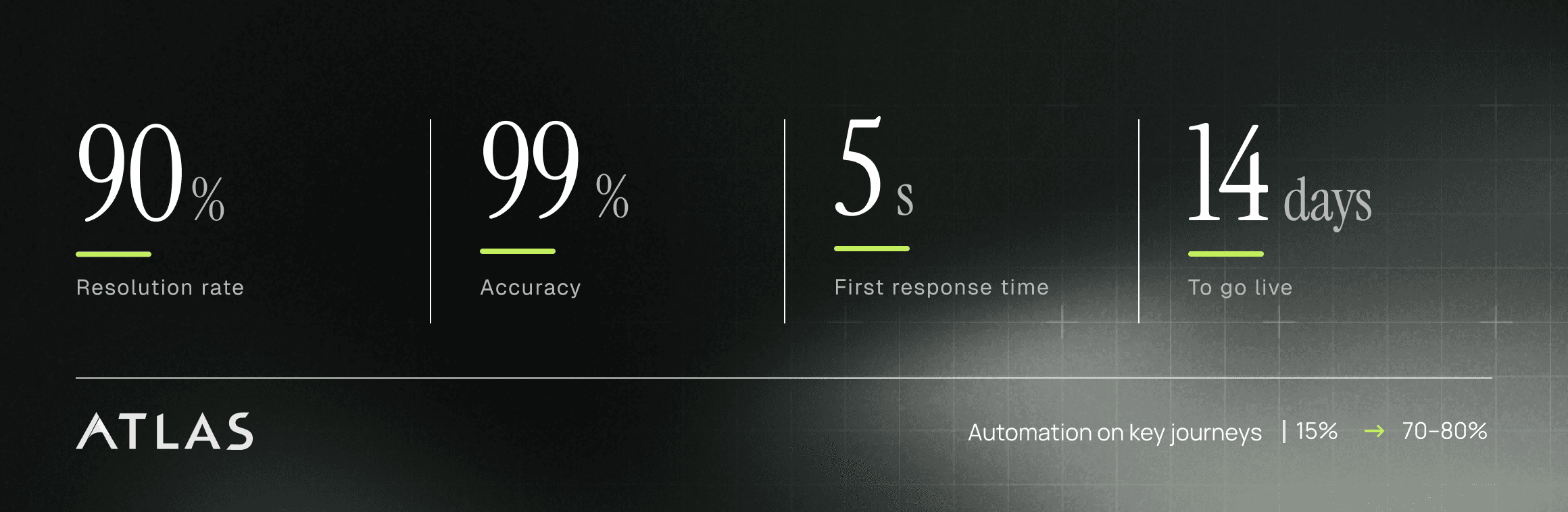
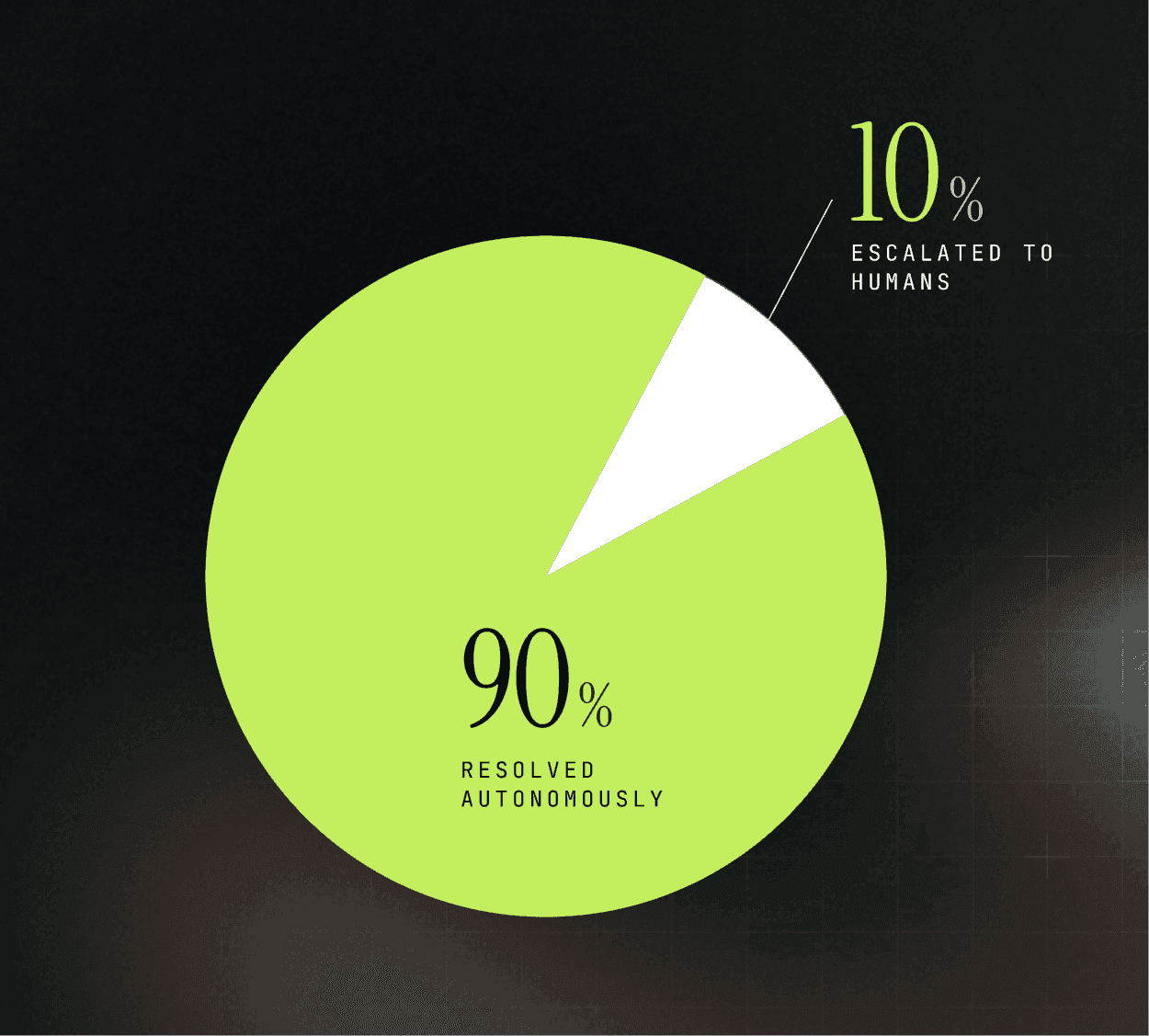
Fini is a per-resolution AI customer-support agent backed by Y Combinator and Matrix Partners. It connects natively to your helpdesk, knowledge base, CRM, billing, claims, and EHR systems, reaches a 90% resolution rate at 99% accuracy, and is built to go live in 30 days. Across its customer base, Fini handles more than 3 million monthly resolutions in fintech and healthcare. The agent works across voice, chat, and email, answers in 130+ languages, and returns a first response in about five seconds.
What is Lorikeet?
Lorikeet positions itself as "the AI Customer Concierge for complex companies", a deliberate contrast with generic deflection chatbots that only answer questions. Founded in 2023 by product and AI leaders previously at Google and Stripe, the company is headquartered in San Francisco with Australian founding roots. Its core pitch is that it follows the same operating workflow a trained human agent would run through: replacing a compromised card, unwinding a delayed order, updating an account on file, actually executing the resolution, not just describing what the customer should do next. Architecturally, Lorikeet is built around four named capabilities rather than a single generic chat model: multi-channel execution across phone, SMS, chat, email, and WhatsApp; workflow automation that takes real actions inside connected systems rather than just drafting a reply; intelligent escalation that hands a conversation to a human when the workflow calls for it rather than looping the customer; and automated QA scoring that reviews resolved tickets after the fact. That QA-scoring layer is notable because Lorikeet also bills for it separately per ticket (see pricing below), which suggests the company treats it as a distinct, resource-intensive capability rather than a thin bolt-on. The public record does not name Lorikeet's specific co-founders individually, only that its leadership previously worked in product and AI roles at Google and Stripe, so this page states that background level rather than inventing names or titles that aren't published. Lorikeet has raised roughly $50-75 million across three rounds: a 2024 seed round led by Square Peg Capital, a 2025 follow-on led by Blackbird, and a $35 million Series A in August 2025 led by QED Investors, with participation from Square Peg, Skip Capital, Capital49, Airtree, Operator Partners, Athletic Ventures, and angels including the founders of Canva and Airwallex. Coverage of the raise noted Lorikeet as the first company since Canva to have all three of Australia's top venture firms: Blackbird, Square Peg, and Airtree, as early backers alongside an international investor syndicate. Reported valuation sits above $200 million. Named customers include Eucalyptus (telehealth), Flex, Airwallex, Linktree, and Magic Eden, a list that already skews toward the fintech and healthtech verticals Lorikeet says it's built for, which lends some credibility to the positioning rather than it being marketing language alone.
Lorikeet pricing in 2026
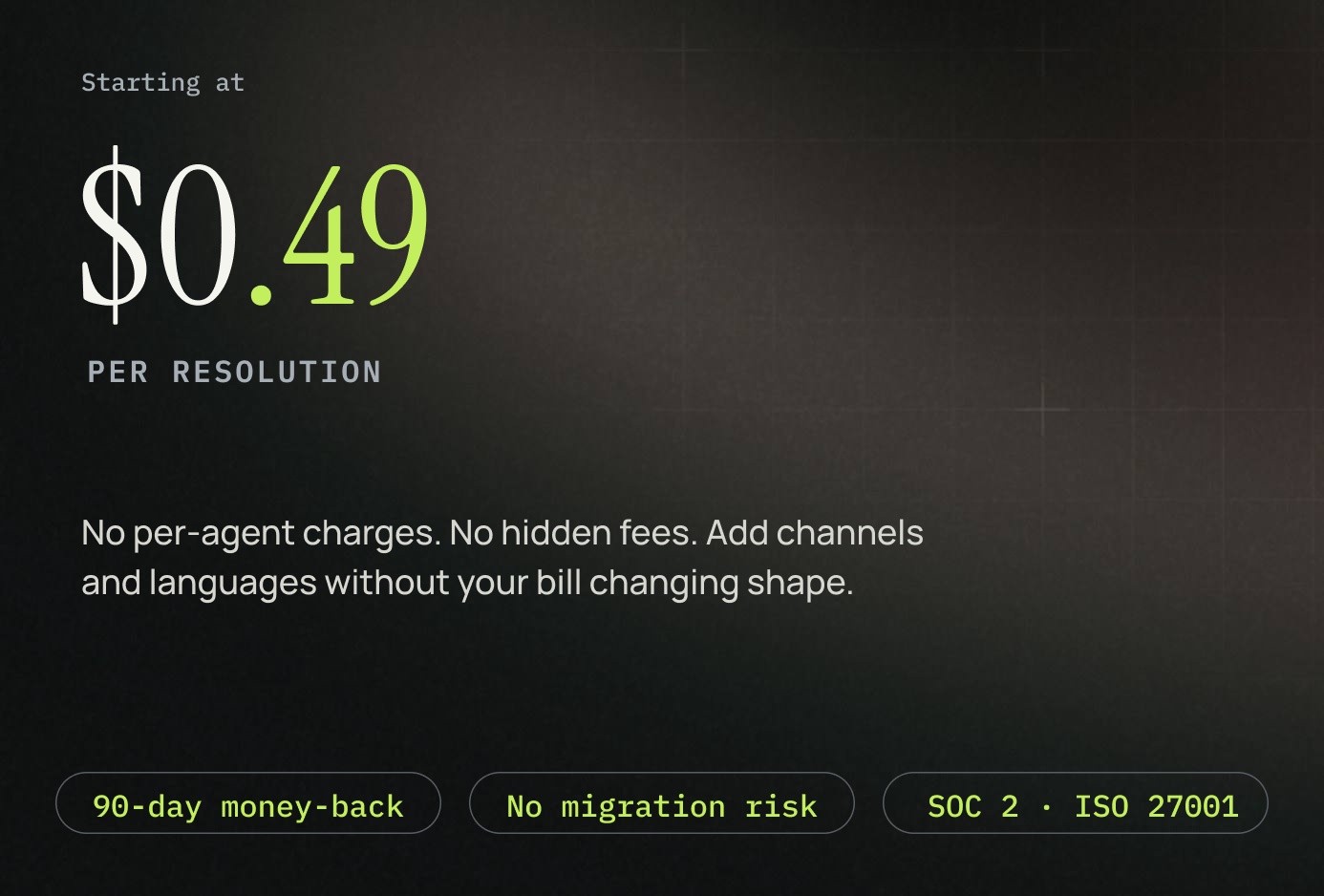
Lorikeet publishes three tiers, and unlike most vendors in this category, none of them sit behind a sales call. Start costs $1,500/month for under 5,000 tickets, but requires an $18,000/year credit commitment paid up front; chat, email, and SMS resolutions run $0.95 each on top of that, voice resolutions under three minutes run $1.50, and routing/tagging plus automated QA are billed separately at $0.30 per ticket each. Scale costs $4,000/month for 5,000-20,000 tickets, with a $48,000/year commitment, and the same per-resolution rates step down to $0.80 for chat/email/SMS and $1.20 for voice, with routing and QA fees dropping to $0.25 each. Enterprise is fully custom-priced above 20,000 tickets a month or for more complex implementations. There are no per-seat charges on any tier, and Lorikeet's stated policy is straightforward: if you're unhappy with how a ticket was handled, you don't pay for that ticket. Fini charges $0.49 per resolution, with no per-seat fees and no annual credit commitment required. Voice, chat, and email are all included in that single rate. Confirm current terms before you commit. The credit-commitment structure also changes how a team should model growth. On Lorikeet, moving from Start to Scale means re-committing to a larger annual credit pool ($48,000 instead of $18,000) up front, ahead of the volume actually materializing, a real planning cost for a team that is not certain how fast ticket volume will grow. On Fini, cost scales directly and predictably with resolution volume, with no tier to move between and no annual credit pool to pre-purchase.
What buyers ask | Lorikeet | Fini |
|---|---|---|
Published price list | ✓ | ✓ |
Price | $1,500/month (Start) | $0.49 per resolution |
Annual commitment required | Yes ($18,000 or $48,000 in credits/year) | No, pay-as-you-grow |
Per-resolution rate (chat/email) | $0.95 → $0.80 as volume scales | $0.49, all channels |
Voice priced separately | Yes, $1.50 → $1.20/resolution | No, included in the per-resolution rate |
Per-ticket routing/QA fees | Yes, $0.25-$0.30/ticket each | Included |
See Fini's full pricing breakdown for plan details, add-ons, and a resolution calculator.
How Fini and Lorikeet differ
1. Commitment structure
Lorikeet's published tiers still require pre-purchasing an annual credit pool, so a team evaluating the $1,500 Start plan is really committing to $18,000 for the year regardless of actual ticket volume. Fini charges $0.49 per resolution with no annual commitment required.
2. Bundled versus itemized pricing
Lorikeet itemizes voice, routing/tagging, and automated QA as separate per-ticket charges on top of its base resolution rate. Fini folds all of that into one per-resolution number, which makes it easier to model total cost from ticket volume alone without adding up five separate line items.
3. Vertical focus versus platform breadth
Lorikeet's entire narrative is built around fintech and healthtech workflow execution specifically, its own customer list backs that up. Fini serves the same two verticals but frames itself more broadly around regulated industries generally, with a wider published language count (130+) and a broader single compliance list.
4. Guarantee mechanics
Both vendors avoid per-seat pricing and both attach a guarantee to outcomes rather than access, but the guarantees work differently in practice, see "The full side-by-side" below for the direct comparison.
5. Verification and disclosure
Fini discloses a specific resolution rate and accuracy figure (90% at 99% accuracy) as a standing published claim. Lorikeet does not publish an equivalent aggregate resolution-rate number across its customer base, its public case-study material leans instead on qualitative workflow-execution examples and named-customer credibility rather than a headline percentage, which is a reasonable but different way of establishing trust with a buyer.
Capabilities side by side
Architecture and reasoning
Lorikeet's architecture is built around following a company's existing operating workflow step by step, the same sequence a trained human agent would run through to replace a card or resolve a delayed order, rather than reasoning freely from a knowledge base alone. That makes it strong on execution depth for well-documented processes, since the AI is following a known-good path rather than improvising a resolution from scratch each time. The trade-off is that the approach depends on those workflows actually being written down clearly somewhere the AI can reference, which is precisely the dependency independent reviewers flag in the "What customers say" section below.
Knowledge management
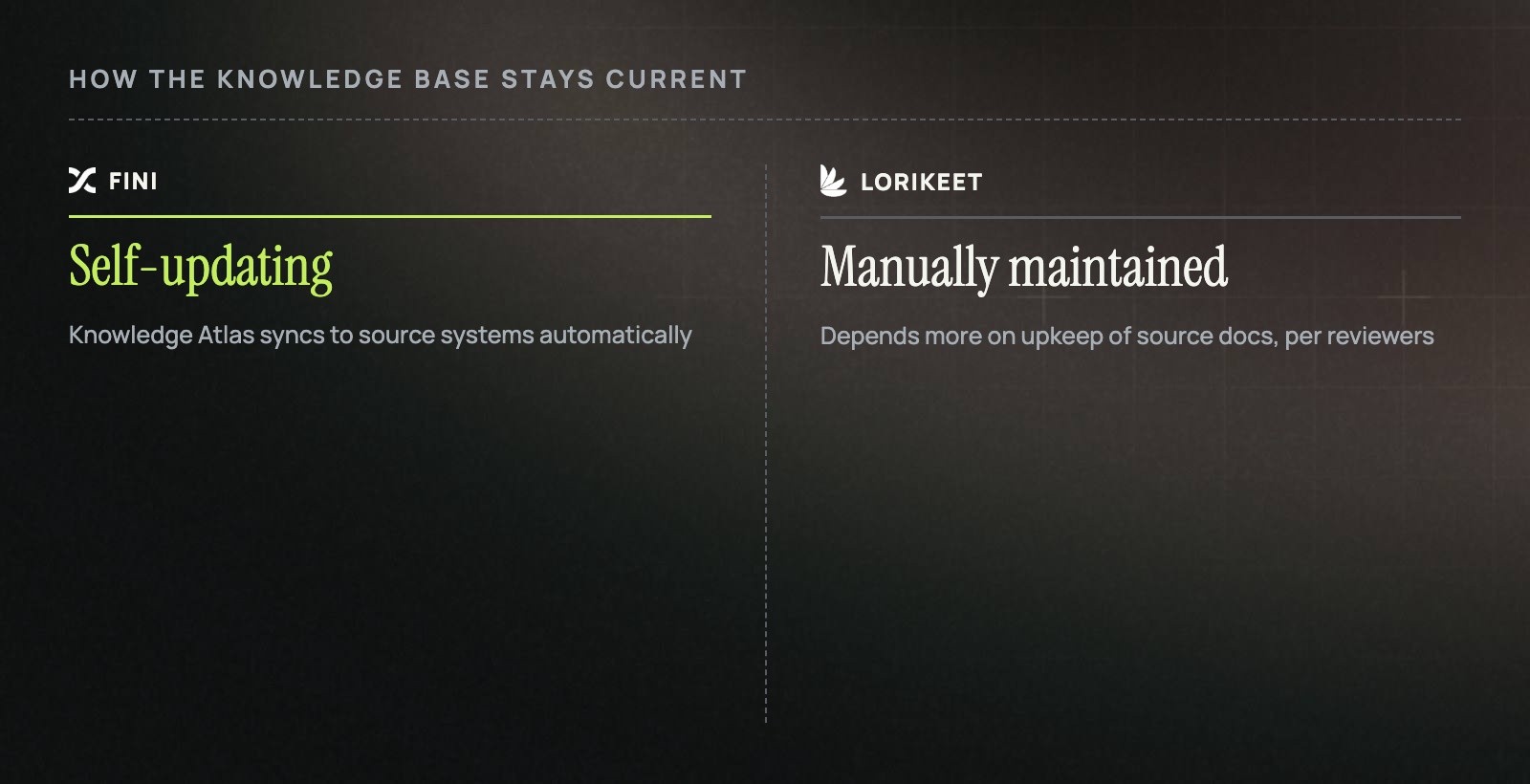
Because Lorikeet's output quality is directly tied to the state of a company's own help articles and internal documentation, independent reviews note that when documentation is scattered across multiple internal tools or out of date, Lorikeet reportedly struggles to reconcile it. Fini takes a different approach to that exact problem: its Knowledge Atlas is a self-writing knowledge base that keeps itself current rather than depending entirely on how well-maintained a team's existing documentation already is.
Action execution
Both platforms genuinely execute actions rather than just describing them: refunds, account updates, and similar workflow steps get carried out by the agent itself in both cases. Lorikeet splits its integrations into two layers: a helpdesk layer (Zendesk, Intercom, HubSpot, Front, Salesforce) where conversations live, and a separate action layer (Stripe plus generic internal APIs) where the actual account or payment changes get executed. Fini connects natively across helpdesk, CRM, billing, claims, and EHR systems in one connector set rather than splitting helpdesk and action integrations into two distinct categories, which is a smaller but real difference in how each vendor expects a technical team to wire things up during setup.
Escalation and quality review
Lorikeet names "intelligent escalation to humans" and "automated QA scoring" as distinct product capabilities, the first hands a conversation off when a workflow calls for human judgment rather than letting the AI loop or guess, and the second reviews resolved tickets after the fact to score how well they were handled. Both are billed as separate per-ticket line items on Lorikeet's published rate card ($0.25-$0.30 each), which tells a buyer these are treated as real, resource-consuming features rather than marketing checkboxes bundled in for free. The table above covers the headline differences; the row-by-row breakdown below goes further into specific product capabilities rather than just pricing and guarantees.
Feature by feature
Feature | Fini | Lorikeet |
|---|---|---|
Channels | Voice, chat, email | Voice, chat, email, SMS, WhatsApp |
Languages | 130+, published | Not publicly specified |
Executes real actions (refunds, account changes) | ✓ | ✓ |
Self-writing knowledge base | ✓ (Knowledge Atlas) | Not published as a named capability |
Automated QA | Bundled into the per-resolution rate | Billed separately, $0.25-$0.30/ticket |
Published outcome guarantee | ✓ (90-Day Money-Back Guarantee) | ✓ (per-ticket dispute) |
Annual commitment | Not required | Required on published tiers |
Ease of use and admin experience
Setup
Because Lorikeet's model mirrors a company's existing workflows exactly, standing it up well implies real upfront investment mapping those workflows out clearly before the AI can follow them, there's no public timeline for how long that setup typically takes for a new customer. The two-layer integration model (helpdesk platform plus a separate action layer for Stripe and internal APIs) also means a technical admin is likely wiring up and testing two distinct connection points rather than one, which is a reasonable trade for the execution depth Lorikeet is selling, but is worth budgeting real implementation time for rather than assuming a same-day connection.
Onboarding
Fini publishes a concrete answer here: a staged, 30-day go-live, which gives a team an actual date to plan a launch around rather than an open-ended implementation project scoped per deal.
Configuration and control
Because Lorikeet is designed to execute existing operating procedures rather than invent new ones, the admin work is less about writing new logic from scratch and more about accurately transcribing workflows that already exist somewhere in a company's internal documentation or in the heads of its support team. That is a real advantage where documentation is already excellent, and a real liability where it isn't, which is exactly the gap independent reviewers flag as Lorikeet's most consistent weakness. Put together, the two vendors are making a similar core promise, pay for outcomes, not seats, but they're selling it to slightly different buyers. Lorikeet's pitch reads best to a fintech or healthtech team that already has strong internal documentation and wants an AI that executes their exact playbook faithfully. Fini's pitch reads best to a team that wants one predictable monthly number, a published guarantee with a specific bar, and a knowledge layer that doesn't assume the company's own documentation is already in perfect shape.
Fini's differentiators
Published per-resolution pricing with no annual credit lock-in, a team pays $0.49 per resolution without pre-purchasing a year of usage the way Lorikeet's tiers require.
90-Day Money-Back Guarantee with a specific, stated 80%-in-90-days bar, a measurable outcome commitment rather than a case-by-case dispute process.
130+ languages published across voice, chat, and email, a number Lorikeet does not publish an equivalent for.
SOC 2 Type II, ISO 27001, GDPR, HIPAA-BAA-eligible, and CCPA all listed together, one compliance page covering both fintech and healthcare requirements, rather than a partial list.
Self-writing Knowledge Atlas, keeps a knowledge base current on its own instead of depending entirely on the state of a team's existing internal documentation.
A published, staged 30-day go-live, a concrete date to plan around rather than an implementation timeline scoped per deal.
One connector set for both helpdesk and action-layer integrations, rather than wiring up a separate action layer for payments/internal APIs on top of the helpdesk connection.
Lorikeet's recognized strengths
A genuinely transparent, published rate card, with a real "don't pay if you're unhappy" per-ticket guarantee, decided ticket by ticket rather than buried in a broader SLA.
Strong workflow-execution depth: built specifically for complex, regulated use cases like replacing a compromised card, rather than simple FAQ deflection.
Fast-growing with serious backing: QED Investors, Blackbird, and Square Peg among its investors, alongside angels from Canva and Airwallex, and the first company since Canva to have all three of Australia's top VC firms as early backers.
Named enterprise-grade customers, already in fintech (Airwallex) and healthtech (Eucalyptus), matching its stated positioning rather than contradicting it.
Broader native channel list: spanning SMS and WhatsApp in addition to voice, chat, and email, ahead of most point-solution competitors in this category.
Named product capabilities beyond basic resolution, intelligent escalation and automated QA scoring are both called out and priced as their own features, not folded silently into a black-box resolution fee.
What customers say
Independent reviews of Lorikeet consistently point to the same two themes. On the positive side, buyers like the transparency of an outcome-based rate card and a policy that doesn't charge for escalated or mishandled tickets, a rarer combination than pricing pages usually admit, and one that directly addresses a common objection to AI support tools: "what happens when it gets something wrong." On the critical side, the most-repeated theme runs the other direction: answer quality is only as strong as a company's own help documentation, and it's unclear how well Lorikeet reconciles knowledge that's scattered across multiple internal tools rather than centralized in one place. For a fintech or healthtech buyer specifically, that second point deserves more scrutiny than it might get on a first pass, since regulated-industry documentation is often exactly the kind that lives split across a wiki, a compliance system, and a handful of internal runbooks rather than one clean source of truth. That is worth weighing directly against Fini's Knowledge Atlas, which is built to keep a knowledge base current on its own rather than depend on a company's existing documentation discipline holding up over time, a different bet on where the hard problem in AI support actually lives. Pulling every dimension covered above into one table makes the trade-off easier to see at a glance: pricing structure, guarantee mechanics, channel and integration breadth, and compliance posture side by side, rather than scattered across separate sections.
The full side-by-side
Dimension | Fini | Lorikeet |
|---|---|---|
Pricing | $0.49 per resolution | $1,500 / $4,000 / custom per month, annual credit commitment required |
Outcome guarantee | 90-Day Money-Back Guarantee, 90% in 90 days | Don't pay for a ticket you're unhappy with |
Channels | Voice, chat, email | Voice, chat, email, SMS, WhatsApp |
Languages | 130+, published | Not publicly specified |
Compliance | SOC 2 Type II, ISO 27001, GDPR, HIPAA-BAA-eligible, CCPA | SOC 2 Type II, ISO 27001 (HIPAA/GDPR not publicly published) |
Backing | Y Combinator, Matrix Partners | QED Investors, Blackbird, Square Peg (~$50-75M raised) |
Go-live | 30 days, staged | Not publicly stated |
Integrations (helpdesk layer) | Native helpdesk, CRM, billing, claims, EHR | Zendesk, Intercom, HubSpot, Front, Salesforce |
Integrations (action layer) | Same connector set as helpdesk layer | Stripe plus generic internal APIs |
Escalation to human | ✓, included | ✓, billed per ticket |
Automated QA | ✓, included | ✓, billed per ticket ($0.25-$0.30) |
Annual commitment | Not required | Required on published tiers |
Scale | 3M+ monthly resolutions across fintech/healthcare customers | Eucalyptus, Flex, Airwallex, Linktree, Magic Eden |
Which should you choose?
Choose Fini if you want
Published per-resolution pricing at $0.49 with no annual credit commitment, 130+ language coverage out of the box, or one bundled rate across every channel instead of itemized voice, routing, and QA fees.
Choose Lorikeet if you want
A vendor that's specifically fintech or healthtech-focused, whose entire product narrative and workflow design is built around executing complex, multi-step actions the way a trained human agent would, and you're comfortable pre-committing to an annual credit pool. In practice, the decision often comes down to how confident a team is in its own documentation and how much it values a single vendor bill. A team with clean, centralized internal docs and a genuine need for SMS/WhatsApp coverage may find Lorikeet's workflow-execution model a strong fit despite the annual commitment. A team that wants one predictable number, broader published language coverage, and a knowledge layer that does not assume documentation is already perfect will likely find Fini's model easier to plan around.
Compliance
Fini publishes SOC 2 Type II, ISO 27001, GDPR compliance, HIPAA-compliant BAA-eligible contracting, and CCPA availability under agreement, all listed together in one place rather than requiring a buyer to piece it together from multiple pages. Lorikeet's pricing page confirms SOC 2 Type II and ISO 27001, but does not publicly list HIPAA or GDPR certifications, notable given that its own named customer list includes a telehealth company handling what is presumably sensitive health information. That's not the same as Lorikeet lacking those protections; plenty of vendors maintain compliance postures they don't publish prominently on a pricing page. It's an open question healthtech and fintech buyers should ask directly during evaluation rather than assume either way from what's currently public, and it's worth asking early in the sales process rather than after a contract is close to signed.
Ready to compare on your own data?
Run your own ticket volume through both rate cards before you decide, the annual-commitment structure on Lorikeet's tiers means the real comparison depends on your actual monthly ticket count, not just the sticker price on the entry plan. See Fini's full pricing, or reach out to the team to request early access or talk through your own volume directly. For more on how Fini keeps its help center current, see the Knowledge Atlas launch post, and if you're also evaluating another helpdesk-layered platform, our Zendesk AI vs Fini comparison. Our explainer on agentic AI covers how we define the category both platforms compete in.
Is Lorikeet's pricing public?
Yes. Lorikeet publishes three tiers: Start at $1,500/month (under 5,000 tickets, $18,000/year credit commitment), Scale at $4,000/month (5,000-20,000 tickets, $48,000/year commitment), and custom Enterprise pricing above that. Per-resolution rates run $0.95-$0.80 for chat/email/SMS and $1.50-$1.20 for voice, with routing/tagging and automated QA billed separately per ticket.
Does Lorikeet require an annual commitment?
Yes: both the Start and pricings require pre-purchasing an annual credit pool ($18,000 or $48,000). Fini requires no annual commitment at all, charging $0.49 per resolution with no credit pool to pre-purchase.
How does Lorikeet's guarantee compare to Fini's 90-Day Money-Back Guarantee?
Lorikeet says you don't pay for a ticket you're unhappy with, decided ticket-by-ticket. Fini's 90-Day Money-Back Guarantee is a stated 80%-resolution bar within 90 days, a broader, outcome-level commitment rather than a per-ticket dispute mechanism.
Who founded Lorikeet and when?
Lorikeet was founded in 2023 by product and AI leaders previously at Google and Stripe, headquartered in San Francisco with Australian founding roots.
How much funding has Lorikeet raised?
Lorikeet has raised roughly $50-75 million across a 2024 seed round (Square Peg Capital), a 2025 follow-on (Blackbird), and a $35 million Series A in August 2025 led by QED Investors. Lorikeet is not Y Combinator-backed.
What channels does Lorikeet support?
Chat, email, SMS, WhatsApp, and voice. Fini supports voice, chat, and email across 130+ languages, a language count Lorikeet does not publicly specify.
Is Lorikeet SOC 2 and HIPAA compliant?
Lorikeet publishes SOC 2 Type II and ISO 27001 compliance. It does not publicly list HIPAA or GDPR certifications despite serving healthtech customers like Eucalyptus, healthtech buyers should confirm directly. Fini publishes SOC 2 Type II, ISO 27001, GDPR, HIPAA-BAA-eligible contracting, and CCPA together.
What is Lorikeet's biggest reported weakness?
Independent reviews note that Lorikeet's answer quality depends heavily on how current and centralized a company's help documentation already is, and that it's unclear how well it reconciles knowledge scattered across multiple internal tools.
Who are Lorikeet's named customers?
Eucalyptus (telehealth), Flex, Airwallex, Linktree, Magic Eden, Summ, Breeze, Amber, and Arbor.
Can I migrate from Lorikeet to Fini?
Yes, both connect to standard helpdesk platforms, so a migration is a knowledge and workflow re-mapping exercise rather than a rebuild from scratch.