
Developer Voice Infrastructure vs. a Finished Support Agent
Vapi and Fini both get pulled into "AI voice agent" searches, but they are not really competing for the same purchase. Vapi is a developer platform for building custom voice agents from scratch. Fini is a finished, purpose-built customer support agent that a support or ops team can turn on without writing a line of code.
If your team has engineers ready to assemble a voice pipeline and wants full control over the stack, Vapi is worth evaluating on its own terms. If you need a working agent that resolves fintech or healthcare support tickets in 30 days, the comparison looks different, and this page lays out exactly where.
In this comparison: What each is · How they differ · Capabilities · Feature by feature · Ease of use · What customers say · The full side-by-side · Which to choose · Compliance · FAQ
What is Fini?
Fini is an AI customer support agent priced per resolution, backed by Y Combinator and Matrix Partners. It connects natively to helpdesk, knowledge base, CRM, billing, claims, and EHR systems, so it can act on the same data your human agents already use.
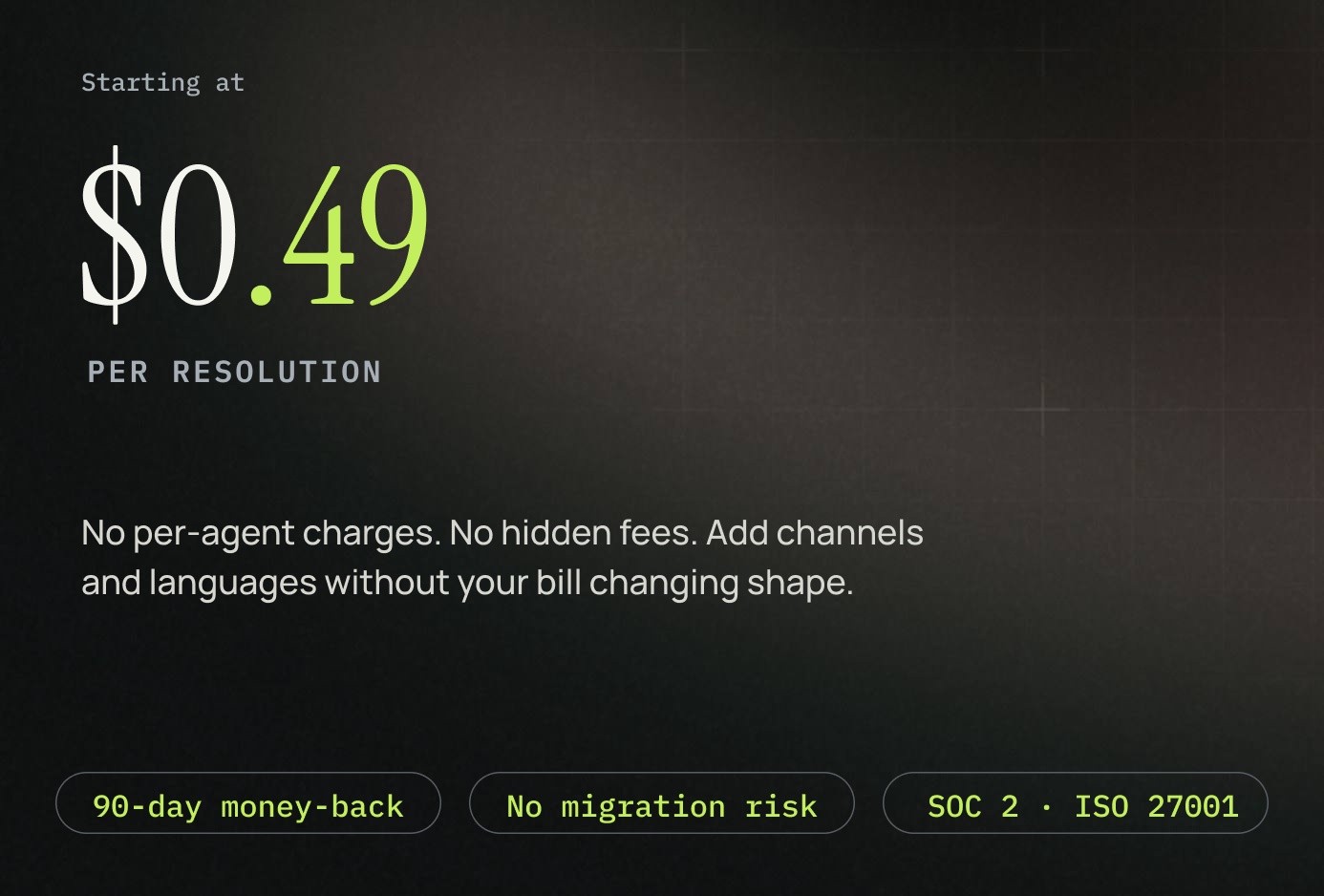
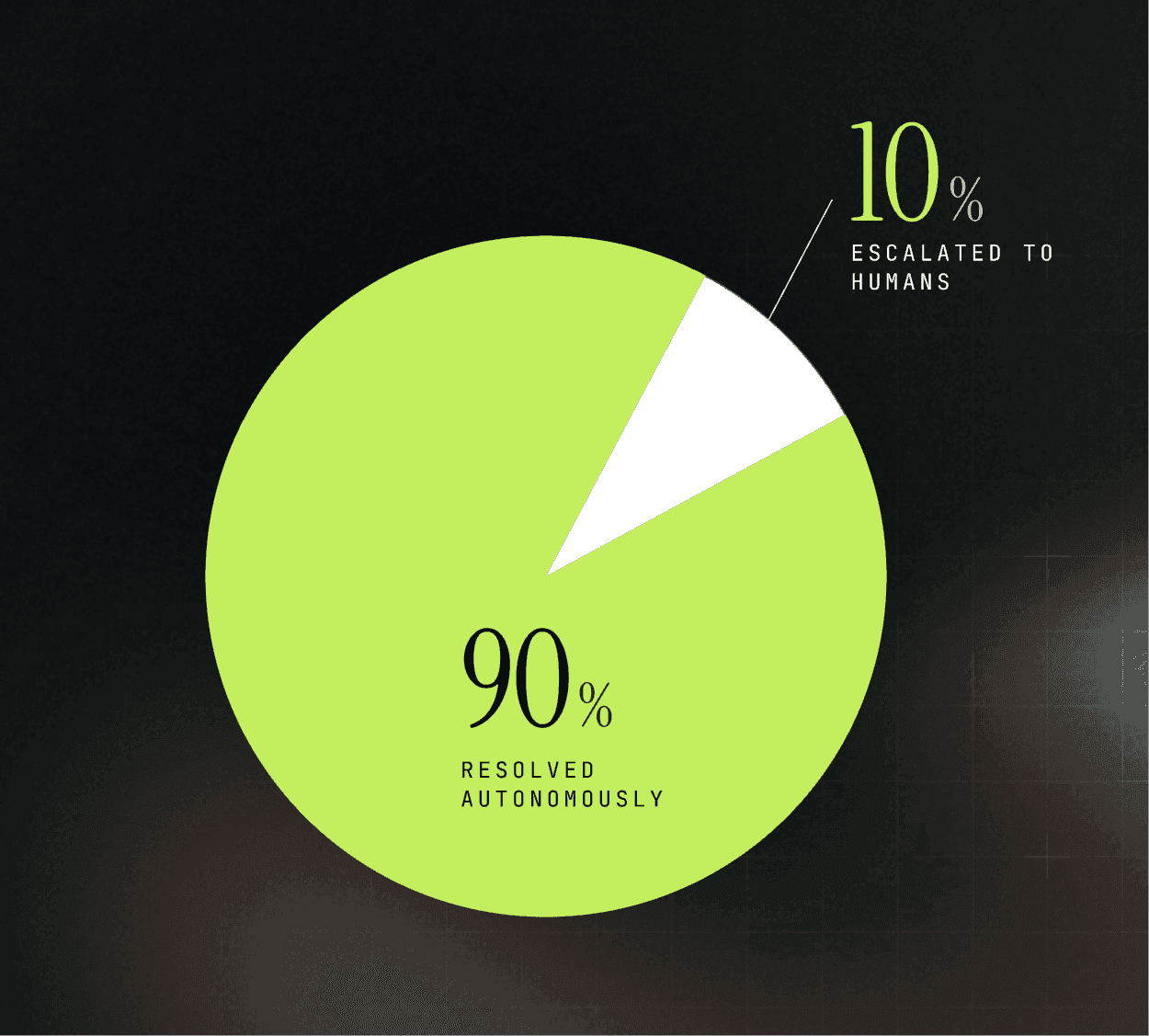
Fini handles voice, chat, and email in 130+ languages, responds in around 5 seconds, and holds a 90% resolution rate at 99% accuracy across more than 3 million monthly resolutions in fintech and healthcare. Most teams go live within 30 days.
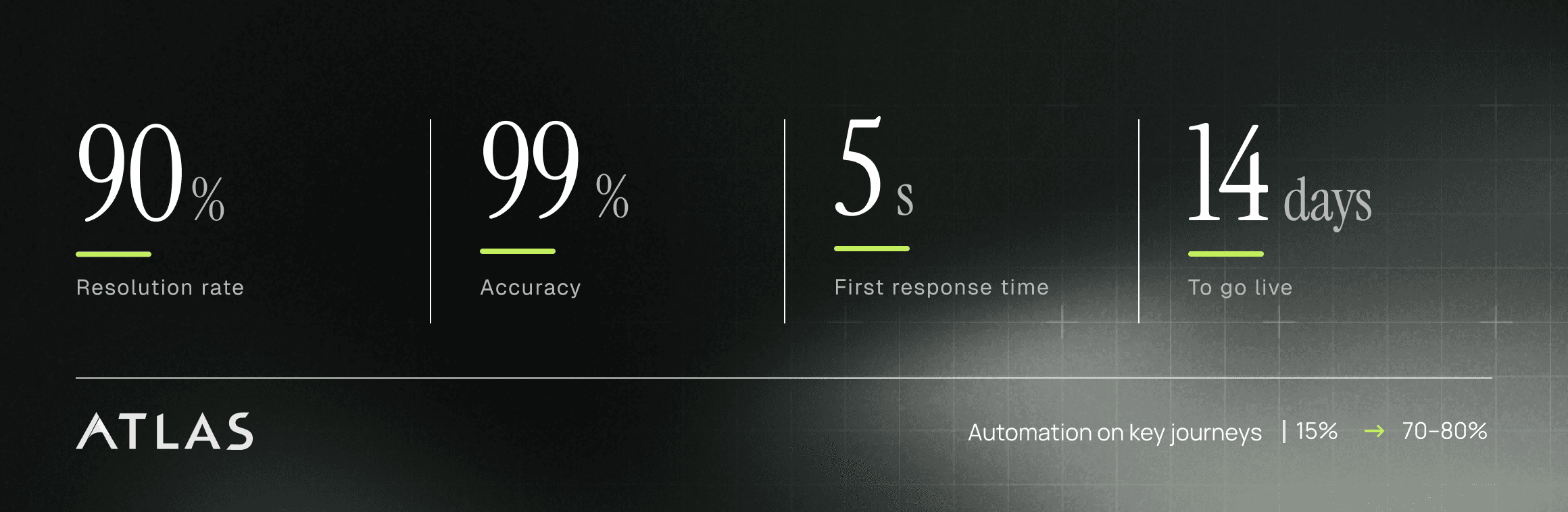
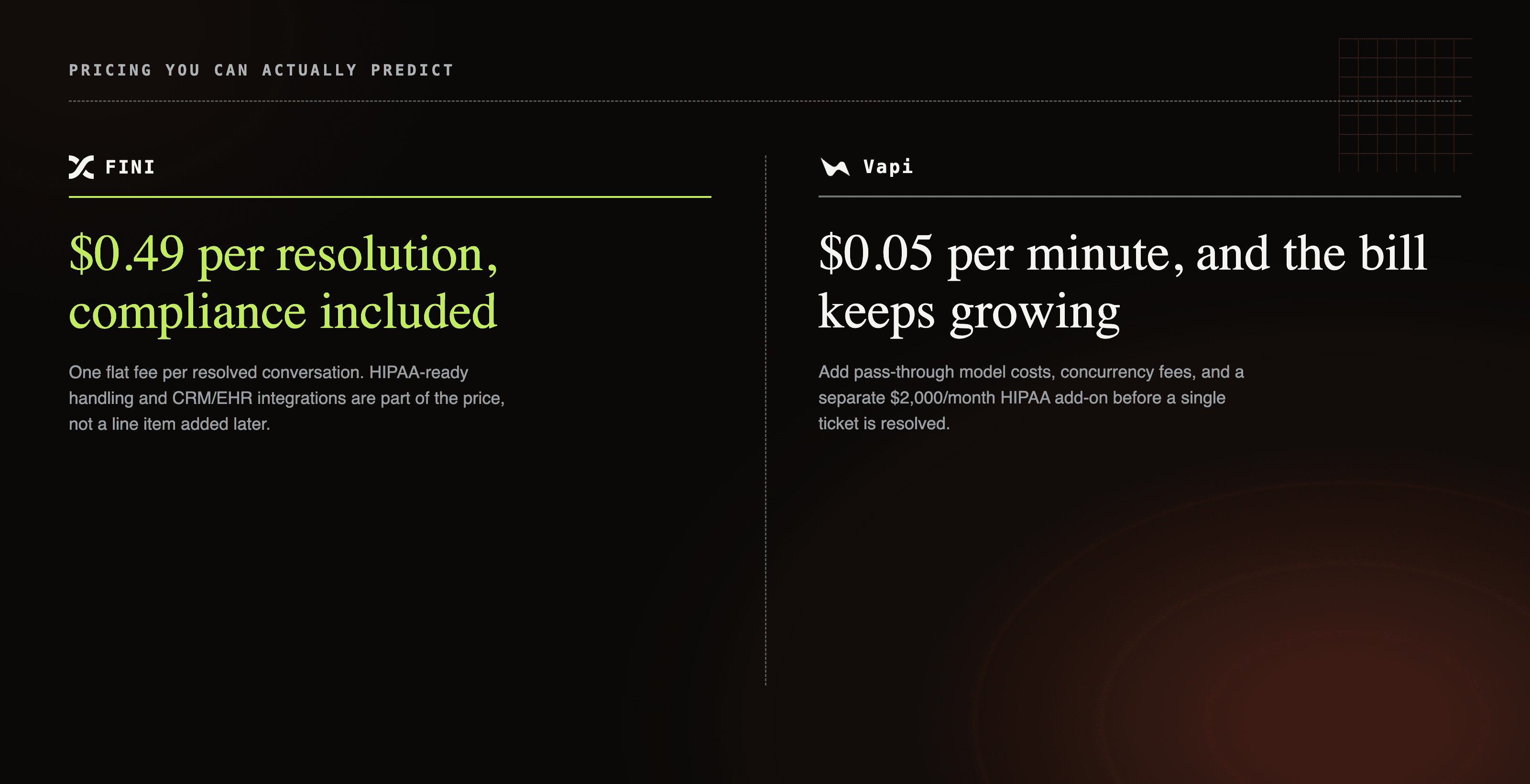
Fini charges a flat $0.49 per resolution, with no per-seat fees. Its Zero Pay Guarantee means if Fini does not reach 90% resolution within 90 days, you do not pay for the shortfall.
What is Vapi?
Vapi is a developer platform for building, deploying, and managing voice AI agents. It markets itself as "voice agents for builders" and is used by more than a million developers on its self-serve platform. Vapi handles the underlying infrastructure, telephony, orchestration, and the speech-to-text, LLM, and text-to-speech pipeline, while the buyer assembles the actual agent on top, choosing their own models and configuring it through more than 4,200 config points.
Vapi raised a $50 million Series B led by Peak XV Partners in 2026, pushing its valuation to roughly $500 million on $72 million raised to date. The company was founded in 2023 and pivoted to its current voice agent product in 2024. Its best-known win is Amazon Ring, which moved 100% of its inbound support call volume to Vapi after evaluating more than 40 competing vendors.
Vapi pricing in 2026
Vapi prices usage, not outcomes. Its self-serve Build plan charges $0.05 per minute for call hosting and $0.005 per message for chat, with 10 concurrent lines included and $10 per additional line per month. Underlying model costs, the LLM, speech-to-text, and text-to-speech providers, are passed through at cost, on top of Vapi's own fee. Call history is retained for just 14 days by default.
The Scale plan adds a fixed platform fee plus a custom volume-based per-minute rate, along with SOC 2, HIPAA, and PCI features, SSO, RBAC, and data residency options for enterprise buyers.
Compliance is a separate line item, not a default. HIPAA mode is a $2,000 per month add-on that requires a signed BAA and switching to a HIPAA-eligible subset of model and voice providers. A Zero Data Retention add-on runs $1,000 a month, and the two add-ons are mutually exclusive. For a regulated healthcare or fintech deployment, the real bill stacks: per-minute usage, pass-through model costs, and a separate compliance fee, before any engineering time is counted.
How Fini and Vapi differ
The core difference is build versus buy. Vapi gives you the infrastructure to construct a voice agent: telephony, orchestration, and a model pipeline you configure yourself. Fini gives you a finished agent, already trained to resolve fintech and healthcare support tickets across voice, chat, and email, connected to the systems of record your team already runs on.
That difference shows up in who buys each product. Vapi's own marketing targets developers and engineering teams. Fini is bought and run by support and operations leaders who need a working agent live in 30 days, not a platform their engineering team spends months configuring.
Capabilities side by side
The gap between "infrastructure to build on" and "agent that works on day one" shows clearly once you line up what each product actually ships with.
Capability | Fini | Vapi |
|---|---|---|
What you get | A finished, trained support agent | A platform to build your own agent |
Channels | Voice, chat, and email | Primarily voice, with an SMS/chat add-on |
Languages | 130+ languages out of the box | Depends on the models you configure |
Native integrations | Helpdesk, knowledge base, CRM, billing, claims, EHR | Salesforce, HubSpot, Zendesk, plus custom webhooks |
Time to go live | 30 days | Weeks to months, engineering-dependent |
Pricing basis | Flat $0.49 per resolution | $0.05 per minute plus pass-through costs |
Feature by feature
Zooming into individual features shows the same pattern: Fini bundles outcomes and compliance into the product, Vapi treats them as configuration decisions.
Feature | Fini | Vapi |
|---|---|---|
Resolution guarantee | Zero Pay Guarantee below 90% resolution in 90 days | No resolution-based guarantee; usage is billed regardless of outcome |
Accuracy | 99% accuracy at a 90% resolution rate | Not publicly benchmarked; depends on the models you choose |
First response time | About 5 seconds | Sub-500ms latency claimed for the voice pipeline itself |
Setup effort | Configured by Fini's team, live in 30 days | Over 4,200 config points to assemble yourself |
Concurrency | Included in per-resolution pricing | 10 concurrent lines included, then $10/line/month |
Default data retention | Built for regulated fintech and healthcare data handling | 14 days for call history on the Build plan |
Ease of use and admin experience
Fini is designed for the team that owns support outcomes, not the team that owns infrastructure. Setup is guided by Fini, and changes to knowledge base content, escalation rules, or integrations do not require an engineer.
Vapi is the opposite by design. Its dashboard, API, and CLI are built for developers, and its enterprise page frames the value as going from build to production "in weeks rather than the traditional 12-18 month development cycle," which is still a build cycle, just a shorter one. Getting to a compliant, production-ready agent on Vapi means engineering time, provider selection, and ongoing maintenance as your support needs change.
Fini's differentiators
Four things stand out when Fini is compared against a build-it-yourself platform like Vapi.
Built for regulated industries from day one
Fini connects natively to EHR and claims systems alongside standard helpdesk and CRM tools, so healthcare and fintech support teams do not need a separate compliance project before the agent can touch real data.
Outcome-based pricing
At $0.49 per resolution with no per-seat fees, Fini's cost moves with results, not headcount or call volume. The Zero Pay Guarantee backs that up: no charge for the shortfall if Fini misses 90% resolution within 90 days.
Live in 30 days, not quarters
Most Fini deployments go live within 30 days, without requiring an internal engineering team to build or maintain the agent.
Multilingual, multichannel by default
Voice, chat, and email in 130+ languages are part of the base product, not separate integrations to configure.
Vapi's recognized strengths
Vapi has real strengths worth naming honestly. It won Amazon Ring's business over more than 40 competing vendors for 100% of Ring's inbound call volume, which is a meaningful proof point for a developer-first voice platform. Its funding is strong too: a $50 million Series B led by Peak XV Partners in 2026 valued the company at roughly $500 million on $72 million raised to date.
For a team with the engineering capacity to build a bespoke voice agent, Vapi's flexibility, more than 4,200 config points, bring-your-own-model support, and a self-serve base used by over a million developers, is a genuine advantage over a fixed, packaged product. Companies like Kavak, Instawork, and Fleetworks have built real voice products on top of it.
What customers say
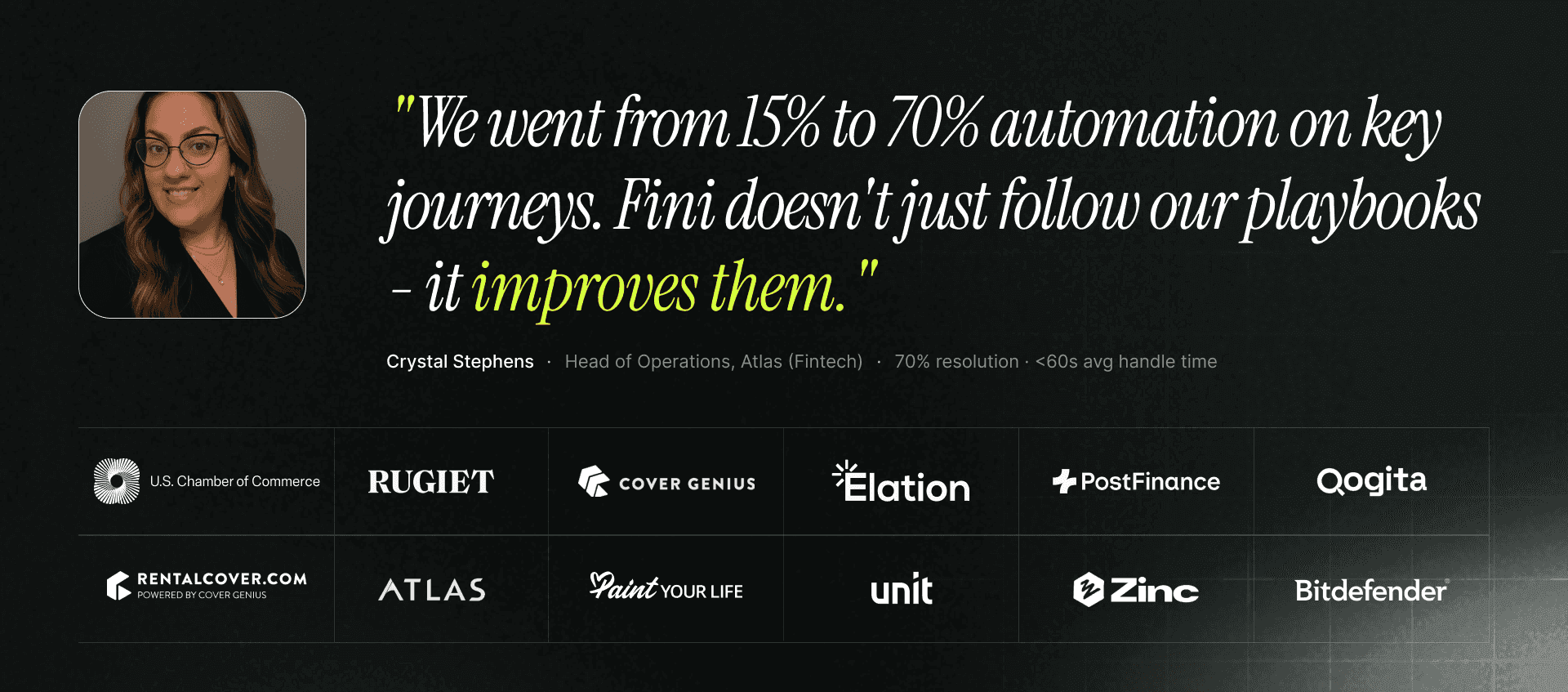
Fini customers describe the agent as a direct extension of their support and operations team, not a chatbot bolted on top of existing tools.
Vapi's public case studies read differently because they describe a different kind of customer: third-party builders like Kavak and Fleetworks who used Vapi's infrastructure to construct their own vertical products, rather than a business that bought a finished support agent off the shelf.
The full side-by-side
Putting company facts, product facts, and pricing facts in one place makes the mismatch, and the fit, easy to see at once.
Category | Fini | Vapi |
|---|---|---|
Product type | Finished AI support agent | Voice agent development platform |
Backing | Y Combinator, Matrix Partners | Peak XV Partners, Y Combinator, and others ($72M raised) |
Buyer | Support and operations leaders | Engineering and developer teams |
Notable customer proof point | 3M+ monthly resolutions in fintech and healthcare | Amazon Ring, chosen over 40 rivals |
Pricing | Flat $0.49 per resolution | $0.05/min plus pass-through model costs |
Compliance posture | Built into the core product for regulated industries | HIPAA is a $2,000/month opt-in add-on; SOC 2 claimed but not publicly documented |
Guarantee | Zero Pay Guarantee at 90% resolution in 90 days | No resolution-based guarantee |
Which should you choose?
Choose Vapi if you have an engineering team that wants to own the voice stack: your own model choices, granular configuration, and the time to build, test, and maintain a custom agent. Vapi's Amazon Ring win shows it can perform at scale once that engineering investment is made.
Choose Fini if you run support or operations for a fintech or healthcare business and need a working agent, not a platform to build one. Fini connects to your existing systems, resolves 90% of tickets at 99% accuracy, and goes live in 30 days with compliance already built in, backed by a guarantee that ties payment to actual results.
Compliance
Compliance is where the two products diverge most for regulated buyers. Fini is built to handle fintech and healthcare data as part of its core product, with native connections into claims and EHR systems.
Vapi's compliance is real but conditional. HIPAA mode requires a signed BAA, manually enabling the add-on, and switching to a HIPAA-eligible subset of model and voice providers, on top of a $2,000 per month fee. SOC 2 is claimed on Vapi's marketing pages, but no public audit report, auditor name, or Type I/II designation is documented, so treat it as a self-reported claim rather than a confirmed certification until Vapi publishes one. Default call retention on Vapi's Build plan is 14 days, which is short for a business that needs an audit trail as standard, not as a plan upgrade.
Ready to compare on your own data?
If you are weighing a build-it-yourself voice platform against a finished agent, the fastest way to decide is to test resolution rate and accuracy on your own tickets. Talk to the Fini team to run a comparison on real conversations from your fintech or healthcare support queue.
Also see how Fini compares to other healthcare-focused agents like Hyro and Assort Health.
Is Vapi a good alternative to Fini?
Vapi is a developer platform for building custom voice agents, not a finished customer support agent like Fini. It is a good fit if you have engineering resources to build and maintain your own agent; if you need a working agent live in 30 days, Fini is built for that instead.
How does Vapi's pricing compare to Fini's?
Vapi charges $0.05 per minute plus pass-through model costs and concurrency fees, with HIPAA compliance as a separate $2,000 per month add-on. Fini charges a flat $0.49 per resolution with no per-seat fees and compliance built into the core product.
Is Vapi HIPAA compliant?
Vapi offers HIPAA compliance as an opt-in add-on for $2,000 per month, requiring a signed BAA and a switch to HIPAA-eligible model and voice providers. It is not enabled or included by default on Vapi's base plans.
Does Vapi have SOC 2 certification?
Vapi's marketing pages claim SOC 2 compliance, but no public audit report, auditor name, or certification date is documented, so it should be treated as a self-reported claim rather than a verified certification.
Who is Vapi's most notable customer?
Amazon Ring is Vapi's best-known customer, having moved 100% of its inbound support call volume to Vapi after evaluating more than 40 competing vendors.
Which is better for a regulated fintech or healthcare support team, Vapi or Fini?
Fini is built specifically for regulated fintech and healthcare support, with native EHR and claims integrations, 90% resolution at 99% accuracy, and compliance included in its flat per-resolution price. Vapi can be configured for these use cases, but it requires engineering effort, provider selection, and a separate compliance add-on to get there.