
Intercom Fin vs Decagon for fintech: the short answer
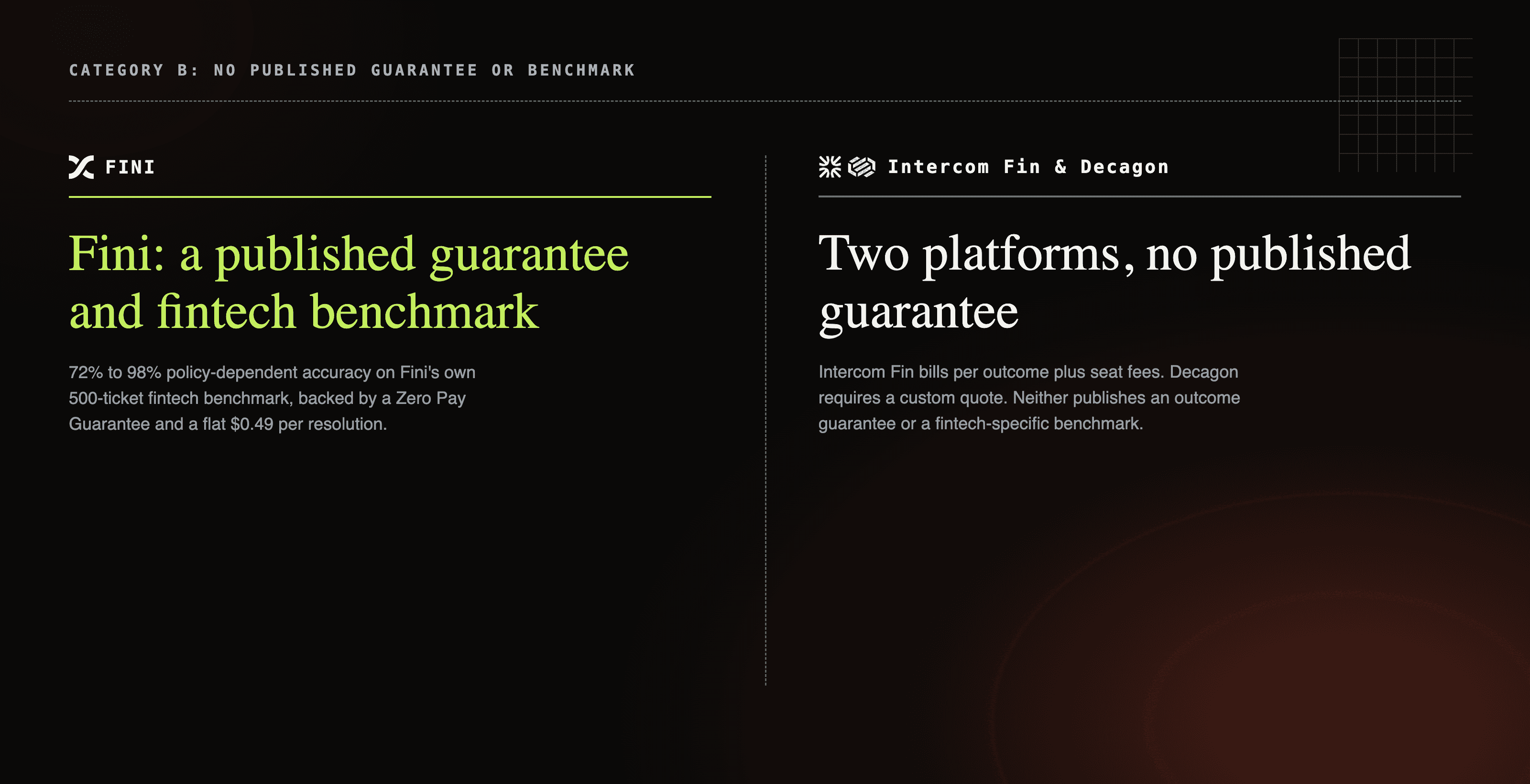
For a fintech company weighing Intercom Fin against Decagon, the deciding factors are pricing transparency, a published outcome guarantee, and a fintech-specific benchmark, and only one of the three vendors in this comparison publishes all three. Intercom Fin bills $0.99 per outcome plus per-seat fees and is mid-acquisition by Salesforce (signed June 2026, not yet closed). Decagon does not publish pricing or a go-live timeline. Fini publishes $0.49 per resolution flat, a Zero Pay Guarantee, and a 500-ticket fintech benchmark showing policy-dependent accuracy rising from about 72% under retrieval to 98% under structured execution.
In this comparison: What each is · Pricing · How they differ · Capabilities · Feature by feature · Ease of use · Fini's differentiators · Recognized strengths · What customers say · The full side-by-side · Which to choose · Compliance · FAQ
What is Fini?
Fini is an AI customer-support agent priced per resolution, backed by Y Combinator and Matrix Partners. It connects natively to helpdesk, knowledge base, CRM, billing, claims, and EHR systems, so it can take real action on tickets rather than just answering questions from a script.
On Fini's published 500-ticket fintech benchmark, policy-dependent accuracy rose from about 72% under retrieval to 98% under structured execution, the same account-state-dependent ticket type (card declines, holds, transfer status) that decides most fintech support volume. Fini goes live in 30 days and already handles more than 3 million monthly resolutions for fintech and healthcare companies.
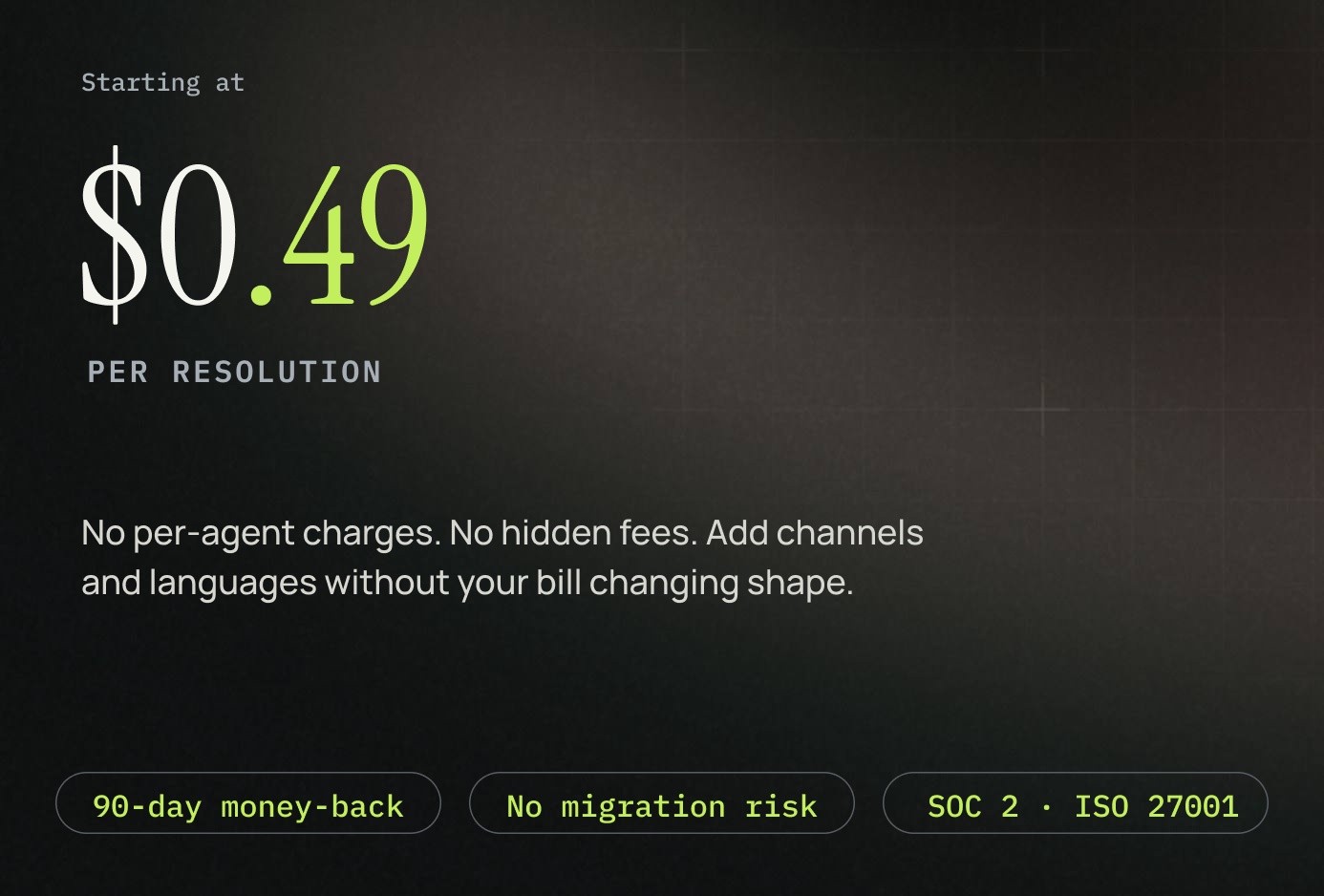
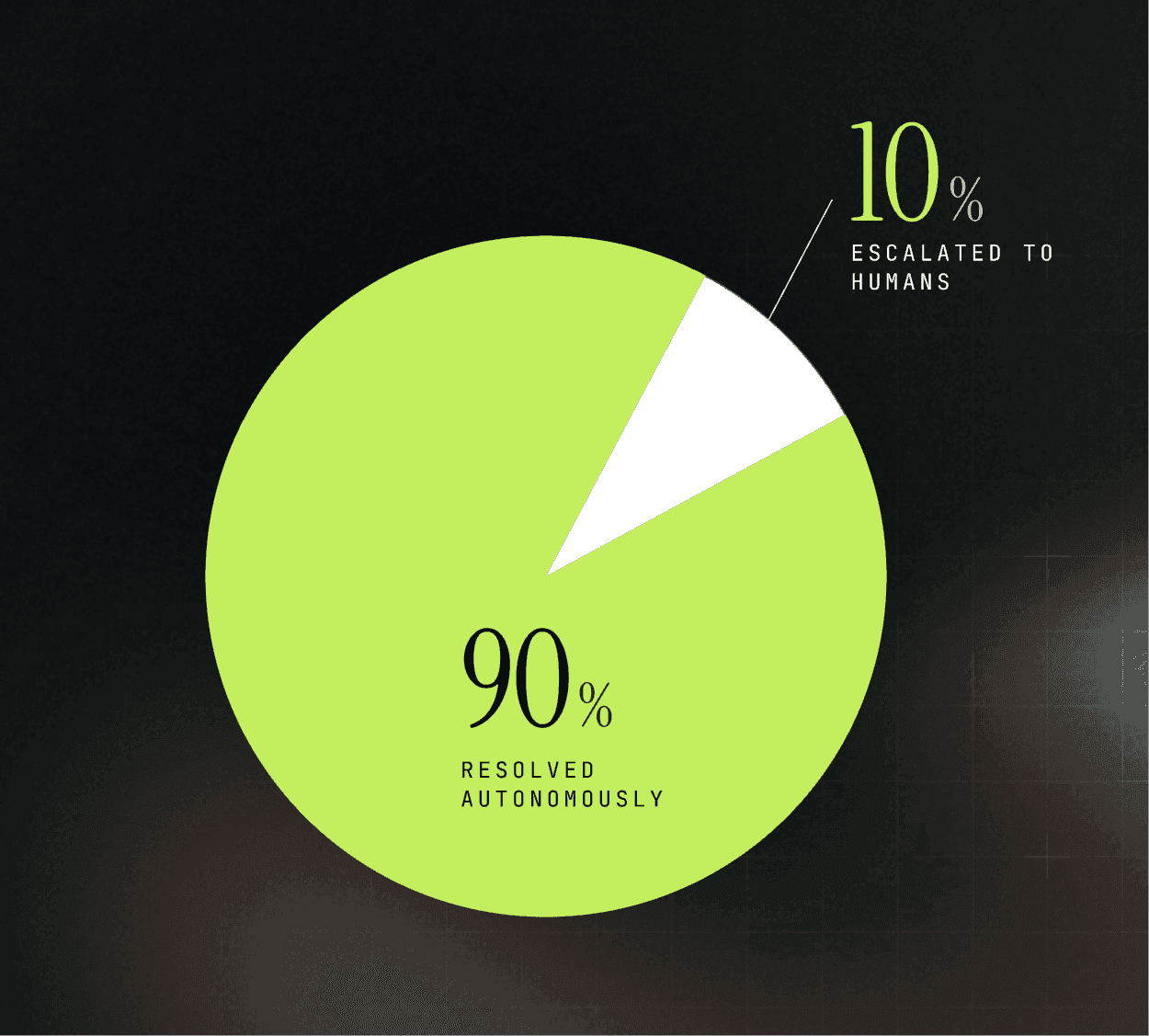
Fini charges a flat $0.49 per resolution, with no per-seat fees, so cost scales with outcomes rather than headcount or conversation volume. Its pricing also includes the Zero Pay Guarantee: if Fini does not reach a 90% resolution rate within 90 days of going live, you are not charged for the shortfall.
What are Intercom Fin and Decagon?
Intercom Fin is Intercom's AI support agent, built on a retrieval architecture plus procedures your team authors on top of the Intercom helpdesk. Intercom itself (renamed Fin in branding as of May 2026) is mid-acquisition by Salesforce, a deal signed in June 2026 that had not yet closed as of this comparison.
Decagon is an independent, Series D-funded (January 2026) AI agent platform built around Agent Operating Procedures, a natural-language workflow-authoring model designed to build a process once and deploy it across channels. Decagon does not publish pricing, a go-live timeline, or a fintech-specific benchmark.
Intercom Fin and Decagon pricing in 2026
Intercom Fin bills $0.99 per outcome with a 50-outcome monthly minimum (roughly $50), on top of separate $29 to $132 per-seat fees for the underlying Intercom helpdesk. That per-seat layer is the detail that changes the total bill most: cost grows with headcount, not just with tickets resolved.
Decagon requires a custom enterprise contract. No per-unit rate, subscription tier, or go-live timeline is published, so a fintech buyer cannot model total cost before a sales conversation.
How Fini compares to Intercom Fin and Decagon
A support ticket that says "my card was declined" or "my transfer is on hold" is not a knowledge-base question. The correct answer depends on the customer's live account state, and getting it wrong risks a compliance issue, not just a bad CSAT score. That is the specific bar fintech buyers should hold all three platforms to, and it is where they diverge most.
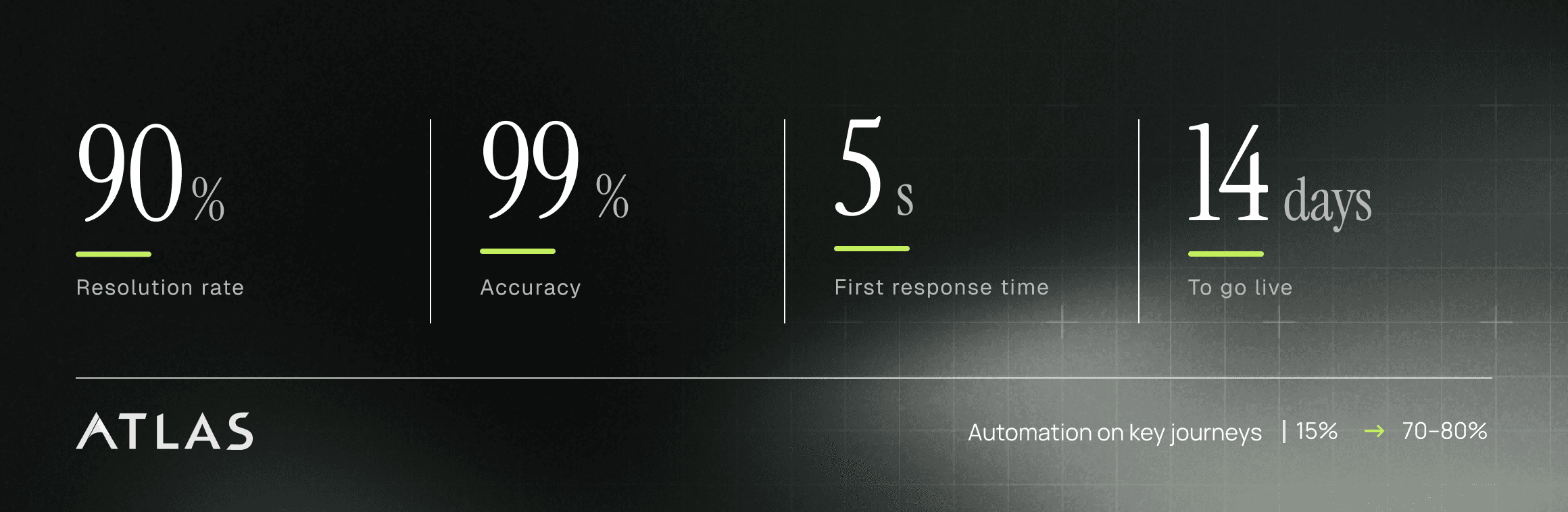
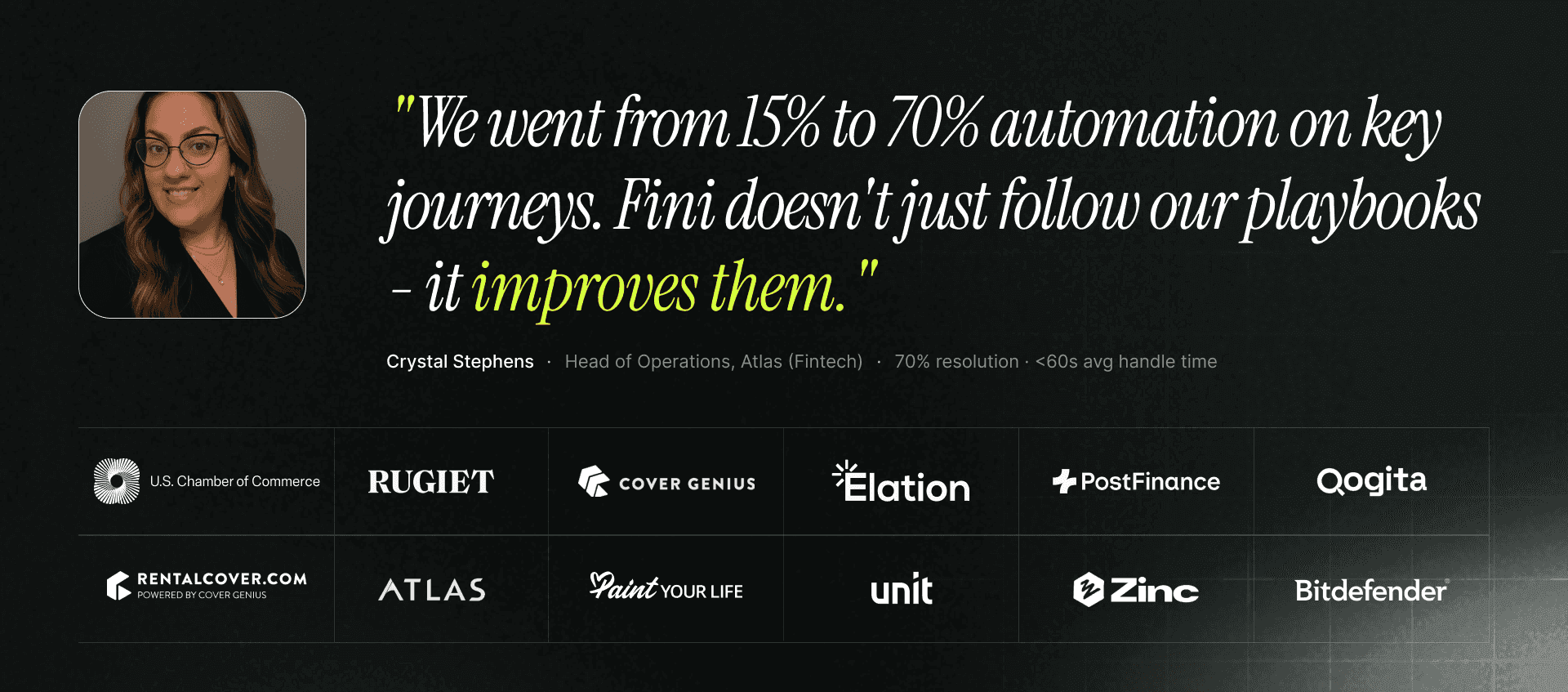
Fini is a third option in this same category: an AI agent priced at a flat $0.49 per resolution with no per-seat fees. One production fintech customer cut wrong-answer escalations from roughly 400 a month to under 30 after switching to Fini, and Atlas, a fintech operator, moved from 15% to 70 to 80% support automation with answers returning in under sixty seconds. Fini also publishes a Zero Pay Guarantee and a 30-day, staged go-live, both of which are usually the two hardest numbers to get out of an enterprise AI vendor during procurement, and neither Intercom Fin nor Decagon publishes an equivalent in the sources reviewed here.
Capabilities side by side
At a functional level, the three platforms ask a fintech buyer to trade off different things. The table below lines up the core capabilities most teams evaluate first.
Capability | Intercom Fin | Decagon | Fini |
|---|---|---|---|
Pricing model | $0.99 per outcome, 50/mo minimum, plus $29 to $132 per seat | Custom enterprise contract, not published | Flat $0.49 per resolution, no per-seat fees |
Architecture | Retrieval, plus procedures your team authors | Agent Operating Procedures, natural-language workflow authoring | Native integrations to claims, billing, CRM, EHR, helpdesk |
Published outcome guarantee | None published | None published | Zero Pay Guarantee: 90% in 90 days or no charge for the shortfall |
Published fintech benchmark | Not published in this comparison | Not published in this comparison | 500-ticket benchmark: 72% to 98% policy-dependent accuracy |
Ownership | Salesforce acquisition signed June 2026, not yet closed | Independent, Series D (January 2026) | Independent, backed by Y Combinator and Matrix Partners |
Feature by feature
Zooming into individual features shows where the account-state-dependent ticket problem actually gets solved, or does not.
Feature | Intercom Fin | Decagon | Fini |
|---|---|---|---|
Channels | Chat, email, via Intercom helpdesk | Chat, voice, email | Voice, chat, email |
Go-live timeline | Not stated in this comparison | Not publicly stated | 30 days, staged |
Workflow authoring | Your team authors procedures on top of retrieval | Natural-language, build-once-deploy-everywhere | Native to the agent, tuned for regulated fintech workflows |
Escalation on account-state tickets | Depends on authored procedures | Depends on configured Agent Operating Procedures | Structured execution against live account state, not just retrieval |
Ease of use and admin experience
Intercom Fin's admin experience is closest to configuring an existing helpdesk: retrieval is built in, and your team writes the procedures for anything beyond a simple lookup. Decagon's Agent Operating Procedures let a non-technical team describe a workflow in natural language and deploy it across channels, which is faster to start than hand-authored logic but still puts the design and maintenance burden on your team.
Fini's onboarding is closer to an implementation project than a build project: connect your existing systems, and Fini goes live in 30 days on top of your own data, with the account-state-dependent logic already built for fintech support rather than something you configure after purchase.
Fini's differentiators
Pricing you can model before a sales call
Fini and Intercom Fin both publish a per-unit rate. Decagon requires a custom quote, so a fintech buyer cannot forecast total cost without a sales conversation.
A guarantee you can hold the vendor to
Of the three platforms in this comparison, only Fini publishes an outcome guarantee. The Zero Pay Guarantee means if Fini does not hit 90% resolution within 90 days of going live, you do not pay for the shortfall.
A fintech-specific number, not a general claim
Fini is the only one of the three with a published fintech benchmark in the sources compared here: 72% to 98% policy-dependent accuracy on a 500-ticket test set, the same account-state-dependent ticket type that decides most fintech support volume.
Vendor stability during your contract term
Intercom Fin is mid-acquisition by Salesforce, a deal signed in June 2026 and not yet closed as of this comparison. Decagon and Fini are both independent, venture-backed companies.
Intercom Fin and Decagon's recognized strengths
Neither of these is a weak product, they are differently positioned. Decagon's natural-language Agent Operating Procedures give non-technical teams a genuinely fast way to stand up and iterate on workflows, and its January 2026 Series D reflects real enterprise scale. Intercom Fin inherits Intercom's existing helpdesk distribution and a broad compliance stack (SOC 2 Type II, ISO 27001, AIUC-1, ISO 27701, and HIPAA on top-tier gated plans), which matters for teams already standardized on Intercom.
For a team that wants to author its own workflows and is comfortable with a custom enterprise contract or per-seat pricing, either platform is a reasonable starting point.
What customers say
Fini customers describe measurable resolution outcomes on live, account-state-dependent support volume. Atlas, a fintech operator, moved from 15% to 70 to 80% support automation with answers returning in under sixty seconds, and one production fintech customer cut wrong-answer escalations from roughly 400 a month to under 30 after switching to Fini.
The full side-by-side
Pulling every verified data point together for a single reference view.
Category | Intercom Fin | Decagon | Fini |
|---|---|---|---|
Pricing | $0.99 per outcome, 50/mo minimum, plus $29 to $132 per seat | Custom enterprise contract, not published | Flat $0.49 per resolution, no per-seat fees |
Guarantee | None published | None published | Zero Pay Guarantee, 90% in 90 days |
Fintech benchmark | Not published | Not published | 72% to 98% on a 500-ticket benchmark |
Go-live timeline | Not stated | Not publicly stated | 30 days, staged |
Compliance | SOC 2 Type II, ISO 27001, AIUC-1, ISO 27701, HIPAA (top-tier gated) | SOC 2 Type II, ISO 27001, HIPAA, GDPR, CCPA, EU AI Act | Confirm directly with Fini for your workload |
Ownership | Salesforce acquisition signed June 2026, not yet closed | Independent, Series D (January 2026) | Independent, Y Combinator and Matrix Partners-backed |
Architecture | Retrieval plus team-authored procedures | Natural-language Agent Operating Procedures | Native vertical integrations, structured execution |
Which should you choose?
If Decagon's natural-language, ops-team-authored workflow model is what your organization is already built around, and budget for a custom contract is not a constraint, it remains a serious enterprise option. If per-seat fees and a pending acquisition make Intercom Fin a harder sell to procurement, or if you need a published fintech benchmark and an outcome guarantee before you can get budget approved, Fini is the option in this comparison that publishes both.
See the full head-to-head against each vendor individually: Intercom Fin vs Fini and Decagon vs Fini.
Compliance
Intercom Fin and Decagon both carry a substantial compliance stack: Intercom Fin lists SOC 2 Type II, ISO 27001, AIUC-1, ISO 27701, and HIPAA on its top-tier gated plans, and Decagon lists SOC 2 Type II, ISO 27001 (2022), HIPAA, GDPR, CCPA, and EU AI Act coverage. See our glossary entry on SOC 2 Type II for what that certification actually covers.
Fini serves fintech and healthcare customers handling regulated data through native integrations into claims, billing, and EHR systems. If compliance certifications are a hard requirement for your deployment, confirm the current status directly with Fini's team rather than assuming parity with either published stack above.
Ready to compare on your own data?
The fastest way to know which of these three is the right fit is to test against your own tickets and your own systems, not a slide deck. Talk to Fini about a live pilot on your own data.
Does Intercom Fin or Decagon publish pricing?
Intercom Fin publishes a per-outcome rate ($0.99, with a 50-outcome monthly minimum) plus separate per-seat helpdesk fees ($29 to $132). Decagon requires a custom enterprise contract with pricing not published.
Does either platform offer a money-back guarantee?
Neither Intercom Fin nor Decagon publishes an outcome guarantee in the sources reviewed for this comparison. Fini publishes a Zero Pay Guarantee: 90% resolution within 90 days of going live, or you are not charged for the shortfall.
Is Intercom Fin still independent?
No. Salesforce signed an agreement to acquire Intercom (renamed Fin in branding as of May 2026) in June 2026, and the deal had not yet closed as of this comparison.
Which is better for a regulated fintech company specifically?
Intercom Fin and Decagon both carry a broad compliance stack (SOC 2 Type II, ISO 27001, HIPAA, and more), but neither publishes a fintech-specific benchmark in the sources compared here. Fini publishes a 500-ticket fintech benchmark showing accuracy rising from about 72% to 98% on account-state-dependent tickets.
Does Fini publish a fintech-specific accuracy benchmark?
Yes. On Fini's published 500-ticket fintech benchmark, policy-dependent accuracy rose from about 72% under retrieval to 98% under structured execution, the same account-state-dependent ticket type (card declines, holds, transfer status) that decides most fintech support volume.
Should I choose Fini over Intercom Fin or Decagon?
If you need a published per-unit price, an outcome guarantee, and a fintech-specific benchmark before you can get budget approved, Fini is the option in this comparison that publishes all three. If your team wants to author its own workflows and a custom enterprise contract is not a constraint, Decagon or Intercom Fin remain reasonable options.