
Gladly built retail commerce AI. Fini built regulated industry support AI.
Gladly is a genuinely strong customer experience platform, and its 2026 rebrand to gladly.ai as an Agentic Commerce Platform shows a company still investing in the category. But its named customers, its integration bench, and its own positioning point at direct to consumer retail: apparel, home goods, crafts, beauty, media. None of that overlaps with fintech or healthcare, where compliance depth and resolution economics matter more than storefront conversion lift.
Fini was built the other way around. It is priced per resolution, backed by Y Combinator and Matrix Partners, and it connects natively to the helpdesk, knowledge base, CRM, billing, claims, and EHR systems that regulated companies actually run on. This page compares the two honestly, including where Gladly is the better fit and where it is not.
In this comparison: What is Fini · What is Gladly · Gladly pricing in 2026 · How they differ · Capabilities side by side · Feature by feature · Ease of use · Fini's differentiators · Gladly's strengths · Customer feedback · Full side-by-side · Which to choose · Compliance
What is Fini?
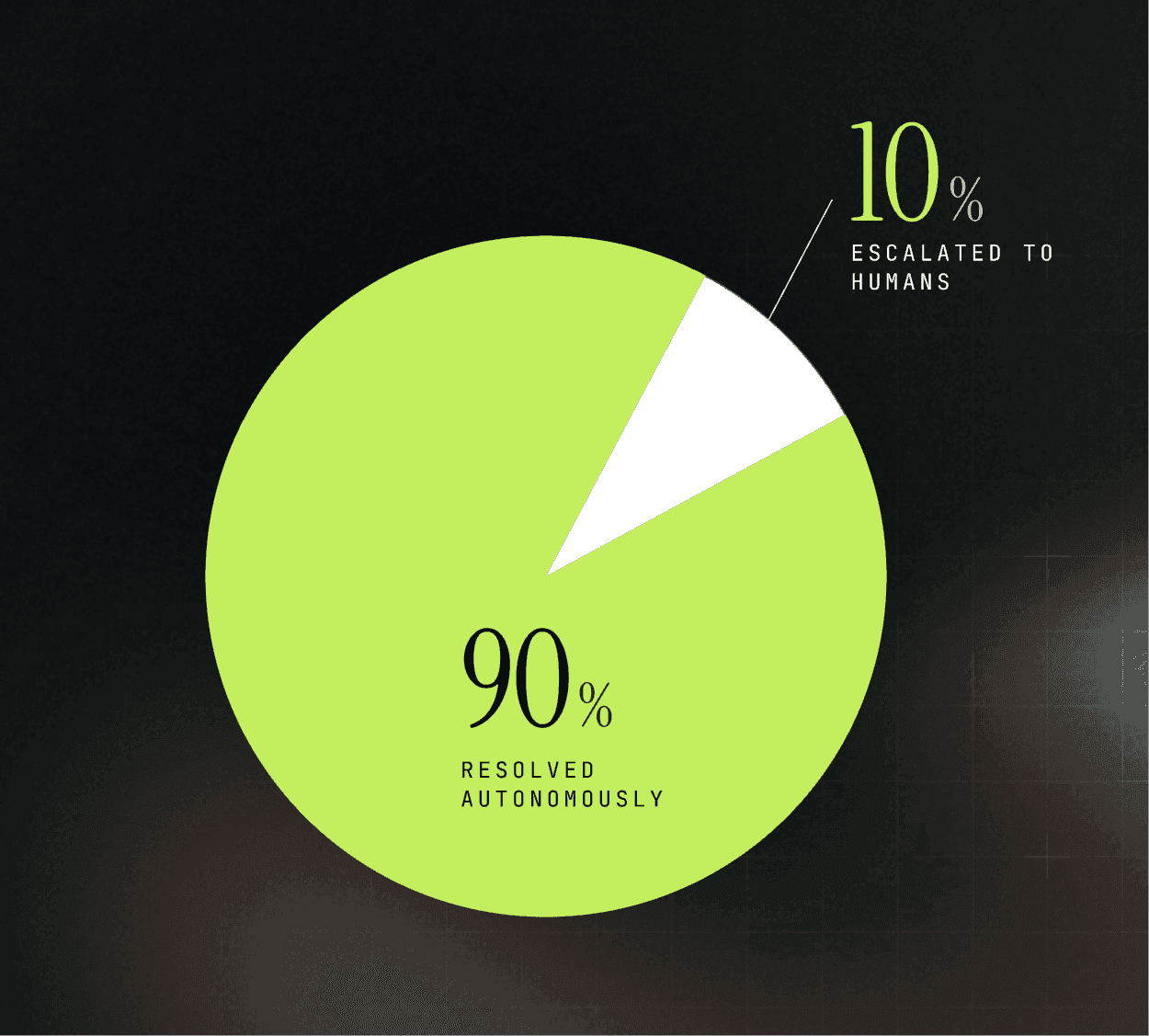
Fini is an AI customer support agent priced per resolution, backed by Y Combinator and Matrix Partners. It connects natively to a company's helpdesk, knowledge base, CRM, billing, claims, and EHR systems, and it handles support across voice, chat, and email in more than 130 languages with roughly a 5 second first response time. Fini reaches a 90% resolution rate at 99% accuracy and typically goes live within 30 days.
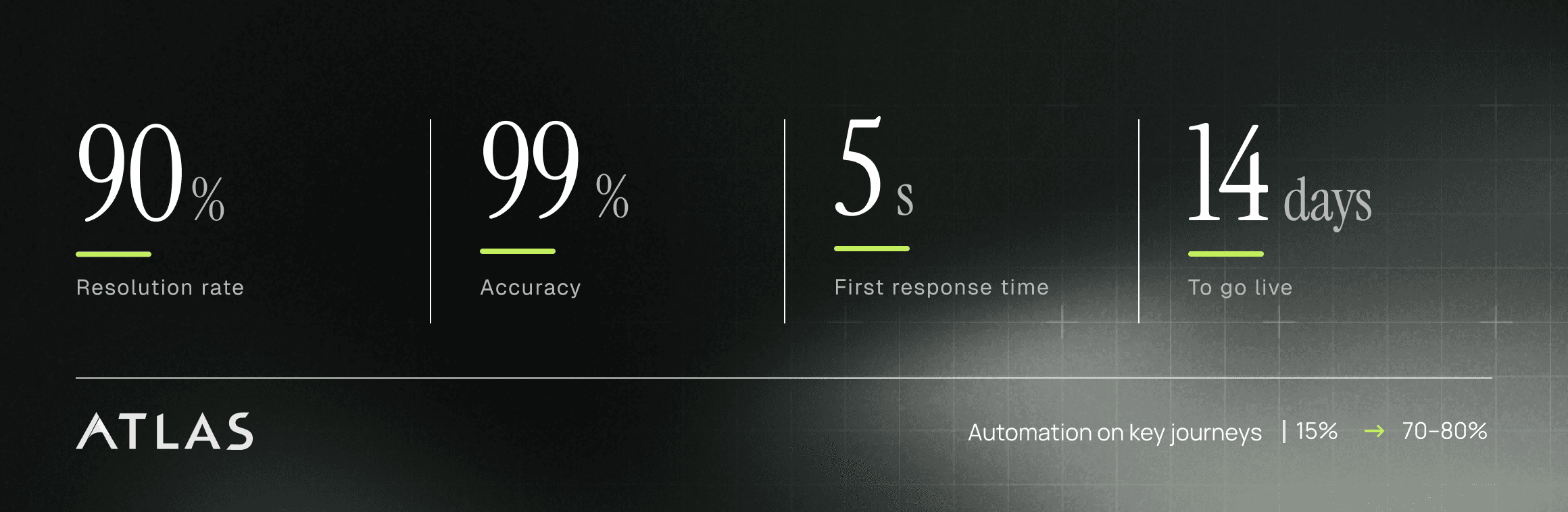
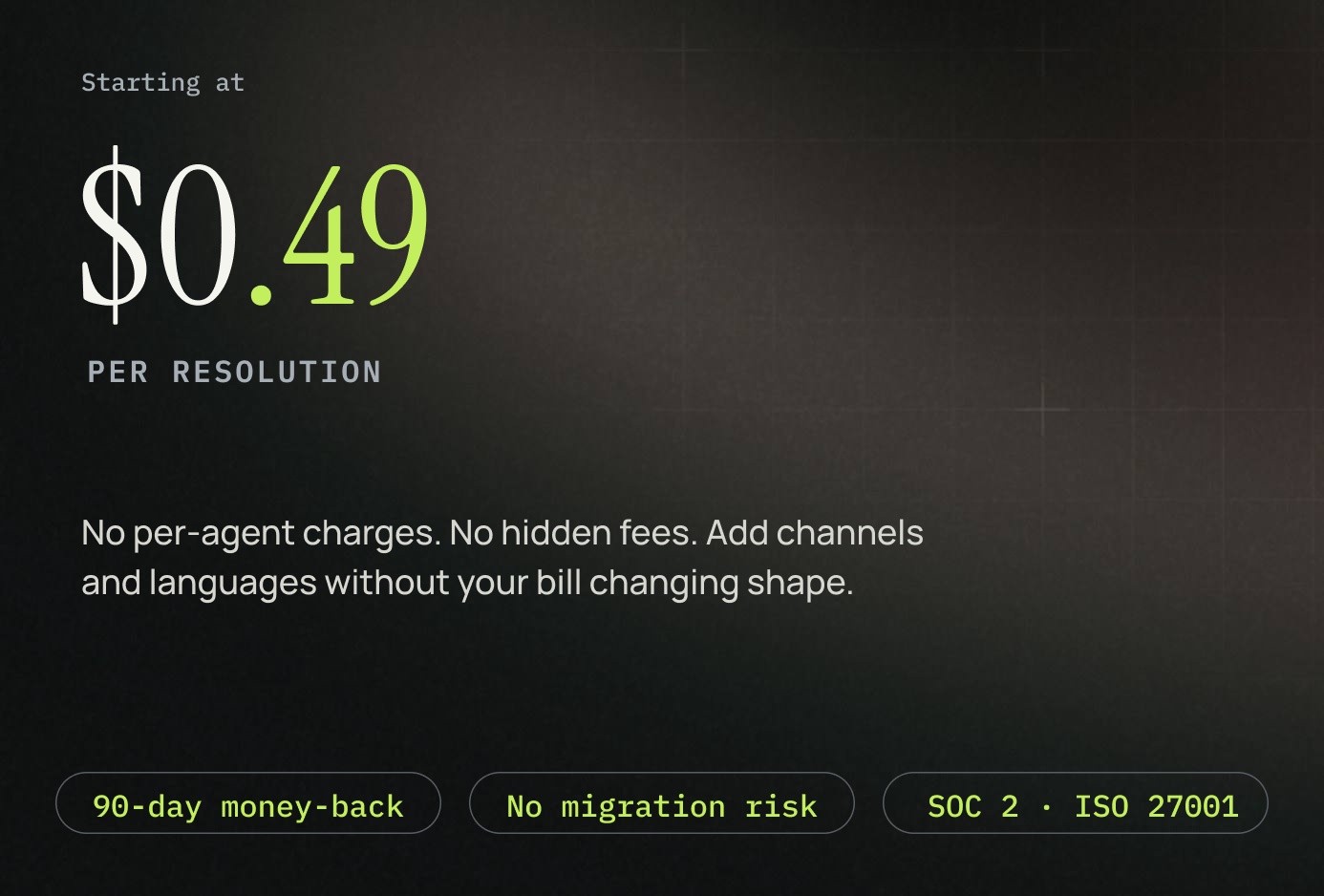
Fini already resolves more than 3 million conversations a month, concentrated in fintech and healthcare, two industries where a wrong answer or a missed compliance step is far more expensive than in retail. Pricing is flat at $0.49 per resolution, with no per-seat fees, and it is backed by a 90-Day Money-Back Guarantee: if Fini does not reach 90% resolution within 90 days, there is no charge for the shortfall.
What is Gladly?
Gladly was founded in 2014 in San Francisco and raised a $50M Series D in 2019, bringing its total funding to roughly $235M. Its long-standing signature idea is the Customer Timeline: every interaction a customer has with a brand across voice, email, text, chat, and social is stitched into one continuous thread organized around the person, not the ticket.
In May 2026, at its Gladly Connect Live event, the company rebranded from gladly.com to gladly.ai and repositioned itself as an Agentic Commerce Platform. Its AI agent layer, Sidekick, now spans core conversation handling, a dedicated voice product, automated high-volume email, and a new Sidekick Sales layer for real-time product recommendations. That is a real broadening of scope, from post-sale service into pre-purchase shopping and conversion.
Gladly's named customers are Bombas, Crate and Barrel, JOANN, Tory Burch, and Ulta Beauty, alongside Breeze Airways, Rothy's, UGG, HOKA, and Conde Nast. Every named account is direct to consumer retail, hospitality, or media. No fintech or healthcare customer shows up in any source we could find.
Gladly pricing in 2026
Gladly does not publish list pricing for its core enterprise platform; it is quote and demo gated. The one public data point is its Shopify App Store listing for smaller merchants, which runs on a usage basis with a per-seat charge on top, under a spend cap the merchant sets. Third-party analyst estimates for the enterprise tiers describe a seat-plus-usage hybrid with enterprise seat minimums, though Gladly itself has not confirmed those figures.
That is the opposite of how Fini prices. Fini is a single, published flat rate per resolution, with no seat minimums and no separate charge for AI assists versus full resolutions. A team can model the cost of Fini before ever getting on a call; modeling Gladly's enterprise cost requires a sales conversation first.
How Fini and Gladly differ
The clearest way to frame the difference is vertical fit. Gladly is built for consumer brands that live and die on storefront conversion and lifetime customer relationships, and its recent Agentic Commerce push doubles down on that: shopping, upsell, and cart recovery folded into the same AI as service. Fini is built for companies where a support conversation might touch a loan decision, a claims status, or a medical record, and where the integration has to reach billing, claims, and EHR systems rather than a Shopify order history.
Neither company is objectively "better." Gladly's G2 scores and case studies are genuinely strong for its category. The difference is what each platform was actually built, sold, and integrated to do.
Capabilities side by side

Capability | Fini | Gladly |
|---|---|---|
Primary vertical focus | Fintech and healthcare | DTC retail, hospitality, media |
Native systems | Helpdesk, knowledge base, CRM, billing, claims, EHR | Helpdesk, Shopify, order and LTV data |
Pricing model | $0.49 per resolution, published | Seat plus usage, custom quoted |
Resolution guarantee | 90-Day Money-Back Guarantee, 90% in 90 days | None found; 99.9% uptime SLA only |
Channels | Voice, chat, email | Chat, email, SMS, social, voice add-on |
Feature by feature
Zooming into individual features, the two products still read as built for different jobs rather than as head-to-head substitutes.
Feature | Fini | Gladly |
|---|---|---|
Resolution rate | 90% at 99% accuracy | Not independently published |
Languages | 130+ | Not specified in Gladly's own materials |
First response time | ~5 seconds | Not specified |
Go-live time | 30 days | "Days instead of weeks" for Shopify merchants |
Monthly volume handled | 3M+ resolutions | Not disclosed |
Backing | Y Combinator, Matrix Partners | Future Fund, Glynn Capital, Greylock, GGV, NEA |
Ease of use and admin experience
Gladly scores well on G2 for ease of use and setup, and reviewers consistently credit the Customer Timeline for keeping context intact across channels. That said, G2 reviewers also note that the AI layer "takes patience initially" and needs real training on product and policy details before it stops giving generic answers, and its faster Salesforce connection runs through a third-party integration layer rather than a first-party one.
Fini is built to connect directly into the systems a fintech or healthcare team already runs, including billing, claims, and EHR platforms, and is designed to go live in 30 days without months of configuration. For a team whose workflows sit outside Shopify-style commerce data, that native depth matters more than a five-minute storefront connector. See how it compares to other Ushur and Zingly setups built for regulated workflows.
Fini's differentiators
Flat pricing with a resolution guarantee
Fini charges a starting rate of $0.49 per resolution with no per-seat fees, and backs it with a 90-Day Money-Back Guarantee: if 90% resolution is not reached within 90 days, there is no charge for the shortfall. Gladly's custom pricing is quote-only, with no equivalent outcome guarantee found anywhere in its published materials.
Native fintech and healthcare integrations
Fini connects directly to billing, claims, and EHR systems alongside the standard helpdesk, knowledge base, and CRM stack. Gladly's deepest native integration is Shopify order and lifetime-value data, which fits a retail workflow but not a claims or clinical one.
90% resolution at 99% accuracy, live in 30 days
Fini publishes a 90% resolution rate at 99% accuracy and a 30-day go-live target. Gladly does not publish an equivalent resolution or accuracy figure for its AI layer.
Backed by Y Combinator and Matrix Partners
Fini's backers include Y Combinator and Matrix Partners. Gladly's funding, a $50M Series D in 2019 and roughly $235M raised in total, is older and larger, but it was raised for a pre-AI customer service platform rather than the agentic support product being compared here.
Gladly's recognized strengths
Credit where it is due. Gladly holds a real, published compliance stack (SOC 2 Type II, PCI DSS, HIPAA with a BAA available, GDPR, and CCPA), and it won 31 number-one rankings across 227 G2 reports in 2025, including the number one spot in AI Agents across all indexes. Its Customer Timeline is a genuinely differentiated architecture for consumer brands, and case studies like Crate and Barrel's $100,000-plus in first-week chat-driven revenue, and JOANN's 93% email backlog cut, are real, sourced outcomes.
None of that is in dispute. It just describes strength in a different category: unified commerce and service for consumer brands, not compliance-heavy support for regulated industries.
What customers say
Gladly reviewers on G2 consistently praise ease of use, ease of setup, and the Customer Timeline's ability to prevent context from falling through the cracks between channels. The most common caveat is that the software is "premium-priced" and that its AI needs setup patience and real training before it stops sounding generic.
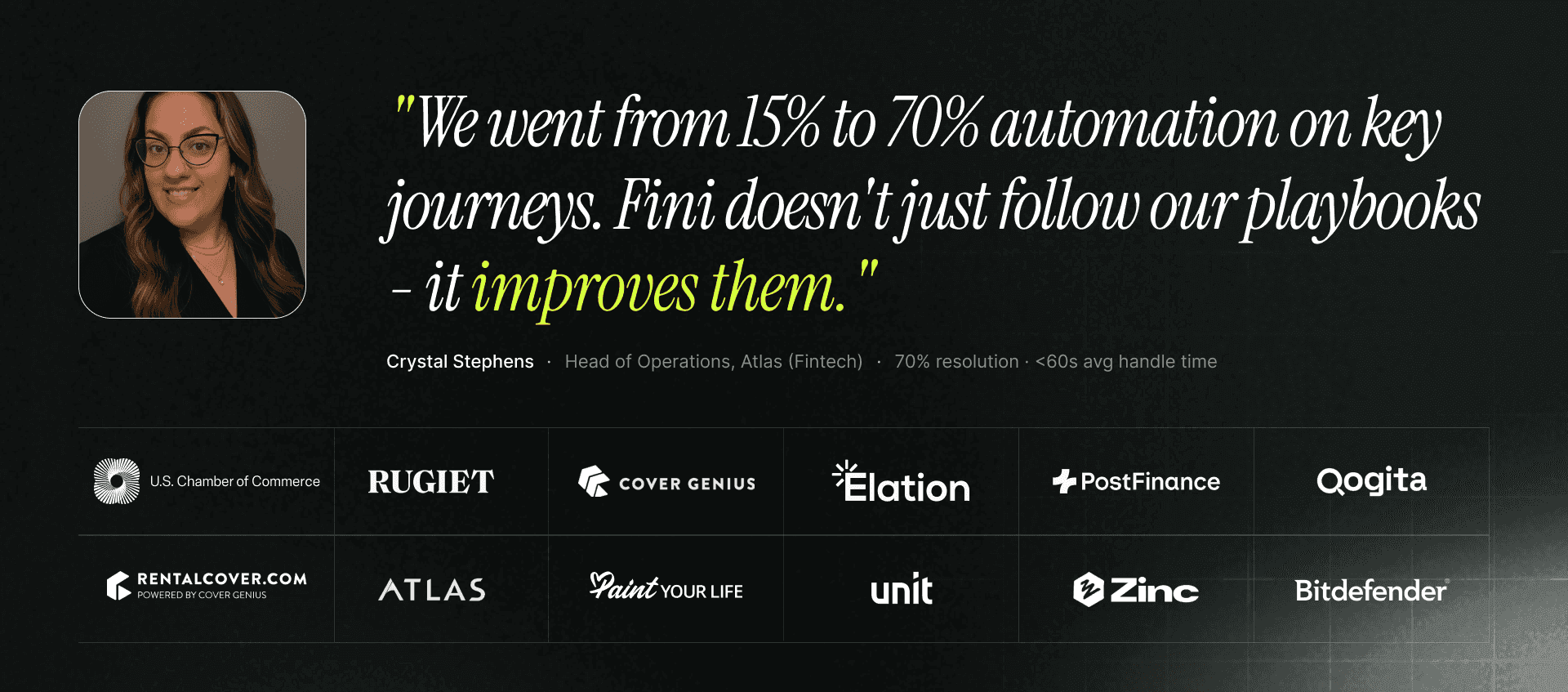
Fini customers in fintech and healthcare describe a different kind of feedback: less about interface polish, more about whether a claims question or a billing dispute actually got resolved correctly on the first try, at a cost per resolution they can forecast in advance.
The full side-by-side
Category | Fini | Gladly |
|---|---|---|
Founded | Y Combinator backed | 2014, San Francisco |
Funding | Y Combinator, Matrix Partners | $50M Series D (2019), ~$235M total |
G2 rating | Not the focus of this comparison | 4.7/5, ~1,086 to 1,100 reviews |
Named customers | Fintech and healthcare accounts | Bombas, Crate and Barrel, JOANN, Tory Burch, Ulta |
Pricing | $0.49 per resolution, starting rate, published | Custom quoted, seat plus usage |
Resolution guarantee | 90-Day Money-Back Guarantee | None published |
Compliance | Built for fintech and healthcare workflows | SOC 2, PCI, HIPAA (BAA), GDPR, CCPA |
Vertical fit | Fintech, healthcare | DTC retail, hospitality, media |
Which should you choose?
If the business is a consumer retail or hospitality brand where the goal is unifying shopping and service into one AI-driven customer relationship, Gladly's Customer Timeline and its new Agentic Commerce push are a legitimate, well-reviewed choice. Its G2 scores back that up.
If the business is in fintech or healthcare, where a support conversation can touch a loan, a claim, or a medical record, and where predictable per-resolution economics and a resolution guarantee matter, Fini is the closer fit. It is worth comparing against other regulated-industry options too, such as Quiq, before deciding.
Compliance
Gladly's compliance stack is real and worth stating plainly: SOC 2 Type II, PCI DSS, HIPAA with a Business Associate Agreement available on request, GDPR, and CCPA, verified directly on its own security page. That HIPAA support is offered as a BAA add-on rather than a HIPAA-native architecture built around clinical workflows, and there is no claim of core-banking-grade compliance depth.
Fini is built around the connections regulated industries already depend on: billing, claims, and EHR systems, in addition to the standard helpdesk and CRM layer. For a team whose compliance requirements start with claims or clinical data rather than payment card data, that native depth is the more direct fit. Full details on the underlying certifications are documented in the G2 Gladly reviews and Gladly's own security page.
Ready to compare on your own data?
The honest answer is that Gladly and Fini are built for different companies. See the Fini pricing page for the flat per-resolution rate, or talk to the Fini team to run your own fintech or healthcare support volume against the 90% resolution, 99% accuracy benchmark and the 90-Day Money-Back Guarantee.
Is Gladly a good fit for fintech or healthcare support?
Not really. Gladly holds real compliance certifications including HIPAA support via a Business Associate Agreement, but every named customer is DTC retail, hospitality, or media, and its deepest integrations are built around Shopify order data rather than claims or EHR systems. Fini is built specifically for fintech and healthcare workflows.
How does Fini's pricing compare to Gladly's?
Fini charges a flat published rate of $0.49 per resolution with no seat fees. Gladly's custom pricing is quote-only and, per third-party estimates, runs on a seat-plus-usage model with enterprise seat minimums.
What is Gladly's Agentic Commerce Platform?
In May 2026, Gladly rebranded from gladly.com to gladly.ai and launched Agentic Commerce capabilities, extending its AI beyond post-sale service into pre-purchase shopping, product recommendations, and cart recovery.
Does Fini offer a resolution guarantee like Gladly?
Fini backs its service with a 90-Day Money-Back Guarantee: if it does not reach a 90% resolution rate within 90 days, there is no charge for the shortfall. Gladly publishes a 99.9% uptime SLA but no equivalent resolution-outcome guarantee.
Which companies use Gladly?
Gladly's named customers include Bombas, Crate and Barrel, JOANN, Tory Burch, Ulta Beauty, Breeze Airways, Rothy's, UGG, and Conde Nast, all direct to consumer retail, hospitality, or media brands.