Last Updated:

Deepak Singla

IN this article
Explore how AI support agents enhance customer service by reducing response times and improving efficiency through automation and predictive analytics.
One in four tickets still lands on a human when you run Fin. For a fintech team at volume, that is not a rounding error. You need audit trails, real account actions, consistent handling across voice, chat, and email, and a compliance stack you can show your security team before the demo. Fin and Decagon are the two names that come up most, but they handle those requirements very differently. Here's a straight comparison of both so you can figure out which one, if either, actually fits what you're building.
TLDR:
Fin holds a 76% resolution rate and is chat-first. Decagon takes six weeks to deploy at a $432,750 median annual contract.
Neither Fin nor Decagon ships with a full compliance stack before you sign. SOC 2 Type II, ISO 27001, and BAA docs surface only after contract negotiation starts.
Both tools require manual maintenance to hold resolution quality. Neither closes the learning loop when a human resolves an escalated ticket.
Fin stacks $0.99 per outcome on top of per-seat fees. Decagon has no public pricing floor. Neither offers a performance guarantee.
Fini runs voice, chat, and email on one reasoning layer, holds Resolution Rate 90% at 99% accuracy, and backs it with the Zero-Pay Guarantee: 90% resolution in 90 days, or you pay $0.
What Intercom Fin Does
Intercom Fin is an AI support agent built natively into the Intercom helpdesk. It handles chat-based ticket resolution and escalates to human agents when it cannot resolve. Pricing runs $0.99 per outcome on top of per-seat plan fees, though as one 2026 pricing breakdown notes, the combined bill can be hard to predict. Salesforce agreed to acquire Intercom for approximately $3.6B in June 2026, with closing expected in fiscal Q4 2027. Fin's strength is its deep integration with Intercom's existing workflow, though its coverage is largely chat-first.
What Decagon Does
Decagon is an enterprise AI support agent built around agentic, LLM-driven resolution. It positions itself above the chatbot tier in any Decagon vs Fini comparison, handling complex multi-step support workflows with a services-heavy deployment model. Setup typically runs around six weeks. Pricing is entirely sales-gated with no public figures, though Vendr's median contract sits at $432,750 per year. There is no free trial and no self-serve signup. Decagon integrates with major helpdesks and supports voice, though the full channel stack depends on configuration scoped during onboarding.
How Fin and Decagon Handle Fintech Support
Fintech support has specific demands that generic AI tools struggle with: PII handling, full audit trails on every decision, and the ability to take real actions, like processing refunds or updating account data without a human involved. The best AI support platforms for compliance-heavy fintech cover all three.
Fin handles chat resolution well within Intercom's ecosystem, but its fintech readiness is limited. Audit trails, compliance certifications, and agentic actions beyond the helpdesk require additional configuration or are absent entirely.
Decagon goes deeper on agentic workflows and does serve some fintech customers, but a six-week deployment timeline and $432,750 median annual contract mean most mid-market fintech teams are priced and timed out before they see results. Neither ships pre-configured for compliance-heavy support.
Channel Coverage: Chat, Email, and Voice
Fin handles chat natively. Email and voice exist as additional surfaces, but they sit on separate configurations instead of a shared reasoning layer. A policy update in chat does not automatically carry to email handling, and the audit trail fractures across channels.
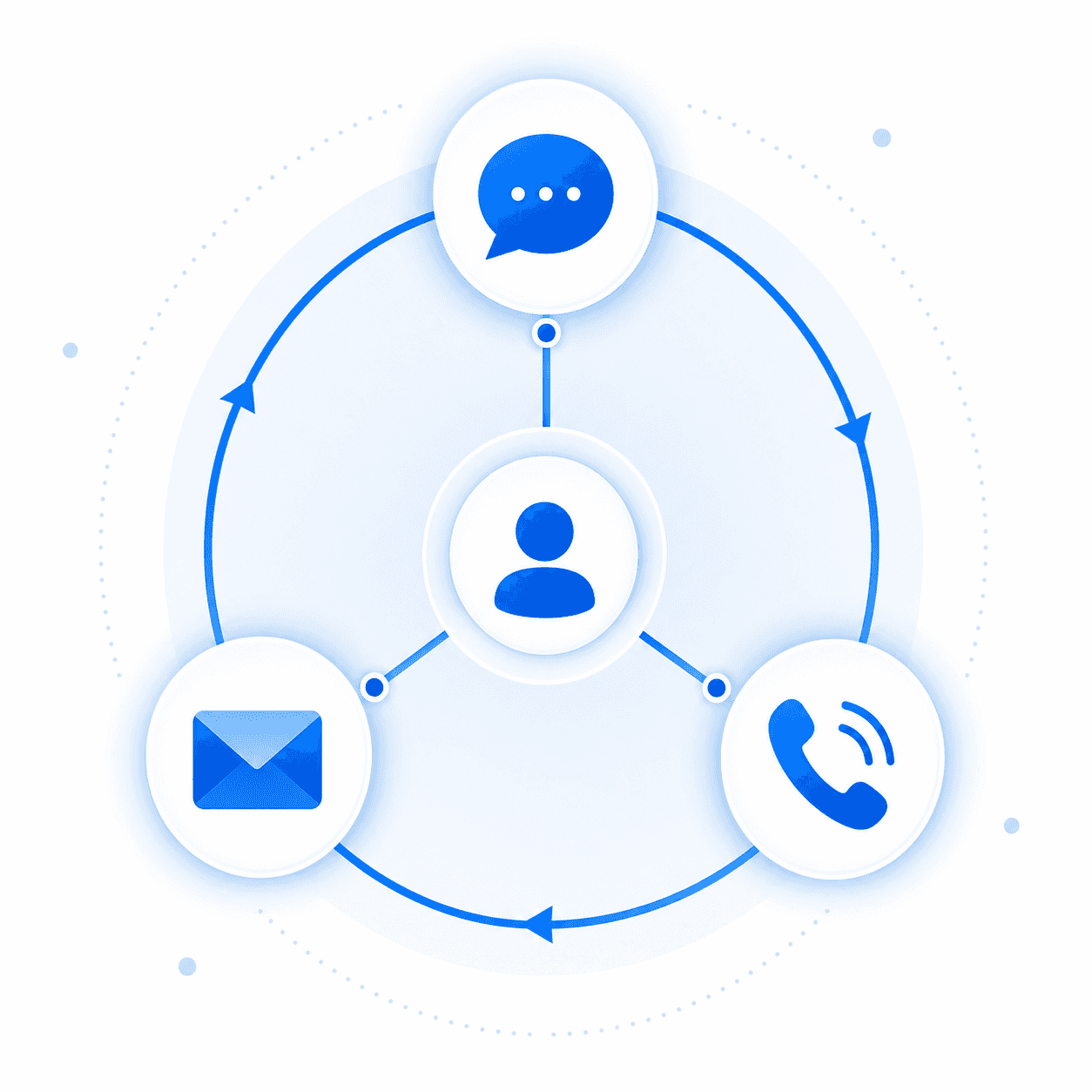
Decagon covers voice and chat, with deployment scope determined during onboarding. Voice quality is strong, but email handling depends on the contract configuration.
The practical problem for fintech teams is consistency. When a customer escalates from chat to a phone call, the agent reasoning behind both interactions should be identical. With Fin or Decagon, it often is not. The channels were not built as one. See the guide to fintech support compliance automation for more.
Resolution, Learning, and Maintenance Overhead
Both Fin and Decagon require ongoing human maintenance to hold their resolution quality. Fin's errors surface through manual QA reviews, and correcting them means patching flows or updating knowledge sources by hand. There is no mechanism that learns from what human agents actually resolved.
Decagon's escalation path runs one direction: AI flags, human takes over. But the resolution the human reaches stays in the ticket. It does not feed back into the agent. Decagon's handoff model does not close that learning loop automatically.
The cumulative cost is real. Support ops teams end up running a monthly maintenance cycle, reviewing failures, patching gaps, and re-testing edge cases. That work does not appear in a vendor's pricing sheet, but it factors heavily into AI customer support TCO and ROI. It shows up in team capacity.
Pricing Transparency and Commercial Terms
Fin charges $0.99 per outcome on top of existing per-seat plan fees, which makes the real annual cost hard to model before you sign. Decagon publishes nothing publicly. The only external read is Vendr's median contract of $432,750 per year, with no free trial and no self-serve path to test before committing.
For a fintech VP of CX building a board-ready business case, neither option gives you a clean number. See the VP of CX evaluation guide for a fuller comparison.
Per-outcome pricing stacked on seats rewards vendor usage, not customer outcomes. A six-figure sales-gated contract with no public floor makes internal approval harder, not easier.
Compliance Posture for Compliance-Heavy Industries
Fin carries SOC 2 and GDPR coverage within the Intercom ecosystem, but the posture is partial.
HIPAA-compliant handling and BAA eligibility are not confirmed publicly on Intercom's trust page, and audit trail coverage across channels is incomplete. For a fintech or healthcare buyer in an internal security review, that gap is a blocker.

Decagon's compliance documentation is similarly opaque. The product is sales-gated from the first conversation, so the security posture only surfaces during contract negotiation. For teams that need a SOC 2 Type II report, ISO 27001 certification, and BAA availability before they can propose a vendor internally, that sequencing creates real delays.
Enterprise buyers in fintech and healthcare need SOC 2 Type II, PCI DSS Level 1, ISO 27001, GDPR, HIPAA-compliant, BAA-eligible, and CCPA covered before the demo, not after the contract. The most compliant AI support platforms for fintech ship with this documentation upfront.
Where Fin Falls Short for Fintech Teams
Fin's 76% average resolution rate means roughly one in four tickets still lands on a human agent. For a fintech team running high volumes, that is not a rounding error.
The chat-first architecture compounds it. Voice and email sit outside Fin's core reasoning layer, so fintech teams that need consistent handling across channels end up managing multiple configurations instead of one agent.
Error correction is manual. When Fin gets something wrong, someone on your ops team finds it, patches it, and re-tests. That cycle repeats monthly.
Pricing adds the final pressure. At $0.99 per outcome stacked on per-seat plan fees, volume growth does not lower your cost per resolution. It raises your bill without a performance guarantee attached.
Where Decagon Falls Short for Fintech Teams
Decagon's roughly six-week deployment timeline is a structural issue for fintech teams that need to move faster than a procurement cycle. White-glove onboarding sounds reassuring until your ticket volume spikes mid-implementation.
That gap compounds over time. The same ticket type resurfaces week after week at the same failure rate, and no vendor-side mechanism closes it. Your ops team absorbs the repeated manual work, and the agent never improves on its own.
Pricing is entirely opaque. With no public pricing floor and no self-serve path, a fintech CX leader cannot build a clean business case without first committing to a sales process. That sequencing is backwards for fintech and healthcare buyers who need numbers before they need a contract.
Compliance follows the same pattern. SOC 2 Type II, ISO 27001, and HIPAA-compliant documentation are not publicly verifiable before you engage, which is why reviewing the safest AI support vendors for fintech matters before any sales process begins. Security reviews stall for weeks before a deal even starts.
Why Fini Resolves What Fin and Decagon Can't
Fin resolves 76% of tickets. Decagon closes the gap but requires a six-week runway, a six-figure commitment, and a compliance conversation that starts after you sign. We built Fini because both of those trade-offs are unacceptable for fintech teams running real volume under regulatory scrutiny.
The number is 90% Resolution Rate at 99% accuracy. Atlas went from 15% to 70% automation on key support journeys after deploying Fini. For context on how that stacks up, see the best AI support platforms for autonomous resolution. That gap is a different category, not an incremental improvement.
The compliance stack ships with the product: SOC 2 Type II, PCI DSS Level 1, ISO 27001, GDPR, HIPAA-compliant, BAA-eligible, CCPA. Before the demo, not after the contract.
Three things Fini does that Fin and Decagon cannot:
Voice, chat, and email run on one reasoning layer, so one policy update carries across all three channels simultaneously with a single audit trail.
Knowledge Atlas detects its own gaps, drafts corrections, and surfaces them for review. The learning loop closes automatically, and your ops team reviews edge cases while Fini handles the rest.
The rollout runs Day 1, Day 14, Day 30: Knowledge Agent live on Day 1, Agentic workflows across billing and CRM by Day 14, full autonomy by Day 30.
We back it with the Zero-Pay Guarantee: 90% resolution in 90 days, or you pay $0.
Fini's Pricing vs. Fin and Decagon
Fini | Intercom Fin | Decagon | |
|---|---|---|---|
Pricing model | Per resolved ticket | $0.99/outcome + per-seat fees | Sales-gated, no public floor |
Entry price | Starts at $0.49/resolution | Seat plan required first | ~$432,750/yr median (Vendr) |
Free trial | 90-day pilot (Enterprise) | 14-day trial | None |
Performance guarantee | Yes, Zero-Pay Guarantee | No | No |
Fin stacks a $0.99 per-outcome charge on top of existing per-seat plan costs. Volume grows, the bill grows, and no performance floor comes with it. Decagon's median annual contract runs $432,750, with pricing only visible after you're deep in a sales process.
Fini charges per resolved ticket only, starting at $0.49 per resolution, with no named tiers. No seat fees. Escalations are free. A charge only triggers when a ticket resolves without a human.
The number a CFO cares about: we absorb the performance risk. The Zero-Pay Guarantee is exact: 90% resolution in 90 days, or you pay $0. Fin and Decagon offer no equivalent. You pay regardless of what the resolution rate turns out to be. For a detailed breakdown, see the Fin vs Zendesk AI vs Fini pricing comparison.
How to Vet AI Support for Fintech
Five questions worth asking any vendor before you commit.
What resolution rate do you guarantee, in writing, and what happens if you miss it?
Can you share your SOC 2 Type II report, ISO 27001 certificate, and BAA availability before you sign?
Do voice, chat, and email run on the same reasoning layer with a single audit trail, or are they separate configurations?
When the agent gets something wrong, who fixes it and how long does that take?
What is the actual price per resolution, and what fees sit underneath it?
Fin can answer one of those cleanly. Decagon can answer two, eventually, after a sales process that takes weeks. Any vendor that hedges on the guarantee question or gates the compliance docs behind a contract conversation is telling you something.
The fastest way to cut through vendor claims is a live benchmark on your own data. Send 1,000 real tickets. Any agent worth deploying should return a resolution rate on your actual volume before you commit to a contract, a migration, or six weeks of onboarding.
We run this with every prospect. The benchmark runs on your data, you see the number, and you decide.
We run this with every prospect. The benchmark runs on your data, you see the number, and you decide.
Final Thoughts on Finding the Right AI Support Agent for Fintech
For most fintech CX teams, the problem with Fin and Decagon comes down to two things: no performance guarantee and compliance documentation that shows up late. Those two gaps tend to stall internal approvals and stretch deployment timelines past what the business can absorb. The fastest way to cut through is to test on your own data. Book a 30-minute call and we'll show you the number before you decide.
FAQ
Is Intercom Fin better than Decagon for fintech support teams?
Neither ships pre-configured for compliance-heavy support. Fin resolves around 76% of tickets through a chat-first architecture with incomplete audit trail coverage across channels, while Decagon goes deeper on agentic workflows but requires a six-week deployment and a median annual contract of $432,750 with no public compliance documentation available before you sign.
How does Decagon's pricing compare to Intercom Fin's pricing?
Fin charges $0.99 per outcome stacked on top of existing per-seat plan fees, making the real annual cost hard to model. Decagon publishes nothing publicly, with Vendr's median contract sitting at $432,750 per year, no free trial, and no self-serve path. Neither offers a performance guarantee, so you pay regardless of the resolution rate you actually get.
When should a fintech team choose Decagon over Intercom Fin?
If your team needs deeper agentic workflows and has six weeks for deployment plus a budget above $400K annually, Decagon goes further than Fin on complex multi-step resolution. If your volume runs through chat within the Intercom ecosystem and your compliance requirements are limited, Fin is faster to start but carries the same maintenance overhead and no learning loop.
Do Intercom Fin and Decagon support voice, chat, and email on a shared reasoning layer?
No. Fin handles chat natively with voice and email on separate configurations, so a policy update in chat does not carry to email automatically and the audit trail fractures across channels. Decagon covers voice and chat with deployment scope set during onboarding, but channel consistency depends on how the contract is configured, not a single unified reasoning layer.
What compliance certifications should you confirm before choosing between Intercom Fin and Decagon for fintech and healthcare?
Any fintech or healthcare buyer needs SOC 2 Type II, PCI DSS Level 1, ISO 27001, GDPR, HIPAA-compliant, BAA-eligible, and CCPA coverage confirmed before the demo, not after the contract. Fin's posture covers SOC 2 and GDPR within the Intercom ecosystem but HIPAA-compliant handling and BAA eligibility are not publicly documented. Decagon's compliance documentation only surfaces during contract negotiation, which stalls internal security reviews by weeks.
Related guides
Explore the guide topics to find more reading.
Co-founder