Last Updated:

Deepak Singla

IN this article
Explore how AI support agents enhance customer service by reducing response times and improving efficiency through automation and predictive analytics.
Most Sierra and Decagon deployments take months to go live and leave your team owning the maintenance. That's the comparison worth running before you sign anything: not features, but how much of the build, the behavior tuning, and the post-launch upkeep lands on your team.
TLDR:
Sierra requires months to deploy and Year-1 spend reportedly runs $200K to $350K+, with your team owning all configuration.
Decagon covers voice, chat, and email with pre-built procedures, but engineers still own the build and every procedure update.
Neither Sierra nor Decagon publishes pricing. Both vendors require a sales conversation before you see a number.
Ask every vendor four questions: written resolution definition, post-go-live ownership, signed BAA availability, and audit trail export format.
Fini goes live in 14 days, prices at $0.49 per resolution, and backs it with a Zero Pay Guarantee: 90% resolution in 90 days, or you pay $0. Enterprise customers get a 90-day free pilot on live traffic.
What Sierra and Decagon actually are
Sierra and Decagon are both enterprise AI agent vendors, but they come from different starting points.
Sierra, founded by Bret Taylor and Clay Bavor, positions itself as a builder's toolkit for customer-facing AI agents. It sells to Fortune 500 companies on outcome-based contracts and is built for organizations that want to configure their own agent behavior from the ground up.
Decagon is purpose-built for customer support, handling chat, email, and voice through defined procedures and API-connected actions.
Both require a sales process to get pricing. Neither offers a self-serve path in.
How Sierra and Decagon differ in core approach
Sierra's architecture is built around multi-agent orchestration. Specialized agents coordinate to handle complex, branching conversations, with Sierra's reasoning layer deciding which agent handles each step. It appeals to enterprises that want to build proprietary agent behavior instead of buying a pre-configured one.
Decagon takes a more deterministic path. Its Agent Operating Procedures define exactly how the agent behaves in a given situation, step by step. AOPs are written procedures the agent follows, making behavior predictable and auditable, but requiring more upfront definition work from the buyer's team. For a broader look at how the field has advanced, see our guide to autonomous customer service platforms.
Sierra gives you the orchestration layer and expects you to build on it. Decagon gives you a structured procedure framework and expects your team to write the procedures.
Agent capabilities and automation depth
Both vendors support action-taking beyond simple Q&A. Sierra's agents execute multi-step workflows across systems, though the configuration burden sits with the buyer's team. Decagon's agents follow Agent Operating Procedures and connect to backends via APIs and MCP, handling real actions like account updates and data lookups, with built-in simulation testing to validate behavior before going live.
Where they diverge is in who owns the complexity. Sierra hands you the tools. Decagon hands you a framework. Either way, your team is writing the playbook.
Omnichannel coverage: voice, chat, and email
Decagon covers chat, email, and voice out of the box. Its voice agents are designed for enterprise volume, with low latency and omnichannel consistency as core design goals. Sierra also spans multiple channels, but the configuration work falls on the buyer's implementation team.
The practical gap shows up at deployment. Decagon ships with channel coverage pre-built into the product. Sierra requires building channel behavior into your agent configuration. For enterprises already stretched across vendors, that distinction matters more than it looks on a feature checklist. The best AI support platforms for autonomous resolution handle channel coverage as a default, not a build task.
Integration architecture and technical depth
Fini connects to Zendesk, Salesforce, Intercom, and your CRM or EHR from Day 1 with no code required. By Day 14, billing systems, claims data, and account management workflows are live, and the agent takes real actions across your stack.
Sierra takes a building block approach: your team defines how each integration behaves inside the agent configuration layer. The flexibility is real, but so is the build time.
Decagon connects via APIs and MCP across helpdesks, CRMs, and backend systems, with SOC 2 Type II, ISO 27001, PCI DSS, and HIPAA on its compliance list. Engineering involvement is still required before the agent can act.
For any buyer already on Zendesk or Salesforce, the question is whether your engineering team is scoping weeks or months to go live.
Deployment timeline and post-launch ownership
Sierra's implementation timeline is white-glove and it shows. Contracts reportedly start near $150K a year, and Year-1 budgets including implementation fees commonly run $200K to $350K or more. Deployment is measured in months, with a dedicated Sierra team guiding configuration. That model works for organizations with the budget and internal bandwidth to absorb it.
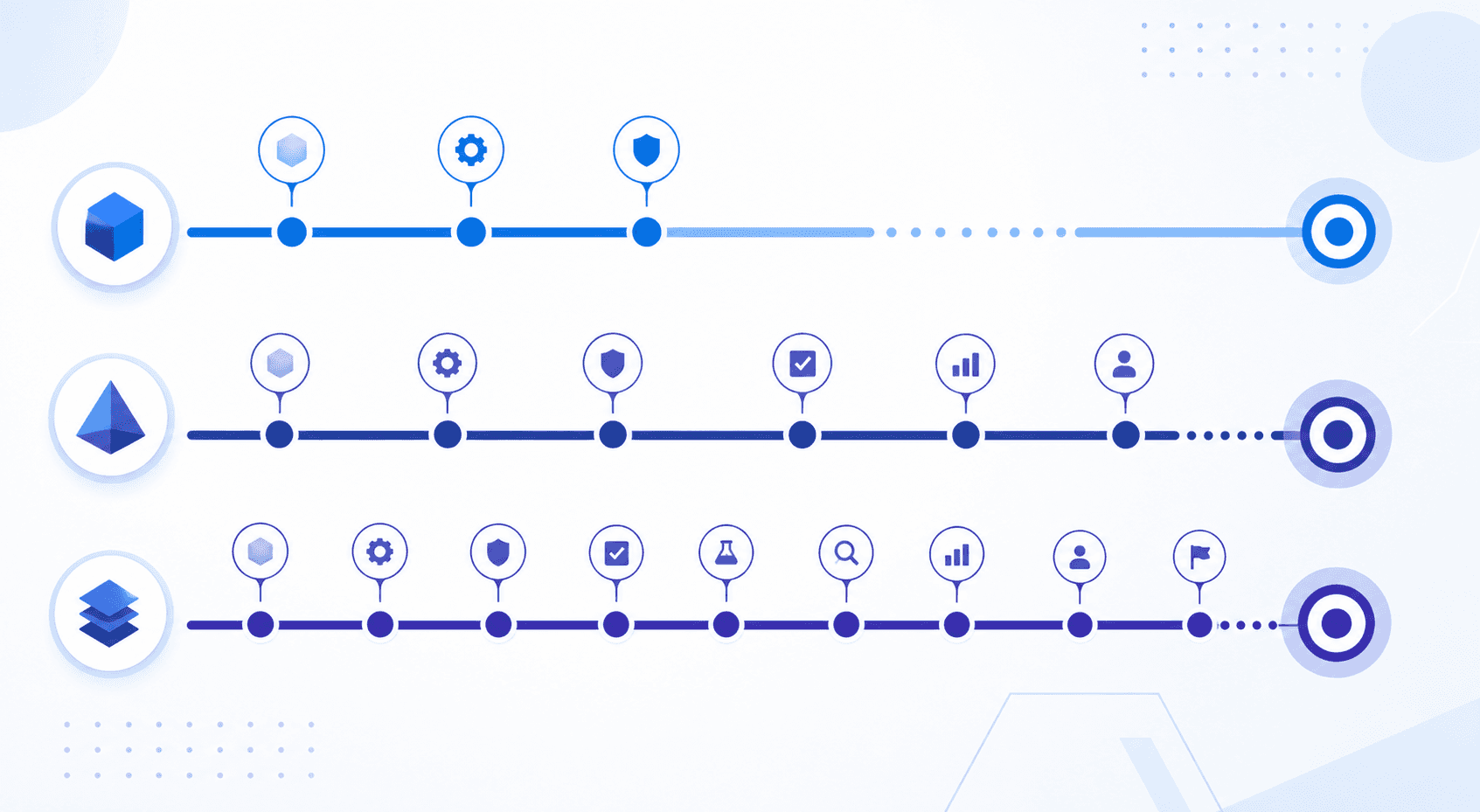
Decagon moves faster, but engineering involvement is still required before the agent handles real traffic. Your team owns the Agent Operating Procedures, the API connections, and the pre-launch simulation testing.
Post-launch ownership is where the real cost hides. With Sierra, your team owns agent configuration and any behavior changes. With Decagon, updating procedures means someone rewrites the procedures. Neither agent maintains itself.
Fini goes live in 14 days. By Day 30, the agent runs at full autonomy with self-learning active. Knowledge gaps get detected and surfaced automatically. Your team reviews edge cases. The agent handles the rest, without a monthly retuning cycle.
AI oversight, quality controls, and escalation handling
Every answer Fini scores before resolving. High confidence resolves automatically. Mid confidence drafts a response for agent review. Low confidence or anything legally sensitive escalates with full context attached, including an AI-generated conversation summary so the human agent doesn't start cold. Every decision produces an audit trail, exportable via API or to your SIEM.
Decagon's quality controls are front-loaded: you define procedures, run simulations, and validate behavior before the agent touches live traffic. Sierra's governance is possible but depends on how your implementation team configured it.
For fintech and healthcare buyers, that gap is a compliance question, not a feature comparison. An agent that resolves without logging is a liability in fintech or healthcare. See how the safest AI support vendors for fintech handle audit trails by default. Fini is SOC 2 Type II, PCI DSS Level 1, ISO 27001, GDPR, HIPAA-compliant, and BAA-eligible by default, with every decision traceable to a single authoritative source article.
Pricing models and cost transparency
Neither Sierra nor Decagon publishes a rate card.
Vendor | Pricing Model | Year-1 Cost (est.) | Deployment Timeline | Post-Launch Ownership | BAA Available |
|---|---|---|---|---|---|
Sierra | Outcome-based contract; no public rate card | $200K to $350K+ (incl. implementation) | Months | Buyer's engineering team | Not publicly documented |
Decagon | Per-conversation or per-resolution; no public rate card | Not published; sales conversation required | Faster than Sierra; engineering required | Buyer's team owns procedures and API connections | Not confirmed publicly |
Fini | $0.49 per resolution; platform + implementation included | 90-day free Enterprise pilot; pay only on results | Live in 14 days; full autonomy by Day 30 | Self-maintaining; Knowledge Atlas detects its own gaps | Yes, by default; signed before contract |
Sierra sells on outcome-based contracts. According to third-party estimates, contracts reportedly start near $150,000 a year, with implementation fees adding another $50,000 to $200,000 on top. Year-1 spend commonly runs $200K to $350K or more before the agent is fully live.
Decagon publishes no price or trial. Every number goes through a sales conversation. Per-conversation or per-resolution contracts are available, but no public figure confirms where pricing lands.
For a VP CX building a business case, both vendors require a leap of faith on cost before a single ticket is resolved. A full view of the best AI support platforms for CX leaders puts those numbers in context.
Fini prices at $0.49 per resolution, covering the platform, implementation, and your monthly resolution allowance. No per-seat fees. Escalations are free. Enterprise customers get a 90-day free pilot on live traffic, with resolution, CSAT, and accuracy targets agreed in writing before it starts. If the numbers don't land, you walk. That is the Zero Pay Guarantee: 90% resolution in 90 days, or you pay $0.
Compliance, security, and industry fit for fintech and healthcare
Decagon lists SOC 2 Type II, ISO 27001, PCI DSS, and HIPAA on its trust center. Sierra's compliance posture is less publicly documented, which creates friction during security review at fintech and healthcare enterprises.

For fintech and healthcare buyers, "listed on the trust center" is not the same as BAA-eligible. A written BAA commitment is the healthcare unlock, and no public Decagon page confirms one. That is a real blocker for any buyer handling PHI.
Fini ships SOC 2 Type II · PCI DSS Level 1 · ISO 27001 · GDPR · HIPAA-compliant · BAA-eligible · CCPA by default. The DPA and BAA are available on request. Data residency, audit log export, and model version control are included at the Enterprise tier. Compliance is how the product is built, not a checklist item added after the security team asked.
Who each vendor is built for
Each vendor assumes the buyer comes with internal technical ownership and capacity to absorb a real build.
Sierra fits Fortune 500 organizations with large engineering teams and procurement cycles measured in quarters. The same pattern plays out in the Agentforce vs dedicated AI support vendors comparison. Year-1 spend runs well north of $150K. If your team can build agent behavior from scratch and has the budget to match, Sierra delivers orchestration depth few vendors offer.
Decagon suits tech-native enterprises that move faster but still need engineers to own the build, maintain API connections, and run pre-launch simulations. If your engineering team is already stretched, that configuration overhead has nowhere to land.
How to run an enterprise evaluation
Start with 1,000 real tickets. Anonymize them if needed, but make them production tickets, not your cleanest FAQ set. If you're still building your evaluation framework, the guide on how to vet AI customer support vendors covers each step in detail. Any vendor worth the contract should return resolved answers within 48 hours with accuracy scores attached.
Beyond the benchmark, ask four questions in every vendor conversation:
What is your definition of a resolution, in writing? Vague definitions hide deflection inside the metric.
Who owns the agent after go-live, and what does a behavior change require? The answer tells you whether your ops team becomes a bot maintenance crew.
Can you provide a signed BAA before contract signature? It is a yes or a no.
What does your audit trail export look like, and where does it go? The answer tells you whether compliance is built in or bolted on.
Run the benchmark in parallel across every vendor on the shortlist. Same tickets. Same evaluation criteria. The number that comes back is the only proof that matters.
Where Fini fits on the 2026 enterprise shortlist
Sierra and Decagon are serious vendors. They are also both built on an assumption: your team will own the agent after go-live. Someone writes the procedures, rewrites them when policy changes, and rebuilds the configuration when something breaks. That overhead is invisible in a demo and expensive in production.
Fini resolves 90% of tickets across voice, chat, and email, goes live in 14 days, and reaches full autonomy by Day 30. The self-maintaining Knowledge Atlas detects its own gaps, learns from real resolutions, and surfaces edge cases for human review. Your team stops being a maintenance crew. That is the specific thing Sierra and Decagon don't offer. The leading AI customer support platforms for CX leaders are closing that gap with self-maintaining architectures.
On pricing, the gap is plain. Sierra's contracts reportedly start near $150K a year. Decagon publishes no price at all. Fini prices at $0.49 per resolution, covering the platform, implementation, and your monthly allowance. No per-seat fees. For Enterprise customers, the deployment starts with a 90-day free pilot on live traffic. If we don't hit 90% resolution in 90 days, you pay $0.
For fintech and healthcare buyers, Fini ships SOC 2 Type II, PCI DSS Level 1, ISO 27001, GDPR, HIPAA-compliant, BAA-eligible, and CCPA out of the box, with a signed BAA available before contract signature. 3M+ monthly resolutions across fintech and healthcare. That is the shortlist case, in numbers you can put in a business case.
Final thoughts on the Sierra and Decagon enterprise support shortlist
Sierra and Decagon will show well in a demo, and both deliver on technical depth for teams that can absorb the build. What the demo won't show you is who rewrites the procedures at month six when your refund policy changes. That's the real evaluation question. Book a 30-minute call and we can walk through what the numbers look like on your ticket volume.
FAQ
Sierra vs Decagon for enterprise customer support: which vendor actually owns post-launch maintenance?
Neither. Sierra hands your team the configuration layer and expects them to update agent behavior when policy changes. Decagon hands your team Agent Operating Procedures and expects them to rewrite those procedures when policy changes. Both vendors put post-launch ownership on the buyer's engineering or ops team, which is where most AI support deployments stall once the initial configuration goes stale. Fini's Knowledge Atlas detects its own gaps, learns from real resolutions, and surfaces edge cases for human review, so your team stops being a maintenance crew.
We're building a Sierra vs Decagon shortlist for our fintech support team: can we get a BAA signed before contract?
With Decagon, no public page confirms BAA eligibility, which is a real blocker for any buyer handling PHI. Sierra's compliance posture is less publicly documented, creating friction during security review. Fini ships SOC 2 Type II, PCI DSS Level 1, ISO 27001, GDPR, HIPAA-compliant, and BAA-eligible by default, with a signed BAA available on request before contract signature.
How do I run an AI support vendor comparison across Sierra, Decagon, and Fini without relying on demos?
Start with 1,000 real production tickets, anonymized if needed, and send the same set to every vendor on your shortlist. Any vendor worth the contract returns resolved answers within 48 hours with accuracy scores attached. Then ask four questions in writing: what is your definition of a resolution, who owns the agent after go-live, can you provide a signed BAA before contract signature, and what does your audit trail export look like. The answers tell you whether compliance is built in, and whether your ops team inherits a maintenance job.
What's the difference between Decagon's Agent Operating Procedures and Fini's Knowledge Atlas for enterprise support automation?
Decagon's Agent Operating Procedures are written step-by-step instructions your team defines before the agent handles live traffic, making behavior predictable but requiring upfront definition work and ongoing rewrites when policy changes. Fini's Knowledge Atlas is a self-maintaining knowledge system that auto-generates articles from resolved tickets, detects conflicts and outdated policies, and runs a nightly learning pipeline that drafts new articles and surfaces them for human review before publishing. The practical difference is who owns the knowledge work after go-live: with AOPs, your team does; with Knowledge Atlas, the agent does.
How does Fini pricing compare to Sierra and Decagon for an enterprise AI support vendor evaluation?
Sierra's contracts reportedly start near $150,000 a year, with Year-1 spend including implementation commonly running $200,000 to $350,000 or more. Decagon publishes no price and requires a sales conversation before any number is shared. Fini prices at $0.49 per resolution, covering the platform, implementation, and your monthly resolution allowance, with no per-seat fees and escalations free. Enterprise customers start with a 90-day free pilot on live traffic, with resolution, CSAT, and accuracy targets agreed in writing. If we don't hit 90% resolution in 90 days, you pay $0.
Related guides
Explore the guide topics to find more reading.
Co-founder