Last Updated:

Deepak Singla

IN this article
Explore how AI support agents enhance customer service by reducing response times and improving efficiency through automation and predictive analytics.
HIPAA-compliant AI support starts with a signed BAA, but it doesn't end there. A vendor can have SOC 2 certification, AES-256 encryption, and a clean pen test, and still be completely out of scope for healthcare use. The gaps that matter most tend to hide in the contract language, not the security spec sheet.
TLDR:
Your AI vendor selection is a compliance decision. A vendor without a signed BAA creates immediate legal exposure.
4 requirements must all be met: signed BAA, technical safeguards, PHI excluded from model training, and exportable audit logs.
HIPAA penalties range from $145 to $2,190,294 per violation. Missing one requirement puts you in that range.
"De-identified" PHI is not safe from model training. Require explicit contractual exclusion, beyond anonymization language alone.
Fini is HIPAA-compliant and BAA-eligible, with PHI excluded from model training and every interaction logged and exportable.
What HIPAA Actually Requires When AI Touches PHI
PHI is any information that can identify a patient and relates to their health condition, care, or payment. Names, dates of birth, insurance IDs, and medical record numbers all qualify.
When a healthcare organization brings in an outside vendor to handle functions that involve PHI, that vendor becomes a business associate under HIPAA. A signed Business Associate Agreement is required before any PHI changes hands.
As HIPAA Journal explains, a BAA is a contract between a covered entity and any business or individual that creates, receives, maintains, or transmits PHI on their behalf.
AI support tools sit squarely inside that definition. When a patient contacts support about a prescription, a claim, or a benefits question, the HIPAA-compliant AI support agent handling that interaction is processing PHI. Your AI vendor selection is a compliance decision, not a product one alone.
Why Generic AI Support Tools Fail Healthcare Requirements
Security credentials alone don't make an AI tool safe for healthcare use. A tool can carry AES-256 encryption, SOC 2 certification, and a clean penetration test and still be completely out of scope for healthcare deployment. Security and compliance are different problems.
As BastionGPT notes, HIPAA compliance is a property of the whole arrangement: the contract, the security, and how your team actually uses the tool. No single feature makes an AI tool compliant.
The gaps in generic tools tend to cluster in four places:
No BAA on offer, which means any PHI the tool touches creates immediate legal exposure for your organization.
PHI fed into model training without restriction, meaning patient data can influence outputs seen by other customers.
No audit trail on individual decisions, leaving you without the documentation HIPAA requires when something goes wrong.
No contractual limit on internal vendor data use, so your data can be used in ways your compliance team never approved.
A vendor that won't sign a BAA is not a gray area. PHI in, no BAA signed: that's a reportable breach waiting to happen.
The Four Requirements of a HIPAA-Compliant AI Support Tool
Four requirements. Miss any one of them and you're exposed.
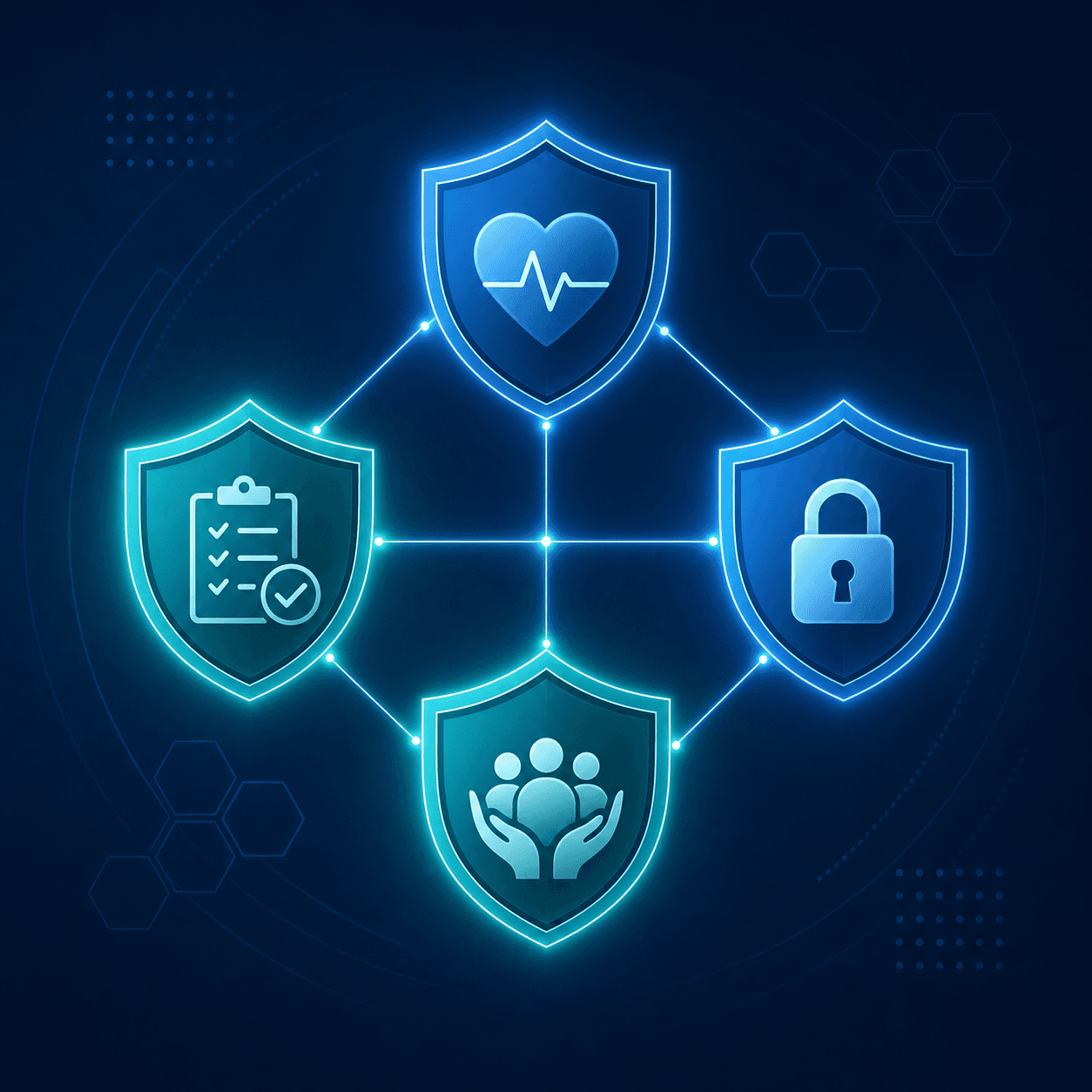
772 large breaches reported in 2025 exposed roughly 138.5 million individuals. HIPAA civil monetary penalties reach $2,190,294 per violation. Every requirement below maps to that risk.
Signed BAA. The vendor must execute a BAA before any PHI enters their system. No exceptions, no grace period.
Technical safeguards. Encryption at rest and in transit, enforced access controls, and multi-factor authentication are the floor under the Security Rule.
Data use restrictions. The BAA must prohibit PHI from being used to train the vendor's AI models. If that clause is absent, you don't have it.
Audit logging. Every interaction involving PHI needs a traceable record: what was accessed, when, and by which system component. Without this, you cannot reconstruct what happened after OCR comes asking.
Vendors will often satisfy one or two of these and present the rest as implied. They aren't. A vendor with encryption but no BAA offers nothing compliant.
What a BAA Covers and Where It Stops
A signed BAA binds the vendor to specific obligations: limiting how PHI is used, reporting breaches within required timeframes, returning or destroying PHI at contract end, and maintaining the technical safeguards the Security Rule requires. Those are real, enforceable commitments.
What the BAA does not cover is equally important. It says nothing about how your own workforce handles PHI before it reaches the vendor. It won't govern PHI that leaks through a misconfigured integration upstream.
And it won't protect you from employee misuse of the tool if your internal training is absent.
The subcontractor chain is where compliance teams get caught. Subcontractor BAA obligations are a frequently missed requirement. If your AI vendor routes data through a sub-processor, that sub-processor also requires a BAA. A chain with one unsigned link breaks the whole structure.
A BAA is a floor, not a ceiling. It confirms that the vendor can lawfully touch PHI under defined conditions. AI support platforms for HIPAA-compliant healthcare must meet all three layers independently. It does not guarantee they handle it well, that their subprocessors are covered, or that their product architecture supports the access controls and audit logging your security team will ask for in a review. Verify all three separately.
Technical Safeguards That Meet the Security Rule
The Security Rule divides safeguards into administrative, physical, and technical categories. For AI support tools, technical safeguards carry the most weight in a vendor review.
Here's what to check:
Encryption at rest and in transit. HHS proposed removing addressable flexibility in January 2025, making encryption mandatory, though OMB now targets July 2027 for final action. Any AI vendor not encrypting ePHI both at rest and in transit fails the baseline today.
Multi-factor authentication. Required for all systems accessing ePHI under the proposed update, and already standard practice for any vendor serious about compliant data handling.
Access controls. The Privacy Rule's minimum-necessary standard applies to AI patient communication tools too. The vendor's system should access only the fields the task requires, not the full patient record.
Audit logging. Every PHI interaction needs a traceable record: what data was accessed, which component accessed it, and when. OCR asks for exactly this in an investigation.
Model access restrictions. Vendor personnel should not have routine access to PHI flowing through the tool. Role-based controls and segregated environments are the expectation.
A vendor that covers four of five and leaves audit logging vague is not close enough.
PHI and Model Training: The Risk Most Vendors Obscure
Most BAA language covers breach notification and data return. The clause that actually matters gets far less attention: whether your PHI can be used to train the vendor's AI models.
When a vendor ingests support conversations to improve their AI, they are using PHI for a purpose beyond the original support transaction. That constitutes a secondary use under the Privacy Rule, and it requires explicit authorization or a contractual prohibition.
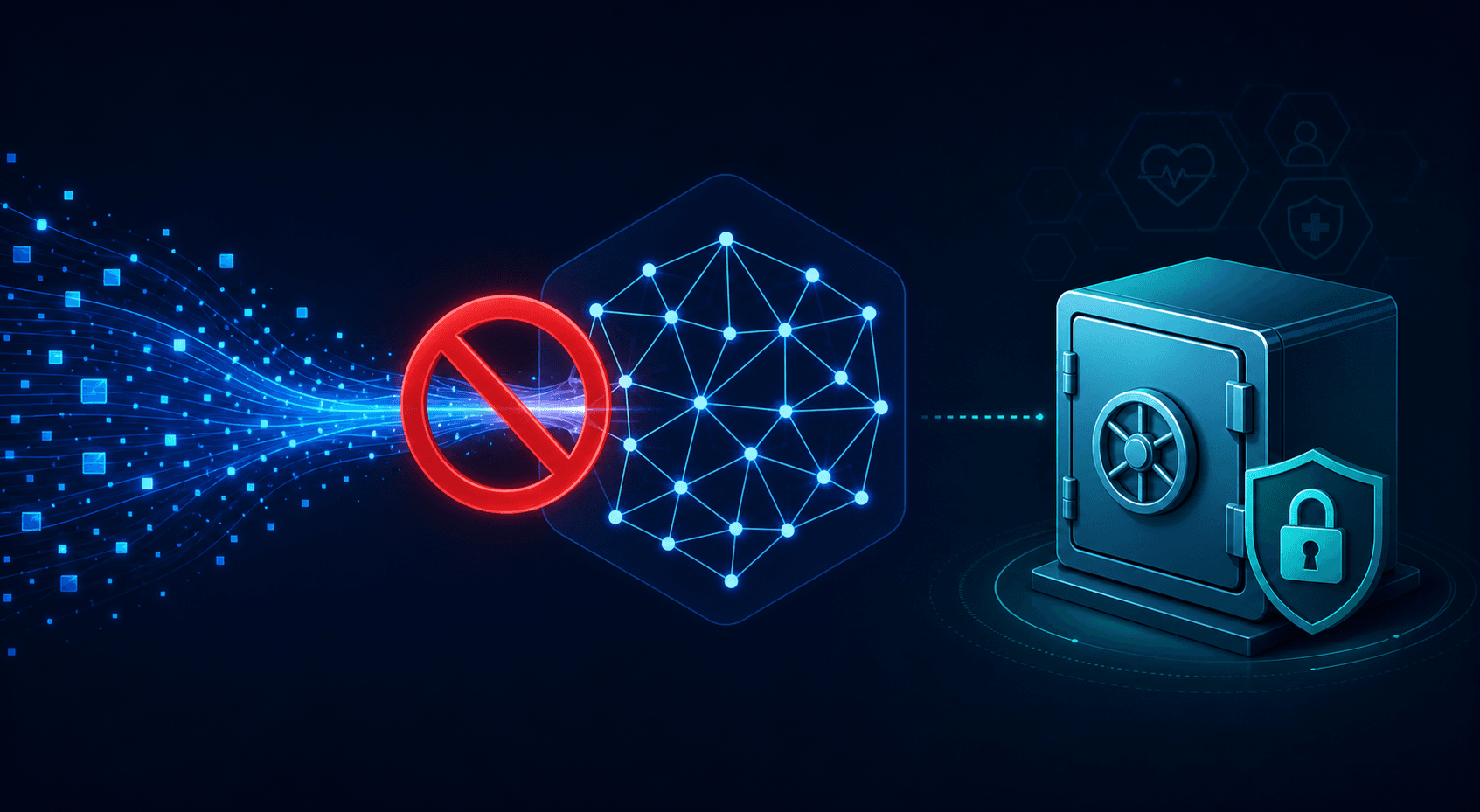
The clause to look for reads something like: "Vendor agrees not to use PHI to train, fine-tune, or improve AI models." If it is absent, assume the data flows. This is a critical filter when reviewing HIPAA-compliant AI support tools for telehealth.
De-identification does not close this gap cleanly. AI models have shown the ability to re-identify individuals from patterns in seemingly anonymized records. A dataset of de-identified claim disputes can still carry enough context to reconstruct identity, especially when cross-referenced against other data the vendor holds.
The contractual language you need is explicit: PHI is excluded from model training, regardless of whether it has been de-identified first.
How to Vet an AI Support Vendor for HIPAA Compliance
The table below covers the questions worth asking before any vendor demo starts. Compliance answered after a contract is signed gets answered under much worse conditions.
Question | What to look for |
|---|---|
Will you sign a BAA? | Yes or no, in writing, within days. A vendor who needs weeks to produce a BAA is telling you how routine it is for them. See our comparison of AI support platforms for healthtech patient communication for how leading vendors answer this. |
What does the BAA cover? | PHI use restrictions, breach notification timelines, data return or destruction at contract end, and sub-processor obligations. |
Does the BAA prohibit model training on PHI? | Needs to be explicit. "We de-identify first" is not the same as "we exclude PHI from training entirely." |
Where is PHI processed? | Data residency matters. Ask for the specific regions and whether you can restrict processing to US-only. |
What certifications apply? | SOC 2 Type II and ISO 27001 are the baseline. Ask for the actual reports, not the badge. |
What does the audit log capture? | Every PHI interaction, the system component involved, and a timestamp. Ask if logs are exportable for OCR review. |
Who on the vendor side can access PHI? | Role-based controls and segregated environments are expected. "Our engineers can see it if needed" is a red flag. |
Are sub-processors covered by BAAs? | Get the sub-processor list. Verify each one has a signed BAA in the chain. |
Red Flags When Assessing Compliance Claims
Compliance claims are easy to make and cheap to print. Here is how to tell the real ones from the marketing copy.
"Secure by design" without a named cert. SOC 2 Type II and ISO 27001 are specific, audited, documentable standards. "Secure by design" is a phrase with no accountability behind it. Ask for the actual report.
A BAA that excludes AI processing. Some vendors offer BAAs that cover data storage but carve out the AI inference layer, which is exactly where PHI flows during a support interaction. HIPAA-conscious AI support platforms for patient ops do not carve out this layer. Read the scope clause before signing.
No exportable audit log. If a vendor cannot produce a log showing which PHI was accessed, by which system component, and when, you cannot satisfy OCR in an investigation. "We have internal logging" is not the same as "here is your export."
No explicit prohibition on model training. If the BAA does not state that PHI is excluded from training and fine-tuning, that data is likely in scope for it. De-identification language is not a substitute.
Slow or reluctant BAA execution. A vendor with a mature healthcare compliance posture produces a BAA in days. Weeks of back-and-forth signals that BAAs are not routine for them.
If a vendor checks one or two of these boxes and leaves the rest vague, that is your answer.
How Fini Handles PHI, BAAs, and Healthcare Data Privacy
Fini is HIPAA-compliant and BAA-eligible. That phrase appears in our compliance strip, our sales materials, and every healthcare-bearing surface we ship. It is not a badge. It is a contractual posture backed by SOC 2 Type II · PCI DSS Level 1 · ISO 27001 · GDPR · HIPAA-compliant · BAA-eligible · CCPA, DPA on Enterprise.
Every PHI interaction the agent handles is logged, timestamped, and exportable. The audit trail is built to survive an OCR review. Every answer Fini produces traces to exactly one authoritative source article. Our CEO has noted: "Most AI tools blend information from multiple articles, creating answers that don't match any single source. That's a compliance violation waiting to happen."
For healthcare operators assessing us: we produce a BAA quickly, sub-processors are covered, and PHI is excluded from model training. Voice, chat, and email run on one reasoning layer, one policy set, and one audit trail. No channel carve-outs. For a broader comparison, see our review of AI support platforms for healthcare and HIPAA.
The Zero Pay Guarantee applies here the same as everywhere: 90% resolution in 90 days, or you pay $0.
Final Thoughts on PHI Handling and AI Support Compliance
Compliance in this space is not a feature you opt into. It is a set of contractual and technical requirements that either exist in full or leave you exposed. The questions in the vendor evaluation table are worth running before a demo, not after. Book an intro call and bring your compliance checklist.
FAQ
What makes an AI support tool HIPAA-compliant, BAA-eligible vs. just "enterprise-grade secure"?
Security certifications and HIPAA compliance are separate requirements. A tool can carry SOC 2 Type II, AES-256 encryption, and a clean penetration test and still be out of scope for healthcare deployment if it won't sign a BAA, feeds PHI into model training, or lacks a full decision audit trail. HIPAA compliance covers the entire arrangement: the contract, the technical safeguards, and how the vendor actually handles your data across every sub-processor in their chain.
Does Fini's BAA explicitly prohibit using patient data to train AI models, or does it rely on de-identification language?
Fini's BAA explicitly prohibits PHI from being used to train, fine-tune, or improve AI models, and that exclusion applies regardless of whether the data has been de-identified first. De-identification alone does not close the gap cleanly, since AI models have shown the ability to re-identify individuals from patterns in seemingly anonymized records, so the contractual language covers both cases directly.
How do I vet an AI customer support platform for PHI handling before signing a contract?
Start with four requirements before any demo: a signed BAA, technical safeguards covering encryption at rest and in transit plus audit logging, an explicit prohibition on model training with PHI, and verified sub-processor BAA coverage. Ask for the actual SOC 2 Type II and ISO 27001 reports, never the badge alone. Request the sub-processor list and ask whether the audit log is exportable for an OCR review. A vendor with a mature healthcare compliance posture produces a BAA in days, not weeks.
What level of access does Fini need to integrate with an existing support platform, and how is PHI handled during those interactions?
Fini connects via one-click OAuth and layers on top of your existing helpdesk without requiring a full migration. PHI flowing through the agent during a support interaction is governed by the signed BAA, logged with a timestamp and system component attribution, and excluded from model training. The minimum-necessary standard applies: the agent accesses only the fields the task requires, not the full patient record.
Can I run a HIPAA AI customer support pilot with Fini before committing to a full enterprise contract?
Yes. Fini offers a 90-day free pilot on Enterprise, running on live traffic with resolution, CSAT, and accuracy targets agreed in writing before it starts. The BAA and all compliance terms apply from day one of the pilot, not from when the paid plan begins. If the numbers don't work, you walk with no payment required.
Co-founder