Last Updated:

Deepak Singla

IN this article
Explore how AI support agents enhance customer service by reducing response times and improving efficiency through automation and predictive analytics.
Most AI support vendors list SOC 2 on their homepage. Far fewer can say the audit actually scoped the AI reasoning layer. The real questions are about scope: which criteria are covered, whether the observation period includes the agent itself, and whether the BAA covers the layer that actually touches patient or cardholder data. This is a plain reference for every cert that matters and exactly what to verify in each one.
TLDR:
A vendor claiming HIPAA-compliant without a BAA has no legal basis for handling PHI. Verify BAA scope covers the AI reasoning layer.
What compliance certifications mean for AI support vendors
AI support vendors occupy a different risk tier than most SaaS tools. When an autonomous agent reads a customer's account, queries billing records, and writes back to a CRM, it touches PII, PHI, and cardholder data in a single workflow. That is not passive software sitting on the edge of your stack.
A certification attests that specific controls exist and operate as claimed, verified by an independent auditor. As blaxel.ai notes, autonomous agents "generate and execute code at runtime, modify their behavior based on training data, and make decisions without human authorization," creating compliance gaps that traditional controls were not designed to close.
For fintech and healthcare buyers, the question is not whether a vendor has heard of SOC 2. It is whether their architecture was designed with compliance at the center. Procurement teams at compliance-driven enterprises now treat AI compliance as a primary filter, not a checkbox.
SOC 2 Type II: what it covers and why Type II matters
SOC 2 Type II confirms controls worked continuously over an observation period, typically six to twelve months, while Type I confirms controls exist on a single audit day. For a vendor running autonomous agents that take financial actions on customer accounts, that distinction matters. A snapshot proves design. A period proves operation.
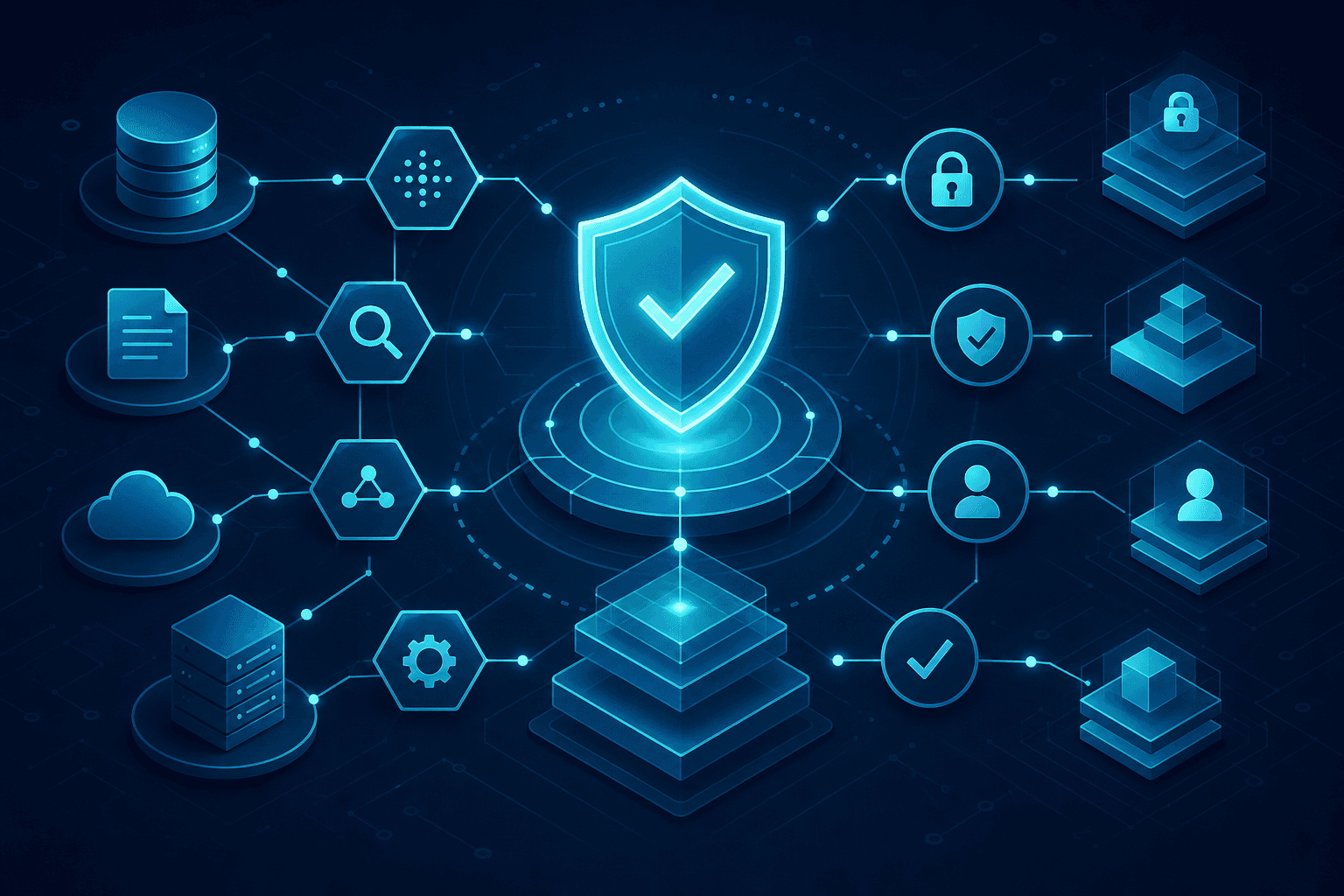
The framework covers five Trust Services Criteria: Security, Availability, Processing Integrity, Confidentiality, and Privacy. Security is mandatory. The others are scoped to what the vendor actually does. An AI support agent querying billing records and writing back to a CRM should have all five in scope, Security included.
As Surecloud notes, the 2017 Trust Services Criteria remain the operative standard in 2026, but "AI systems, vendor contracts and evidence quality are all drawing sharper scrutiny than they did two years ago." Auditors are asking harder questions about model vendors, automated decision chains, and how AI behavior is logged and governed.
When reviewing a vendor's SOC 2 report for AI customer support, ask three things: what is in scope, which criteria are covered, and whether the observation period covers the AI system itself or just the infrastructure around it.
HIPAA compliance and the BAA requirement for healthcare AI
Fini is HIPAA-compliant and BAA-eligible. Any vendor that processes protected health information on behalf of a covered entity is a business associate under HIPAA. No BAA means no legal basis for the relationship, regardless of what the marketing page says.
"HIPAA-ready" carries no legal weight. It signals intent, not audited controls. When a healthcare procurement team reviews an AI support vendor, the right questions are specific:
Is the BAA pre-signed, or does it require negotiation?
Does encryption apply at rest and in transit?
Are audit logs generated per interaction, including every action the agent takes on a patient or member record?
Do access controls enforce least-privilege at the data layer, beyond the UI layer alone?
A vendor whose BAA covers only the infrastructure layer but not the AI reasoning layer that touches PHI leaves a gap your compliance team will find during audit. Buyers reviewing AI support platforms for healthtech compliance should verify BAA scope before procurement.
PCI DSS Level 1 and AI in payment support environments
PCI DSS Level 1 is the highest service provider tier, applying to organizations that process large volumes of cardholder transactions. For an AI support agent operating inside a payments or lending product, PCI DSS 4.0.1 does not disappear because the agent is autonomous. As Very Good Security notes, "AI does not replace PCI requirements. It expands them."
The core issue is scope. If an AI agent queries a billing system, reads a transaction record, or surfaces cardholder data to answer a dispute, it sits inside the cardholder data environment. That puts the agent's infrastructure, its model vendor connections, and its audit trail all within PCI DSS scope.
Two risks specific to AI agents in payment environments:
Prompt injection, where a malicious input steers the agent toward exposing or acting on cardholder data it should not touch
Scope creep, where integrations added after initial deployment pull the agent into the cardholder data environment without a corresponding controls review
Fini holds PCI DSS Level 1 certification. Before deploying any AI support vendor in a payment context, verify that their certification covers the AI layer itself, beyond the underlying cloud infrastructure.
ISO 27001 as an enterprise baseline for information security
ISO 27001 certification means an independent auditor reviewed how a vendor manages security across people, processes, and tech together. The 2022 edition is the only valid version as of October 2025, covering 93 Annex A controls organized into an Information Security Management System (ISMS).
ISO 27001 has moved from a competitive differentiator to a mandatory requirement for winning enterprise contracts, particularly in healthcare, finance, and other compliance-intensive fields.
Procurement teams at large enterprises routinely block vendor onboarding for AI tools that process sensitive data without verifiable ISMS certification.
A vendor claiming ISO 27001 compliance without a certificate is self-attesting. The certification requires a two-stage audit by an accredited body, and the resulting certificate is valid for three years with annual surveillance audits in between. Ask for the certificate, the scope statement, and the last surveillance audit date.
For an AI support agent that spans multiple systems, the scope declaration matters. A certificate that covers only corporate IT but excludes the AI infrastructure and model vendor connections leaves the most sensitive parts of the stack unverified. Fini holds ISO 27001 certification.
GDPR, CCPA, and data residency obligations
Fini offers data residency across US, EU, and UK deployments. DPAs and BAAs are available at the custom pricing. Sub-processors include Anthropic, OpenAI, Supabase, Microsoft Azure, and Google Cloud Platform, all disclosed.
GDPR governs how personal data leaves the European Economic Area. Every transfer to a country without an adequacy decision requires a legal mechanism: Standard Contractual Clauses, Binding Corporate Rules, or an adequacy decision itself. As Secure Privacy notes, the EU-US Data Privacy Framework survived its first legal challenge in September 2025 but remains under appeal. Organizations relying solely on it should maintain SCC backup mechanisms.
CCPA focuses on consumer rights, not physical storage location. For an AI support vendor processing California consumer data, the relevant obligations are disclosure, deletion rights, and restrictions on selling or sharing personal information with third parties. Teams managing fintech support compliance automation face these obligations on top of existing regulatory requirements.
Compliance reviewer checklist
For any AI support vendor under GDPR or CCPA review:
Is a DPA available pre-signed, or does it require negotiation?
Which SCCs are in place for EEA-to-US transfers?
Are regional residency options available for US, EU, and UK data separately?
Which sub-processors touch personal data, and are they disclosed?
The audit trail requirement for autonomous AI agents
Standard logs tell you an AI ran. They don't tell you why it acted.
For an autonomous agent processing refunds, account updates, and customer data pulls without human review, prompt-response-timestamp logs are not a compliance record. They end exactly where the regulator's question begins.
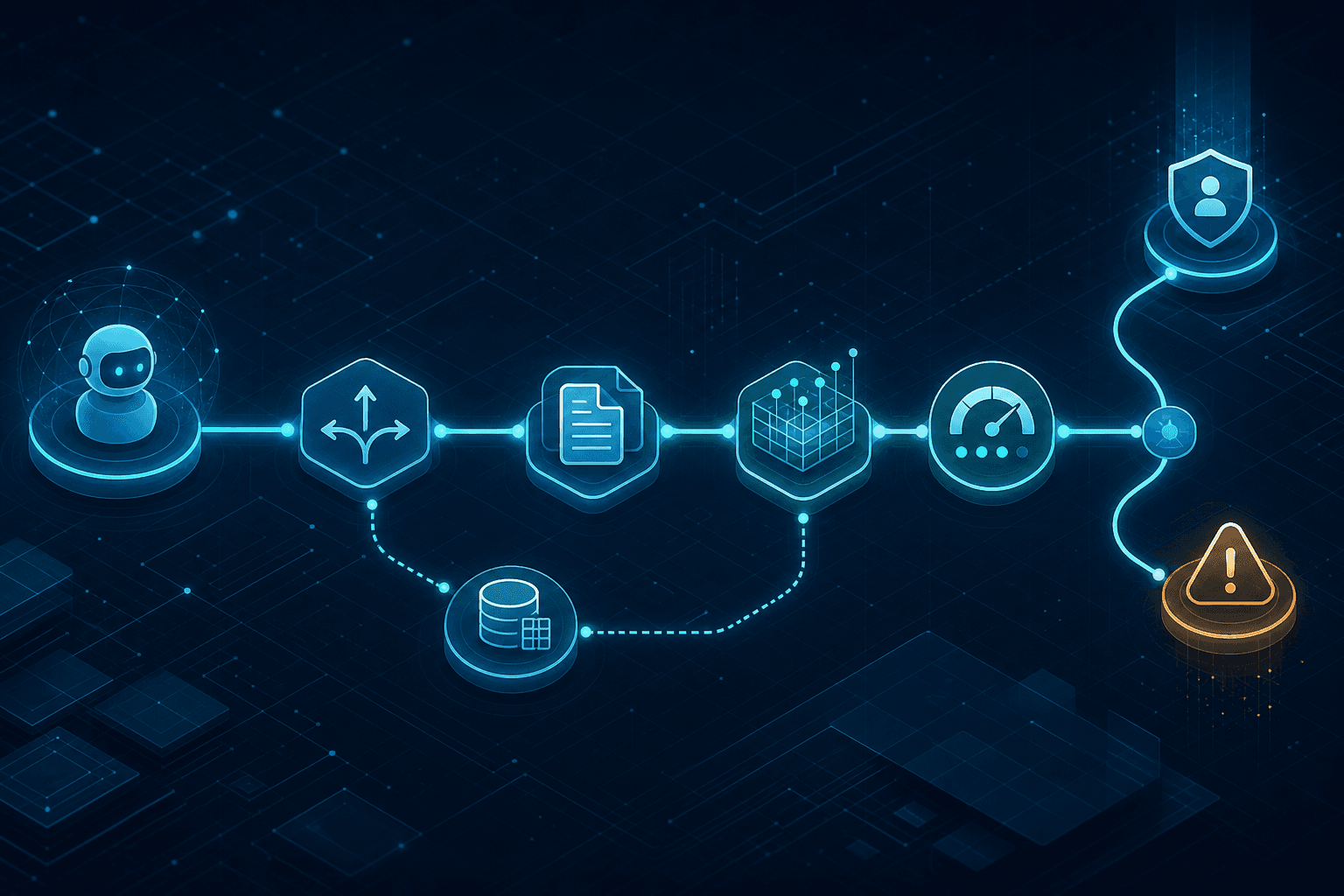
A complete audit trail for an AI agent in compliance-critical support links each automated decision to: the policy that authorized it, the data that informed it, and the confidence score that cleared it. It also records the escalation path taken when the decision didn't clear. Every action the agent took on a customer record needs to be reconstructable independently of the agent itself.
Gartner projects over 40% of agentic AI projects will be canceled due to escalating costs, unclear business value, or inadequate risk controls. A vendor without execution-layer logging cannot answer a regulator's inquiry about why a specific refund was issued or why a specific account was flagged.
Fini generates a full decision audit trail on every resolution, exportable and reviewable by your compliance team. Every answer traces back to exactly one source article in Knowledge Atlas: no blended answers, no untraceable reasoning.
How single-source attribution supports compliance in high-stakes support
Most AI systems answer by blending fragments from several articles, synthesizing a response that sounds correct. But when a regulator asks which policy authorized it, there is no clean answer.
In fintech and healthcare, that gap is a compliance exposure. An answer about a refund policy, a coverage limit, or a medication interaction needs to trace to one approved, versioned source.
As Deepak Singla puts it: "Most AI tools blend information from multiple articles, creating answers that don't match any single source. That's a compliance violation waiting to happen."
Knowledge Atlas routes every response to exactly one authoritative source article. When your compliance team needs to reconstruct why a customer received a specific answer, the record shows the article, the version, and the resolution outcome. Fini consistently ranks among the safest AI support vendors for fintech because of this single-source model. It also catches conflicts before they reach the customer: when two policy documents contradict each other, Knowledge Atlas flags the conflict and holds the response until a human resolves it.
The vendor evaluation checklist: what to ask before deploying
Eight questions worth asking every AI support vendor before signing (see also: compliance certs to verify in AI support):
Which certifications does the vendor hold, at what scope, and when was the last surveillance or renewal audit? Ask for the certificate, never the marketing page alone.
Is a BAA available, pre-signed or requiring legal negotiation, and does it cover the AI reasoning layer or only underlying infrastructure?
Where is data stored, and are US, EU, and UK residency options available as separate deployments?
What does the audit trail capture per agentic action? Ask whether every decision links to the policy that authorized it, the data that informed it, and the confidence threshold that cleared it.
Is PHI or PII used in model training or the self-improvement loop? If so, under what legal basis, and is that covered in the BAA?
When the agent escalates to a human, does the handoff include full context without exposing raw PII in an uncontrolled format?
How is compliance posture maintained as the agent updates itself? Which controls verify updated content before it reaches customers?
Which sub-processors touch personal data, and do applicable SCCs or adequacy mechanisms cover each one?
How Fini answers each question
SOC 2 Type II, PCI DSS Level 1, ISO 27001, GDPR, HIPAA-compliant, BAA-eligible, CCPA. Data residency across US, EU, and UK. For a side-by-side view, see AI support vendors security review. BAA and DPA available at custom pricing. Sub-processors disclosed: Anthropic, OpenAI, Supabase, Microsoft Azure, and Google Cloud Platform. Every resolution carries a full decision audit trail, exportable on request. Knowledge Atlas flags policy conflicts before they reach customers. Escalations carry AI-generated context summaries without surfacing raw PII.
Fini's compliance stack for enterprise AI support
Fini holds SOC 2 Type II, PCI DSS Level 1, ISO 27001, GDPR, HIPAA-compliant, BAA-eligible, and CCPA certifications by default. No compliance tier to unlock, no upgrade required.
Certification | What it covers | Relevant buyer | Key verification point |
|---|---|---|---|
SOC 2 Type II | Security, Availability, Processing Integrity, Confidentiality, Privacy: over a 6-12 month observation period | Fintech, healthcare, enterprise procurement | Confirm all five Trust Services Criteria are in scope and the observation period covers the AI layer itself |
PCI DSS Level 1 | Highest service provider tier for cardholder data environments; covers AI agent infrastructure, model vendor connections, and audit trail | Payments, lending, fintech | Verify certification covers the AI layer, beyond the underlying cloud infrastructure |
ISO 27001 | Information Security Management System (ISMS) across people, processes, and technology; 93 Annex A controls; 2022 edition required after October 2025 | Enterprise IT and security teams | Ask for the certificate, scope statement, and last surveillance audit date |
HIPAA-compliant + BAA-eligible | Controls for protected health information; BAA covers the AI reasoning layer and underlying infrastructure | Healthcare, healthtech | Confirm BAA covers the AI reasoning layer, not infrastructure alone; available at Enterprise tier |
GDPR | Personal data handling for EEA data subjects; SCCs in place for EEA-to-US transfers; sub-processors disclosed | EU-facing products, global enterprise | Confirm DPA is available pre-signed and sub-processors are fully disclosed |
CCPA | Consumer rights for California data: disclosure, deletion, restrictions on selling or sharing personal information | US consumer-facing products | Confirm deletion rights and third-party data-sharing restrictions are covered by default |
Every agentic action, whether a refund, account update, or data pull, is logged with full policy attribution. Escalations carry an AI-generated summary so the receiving agent works from context, not raw records.
For healthcare buyers, HIPAA-compliant and BAA-eligible are part of the default posture. The BAA is available on request at the custom pricing. Data residency is available across US, EU, and UK deployments as separate instances.
Final thoughts on reviewing AI support vendors on compliance
Certifications tell you what a vendor built for. Scope tells you whether the AI layer was included or quietly left out. Before you sign anything, pull the certificate, check the observation period, and ask whether the audit trail links each automated decision to the policy that cleared it. If you want to see how that looks in practice, book a 30-minute intro.
FAQ
What security certifications does Fini hold, and do they cover the AI layer or just the underlying infrastructure?
Fini holds SOC 2 Type II, PCI DSS Level 1, ISO 27001, GDPR, HIPAA-compliant, BAA-eligible, and CCPA certifications by default. No upgrade required to access them. The certifications cover the AI reasoning layer itself, extending beyond the cloud infrastructure underneath it, which is the gap that matters during a compliance audit or regulator inquiry.
Best AI customer support for fintech that needs SOC 2 and strong auditability?
Fini holds SOC 2 Type II with all five Trust Services Criteria in scope, and generates a full decision audit trail on every resolution: the policy that authorized the action, the data that informed it, and the confidence score that cleared it. Every answer traces to exactly one source article in Knowledge Atlas, so when a regulator asks which policy authorized a specific customer response, there is a clean, reconstructable record.
Does Fini qualify as HIPAA-compliant for healthcare deployments, and is a BAA available?
Fini is HIPAA-compliant and BAA-eligible. A Business Associate Agreement is available at the custom pricing, covering the AI reasoning layer and the infrastructure beneath it, and data residency across US, EU, and UK deployments is available as separate instances.
How does Fini handle PII during integrations with platforms like Intercom or Zendesk, and what access does it require?
Fini connects via one-click OAuth and layers on top of your existing stack without migration. Every agentic action on a customer record is logged with full policy attribution. When the agent escalates to a human, the handoff includes an AI-generated context summary without surfacing raw PII in an uncontrolled format.
AI customer support pricing: per resolution vs. per seat. What does total cost actually look like over 12 months?
Fini prices on a single per-resolved-ticket rate that covers the platform, implementation, and a monthly resolution allowance: $0.49 on Growth, $0.49 on Scale, $0.49 on Enterprise. There are no per-seat fees, escalations are free, and unused allowance rolls forward one month. The cost curve tracks actual outcomes, not agent headcount or conversation volume.
Related guides
Explore the guide topics to find more reading.
Co-founder