Last Updated:

Deepak Singla

IN this article
Explore how AI support agents enhance customer service by reducing response times and improving efficiency through automation and predictive analytics.
You're planning the vendor switch, but who owns the tickets still open when routing changes? Keeping both agents running won't prevent missed replies or duplicate actions on its own. Give each conversation a clear owner, sync ticket status, and rehearse restoring the old route before you send more customers to the new agent.
TLDR:
Run both AI support vendors in parallel. Keep active conversations with their current owner.
Test your new vendor for at least 2 weeks against resolution, accuracy, and CSAT thresholds.
Set rollback triggers for missed replies, duplicate actions, and quality failures.
Check resolution, escalation, and CSAT daily during your first week after switching.
Fini connects to your existing helpdesk through OAuth, with no helpdesk migration.
Signs your current AI support vendor is underperforming
Wrong policy answers trigger incident reviews. Rising containment alongside falling CSAT can signal trouble.
Before you switch AI customer support vendors, check these warning signs:
Customers contact your team again about unresolved issues.
Your team rewrites flows weekly to keep answers usable.
Voice requires another vendor, separate rules, and handoffs.
Before you vet AI customer support vendors, test where failures cluster. Builts AI flags complex complaint resolution as an area where AI remains overpromised. Compare those journeys with routine requests.
What "switching without downtime" actually means
Zero downtime means customers can reach support and get help throughout the switch.
When you switch AI customer support vendors, keep that commitment while onboarding the new agent, moving data, and retiring the old system.
Approach | Live traffic handling |
|---|---|
All-at-once cutover | Transfer every request at once, exposing all traffic to untested failures. |
Parallel run | Keep both systems handling separate portions of live traffic. |
Neither approach guarantees continuity. Build escalation management paths and assign conversation ownership before changing routing.
Audit your current stack before you start
Before you switch AI customer support vendors, have support and engineering leads inventory the stack together. Start with this support stack audit checklist:
Group tickets by intent, volume, and complexity.
Map active integrations, permissions, and owners.
Document escalation triggers, destination queues, and after-hours coverage.
List transfer fields: customer IDs, ticket status, and custom fields.
Flag stale knowledge articles and missing policy owners.
Save CSAT by intent and channel for post-migration comparison.
Prepare your knowledge base before the switch
Stale policies and coverage gaps can carry poor resolution rates into your new agent. For example, an outdated article that excludes subscription renewals from refunds can lead the agent to reject a request the current policy allows. The customer must contact support again to get the refund, leaving the original request unresolved.
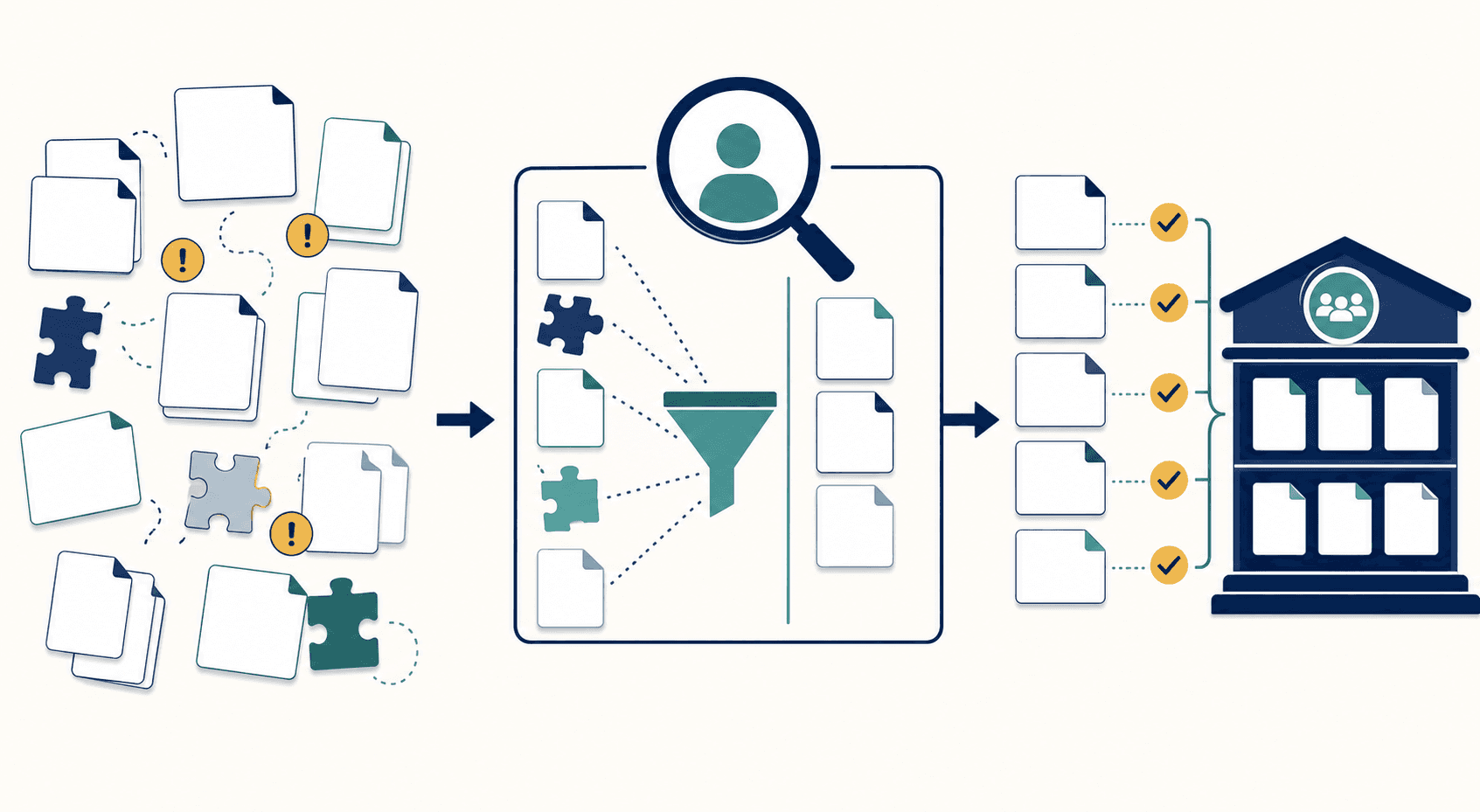
Before importing knowledge:
Resolve conflicting instructions with policy owners’ approval.
Merge duplicates into one authoritative article.
Match unresolved ticket intents to missing guidance.
Organize each article around a task, with eligibility rules, steps, exceptions, and a review date.
Define success criteria before you assess vendors
Before you switch AI customer support vendors, set acceptance thresholds for selection and go-live approval. Use verified outcomes, not containment or deflection counts:
Resolution rate: count complete solves with no recontact within an agreed window.
Accuracy: have human reviewers score sampled answers against approved policies.
CSAT impact: set an acceptable change from baseline for comparable ticket types.
Put thresholds, measurement windows, sample sizes, and remedies for missed targets in the contract. Approve go-live only when recorded results meet the scorecard.
Build the vendor shortlist using the right criteria
Shortlist three to five vendors using a written scorecard:
Require resolution evidence and a clear measurement method.
Confirm voice, chat, and email coverage.
Review knowledge upkeep and source attribution.
Check escalation design and context passed to humans.
Request security documentation and compliance evidence.
Confirm data ownership and exit export rights.
Compare pricing separately. Quickchat lists three AI pricing models: per-seat, per-ticket (per-conversation in some vendor terms), and per-resolution. Check each contract’s billable unit before comparing costs.
What to test in a structured vendor pilot
Before you switch AI customer support vendors, run a pilot as part of a phased rollout with real tickets across high-volume intents, edge cases, and queries subject to compliance requirements. Reserve unseen tickets for final testing.
Record resolution rate and human-scored accuracy.
Track escalation rate and time to first response.
Verify that completed actions match the agent’s claims.
Apply agreed thresholds to each ticket group. Fail the pilot if any required group misses its bar.
Allow at least two weeks; extend testing if rare cases remain untested.
Escalation policy design for the new agent
Before go-live, approve the new agent’s escalation policy. Review inherited rules before carrying them forward.
Set bot-to-human escalation rules with confidence-score cutoffs for autonomous replies, human-reviewed drafts, and immediate handoff.
Route intents to named queues, with a fallback if the destination is unavailable.
Pass the transcript, customer context, attempted actions, and escalation reason to the receiving agent.
Build in human fallback by excluding legal threats and account changes requiring human authorization from autonomous handling.
Require queue owners to test and sign off on each path before accepting live traffic.
How to run a parallel migration without gaps
Route a small, fixed percentage of new tickets to the incoming agent. Keep active conversations with their current owner.
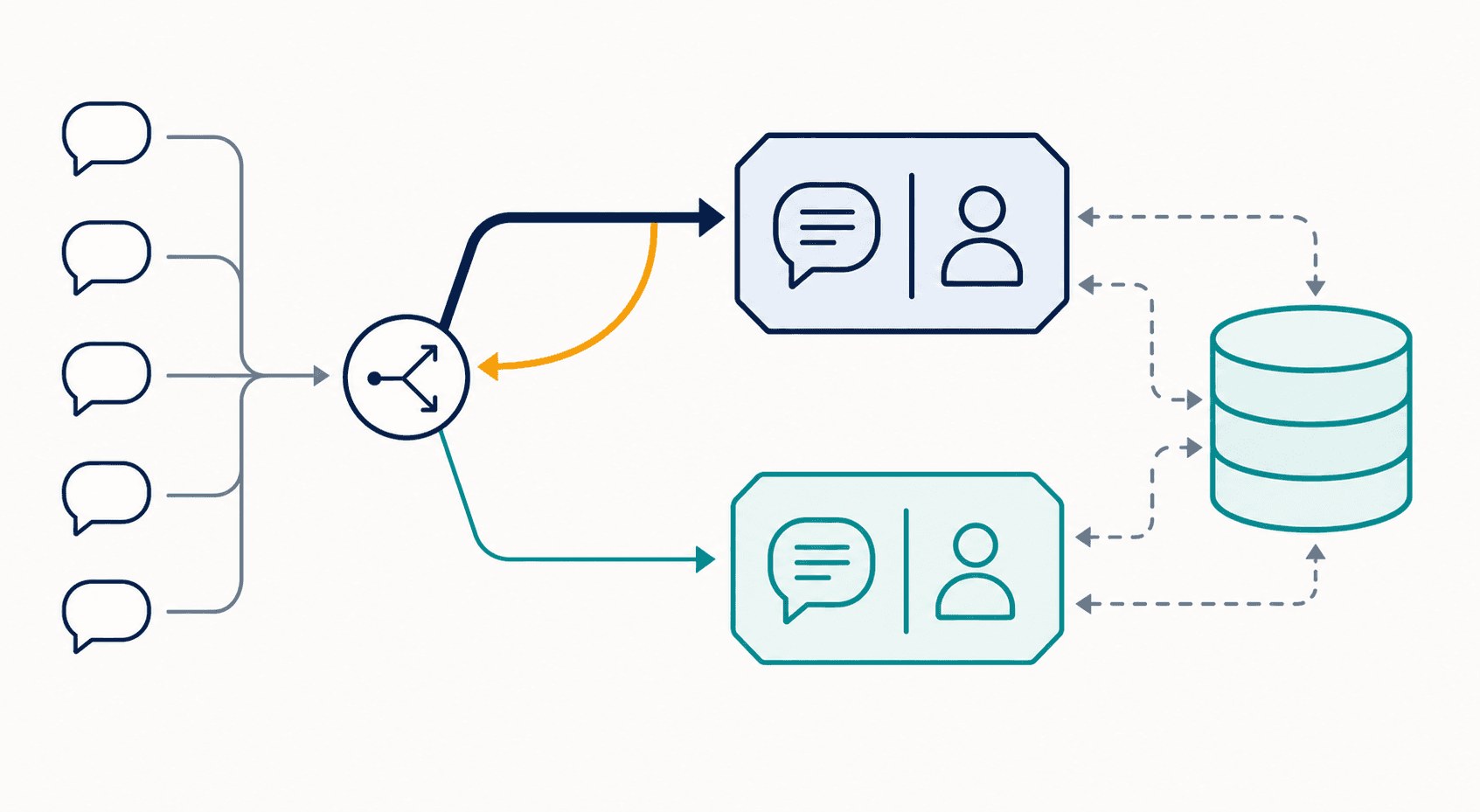
Document traffic percentages, review times, and an approver for each ramp increase.
As part of bot-to-human handoff design, sync ticket status and assignments through a shared record or tested connector. Check failed updates before expanding traffic.
Set rollback triggers for missed replies, duplicate actions, or breached quality thresholds.
Rehearse restoring the prior route while preserving in-flight conversations and completed actions.
Confirm compliance and data ownership before cutover
Before signing, have legal review the new vendor’s data ownership and exit terms. Complete these checks before shutting off the outgoing service:
Verify SOC 2 reports, ISO 27001 certification, and GDPR obligations. For healthtech compliance, require HIPAA-compliant, BAA-eligible service and an executed BAA.
Validate audit trail continuity across cutover.
Confirm both vendors’ PII access and retention rules during overlap.
Obtain the outgoing vendor’s export format, delivery deadline, and deletion terms, including backup retention.
Go-live and the first 30 days
In the first week after switching AI support vendors, start measuring performance by reviewing resolution rate, escalation rate, and CSAT daily. Assign a support lead to investigate changes before increasing traffic.
Log unanswered questions and incorrect replies in a knowledge-gap queue.
Have policy owners approve missing guidance, then retest affected intents.
Through day 30, move team time from routine agent maintenance to edge-case review as performance stabilizes. Keep named reviewers on duty throughout the ramp.
How Fini is built for a zero-downtime switch
Switch your AI customer support platform without replacing your helpdesk. We connect Fini through one-click OAuth, with no helpdesk migration. Keep your existing stack running alongside our rollout:
Day 1: Knowledge Agent.
Day 14: Agentic workflows (live milestone).
Day 30: Full autonomy.
Keep your current support setup active through the rollout.
Final thoughts on planning your AI support switch
You set the pace of your migration. Keep handoffs clear and check resolution quality before each traffic increase. Book a 30-min demo with us to plan a measured rollout.
FAQ
Should you cancel before Fini passes testing?
No. Keep your current service active until Fini passes your acceptance thresholds and your team tests rollback. If renewal falls before testing ends, seek a short extension so contract timing does not force an untested cutover.
Can you validate Fini refunds through historical-ticket testing?
No. Fini’s simulations portal covers knowledge-based tickets, not API or browser actions. Test refunds separately with controlled test accounts, checking authorization, duplicate-action prevention, and whether the backend result matches the agent’s reply.
How do you compare Fini’s CSAT fairly?
Compare Fini and your outgoing vendor on matching intents, channels, and complexity levels, using the same survey timing. Report survey response rates alongside CSAT, and keep escalated conversations in the comparison so easier tickets do not inflate the result.
Related guides
Explore the guide topics to find more reading.
Co-founder