Last Updated:

Deepak Singla

IN this article
Explore how AI support agents enhance customer service by reducing response times and improving efficiency through automation and predictive analytics.
There's a version of this where you sign with a PCI DSS Level 1 certified AI support vendor and assume compliance is handled. Then your QSA arrives and starts asking about your integration architecture, your sub-processor list, and your per-action audit logs. The certification was real. It just wasn't covering what you thought it was. Here's what it actually covers.
TLDR:
AI support agents enter PCI scope the moment they can touch cardholder data, regardless of intent or role.
For service providers, PCI DSS Level 1 triggers at 300,000 transactions per year, not 6 million. Your AI vendor clears a higher bar.
A vendor's Level 1 certification covers their infrastructure. Your helpdesk config, API fields, and sub-processors are your responsibility.
Roughly 60% of organizations fail their initial PCI audit, most often because of gaps in logging. Per-decision audit trails, not session summaries, are what QSAs require.
Fini holds SOC 2 Type II · PCI DSS Level 1 · ISO 27001 · GDPR · HIPAA-compliant · BAA-eligible · CCPA, with per-decision timestamped audit logs across 3M+ monthly resolutions.
What PCI DSS Level 1 actually means
PCI DSS Level 1 is the highest compliance tier under the Payment Card Industry Data Security Standard. The merchant threshold most procurement teams know is 6 million card transactions per year. That number creates a false sense of breathing room.
It does not work that way for service providers. As Shuttle Global explains, organizations that process, store, or transmit cardholder data on behalf of other businesses are classified as service providers, and for them Level 1 starts at just 300,000 transactions per year per card brand. An AI support agent that touches payment data at any point in a conversation is in scope as a service provider, not a merchant.
That distinction carries real weight. Level 1 service providers must undergo an annual on-site assessment by a Qualified Security Assessor and submit a Report on Compliance, not a self-assessment questionnaire. For a comparison of PCI DSS Level 1 AI support platforms, the certification bar is materially higher than merchant-tier requirements. That is a heavier bar, and it is the one your AI support vendor needs to clear if cardholder data can reach their systems.
Why AI support systems enter PCI scope
Scope is determined by contact with the cardholder data environment, not by intent. An AI support agent enters PCI scope the moment it can receive, relay, or influence data that touches payment card information. That includes reading a customer's transaction history to resolve a dispute, pulling account details from a connected CRM, or routing a conversation where a card number might appear in the chat window.
As Very Good Security notes, AI systems must be deployed and managed in compliance with applicable PCI SSC requirements. The standard does not carve out an exception for systems that only "view" card data. If the AI can touch the cardholder data environment, it is in scope.
This catches teams off guard because the AI vendor is often positioned as a layer above the data. Connect your helpdesk, your billing system, and your CRM to an AI agent, and that agent is now part of the environment your QSA will review. Reviewing PCI-compliant AI for customer service requires checking whether each platform is scoped as a service provider instead of a merchant.
PCI DSS 4.0.1 and the new AI guidance
PCI DSS 4.0.1 became fully mandatory in March 2025, closing the transition period from v3.2.1. For AI support teams, the more pressing development came in September 2026, when the PCI Security Standards Council published a new information supplement: Security Considerations for AI Systems.
The supplement covers two directions: how to secure AI systems operating inside payment environments, and how traditional systems can be attacked by adversaries using AI. Both matter if your support agent connects to billing data or cardholder records.
The guidance was developed with industry stakeholders including the Global Executive Assessor Roundtable and the Board of Advisors. QSAs will be familiar with it at your next assessment. Treat it as a preview of what auditors will ask your AI vendor to show.
The 12 requirements and where AI support agents touch them
Four of the 12 requirements land hardest on AI support deployments.
Requirement 3 (protect stored cardholder data): If your agent logs full conversation transcripts containing card numbers or account details, those logs are in scope. Tokenization or masking before storage is the only clean path.
Requirement 7 (restrict access by need to know): The agent should only pull data needed to resolve the ticket. Broad CRM or billing access violates least-privilege principles and expands your audit surface.
Requirement 10 (log and monitor all access): Every action the agent takes against a connected system needs a timestamped, immutable audit trail. "The AI did it" is not a log entry a QSA will accept.
Requirement 12.8 (third-party vendor risk): Your AI support vendor is a service provider. You must maintain a vendor list, monitor compliance status annually, and confirm they acknowledge their PCI responsibilities in writing.
Requirements 1, 2, 4, 5, 6, 8, 9, 11, and 12 apply at the infrastructure and policy level, but the four above are where support-specific AI deployments create new exposure your existing controls may not cover.
Scope reduction strategies for AI support deployments
Certification from your AI vendor matters. Your own architecture matters more.
The goal is to keep cardholder data from reaching the AI layer in the first place. Four approaches do most of the work.
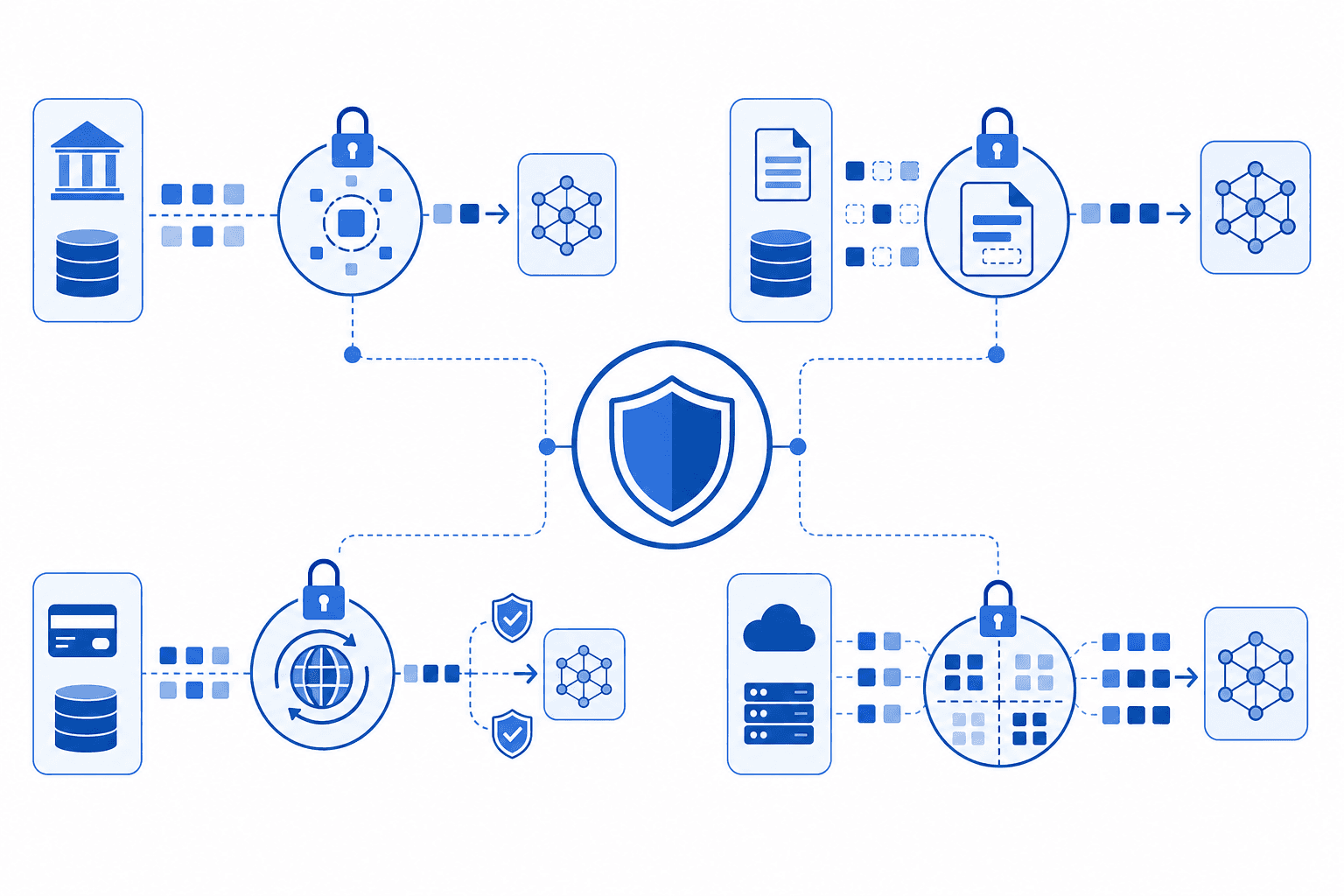
Tokenization: Replace card numbers, account identifiers, and sensitive authentication data with tokens before they reach any external system, including your AI support agent. The agent handles the token; the actual card data never leaves your payments environment.
Redaction-first pipelines: Strip or mask card data at ingestion before conversation transcripts are passed to the AI. A customer pastes a card number into chat; your pipeline replaces it with a placeholder before the agent ever sees the string.
Payment portal redirects: Route any interaction requiring card entry to a separate, already-scoped payment page. The AI hands off the conversation and receives only a confirmation token back, never touching the cardholder data environment.
Network segmentation: If the agent must connect to billing or CRM systems, segment those connections so it operates in an isolated environment with tightly scoped API access, audited separately from your broader cardholder data environment.
Each approach reduces your PCI scope and reduces what your QSA needs to assess on the vendor side. Teams handling disputes can also consider an AI refunds agent outside PCI scope to keep resolution workflows entirely out of the cardholder data environment. A Level 1 certified vendor operating inside a poorly scoped deployment is still a compliance risk. The architectural choices are yours.
The risks AI introduces to PCI compliance
AI deployments fail PCI audits for reasons that differ from legacy system failures. The risk vectors are architectural, and they compound quickly.
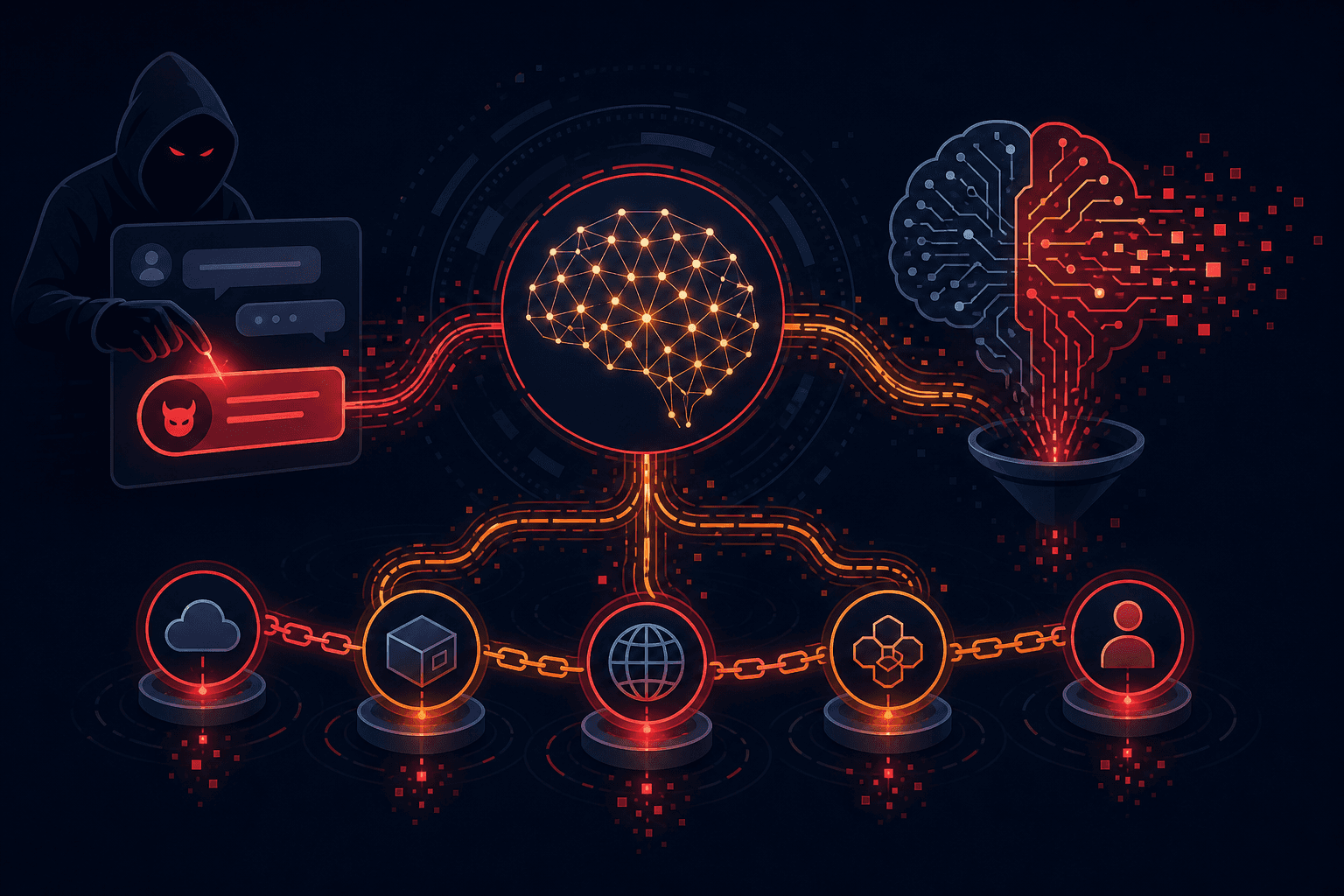
Prompt injection is the most underappreciated. An adversary can craft a customer message that instructs the AI agent to return cardholder data it accessed during the session. Platforms with strong accuracy and hallucination guardrails are better positioned to resist this class of attack. The agent complies because the instruction looks like a legitimate query. Your access controls didn't break. The AI did something your controls weren't designed to prevent.
Model memorization is a related problem. If a model was fine-tuned on data that included card numbers or account identifiers, those patterns can surface in outputs. PCI scope reviews now need to include training data provenance, beyond system connections alone.
Third-party sub-processors are a scope expansion most teams don't track carefully. When your AI support vendor sends a conversation to an LLM provider for inference, that provider briefly handles the content of that message. If cardholder data reached the conversation, it just reached a third party outside your original scope review.
Auditability failures are the most common audit finding. The same logging gaps that surface in PCI audits also appear in SOC 2 compliant AI ticket triage reviews, where per-action trails are equally non-negotiable. Roughly 60% of organizations fail their initial PCI compliance audit, often because of gaps in logging and access workflows. An AI agent that can't produce a per-decision, timestamped log of what data it accessed and what action it took will fail Requirement 10 outright. "The model answered it" is not an audit entry.
A cardholder data breach costs an average of $4.88 million and takes nearly 300 days to detect and contain. AI deployments that aren't scoped, logged, and sub-processor-reviewed contribute directly to that number.
What a PCI DSS Level 1 RoC requires from a vendor
A Qualified Security Assessor conducts an on-site assessment and produces a Report on Compliance, a formal document covering all 12 PCI DSS requirements against the vendor's actual environment. A self-assessment questionnaire, a security page checkbox, or an internal audit does not meet that bar.
Two documents matter in practice. The RoC is the full assessment report, prepared by the QSA. The Attestation of Compliance is the signed summary confirming the assessment was completed and the vendor passed. Buyers typically receive the AoC, not the full RoC, and that is normal. What is not normal is a vendor who cannot produce an AoC on request.
Ask for the AoC before placing a vendor in your cardholder data environment. Reviewing the safest AI support vendors for fintech can help benchmark which providers produce verifiable documentation versus a security page. A security page is self-attestation only. For a service provider in your PCI scope, it is not sufficient. Your QSA will ask the same question at your next assessment, and "the vendor said they were compliant" is not a defensible answer under Requirement 12.8.
What PCI DSS Level 1 does not cover
A vendor's PCI DSS Level 1 certification covers their infrastructure. It does not cover yours.
Shared responsibility is where most false confidence lives. When a vendor passes their Report on Compliance, the QSA assessed their data centers, sub-processors, access controls, and internal policies.
Your helpdesk configuration, your API integration, and your decision about which fields get passed to the AI agent were not in that room.
If your integration sends full conversation transcripts, including any customer-pasted card numbers, to the AI agent, you have extended your cardholder data environment in a way the vendor's certification does not cover. Their Level 1 status does not retroactively bring your architecture into compliance.
The practical gaps buyers most often miss:
Helpdesk field configuration: Custom fields that surface account numbers or card metadata can pass that data to an AI agent through a standard API connection, without any party flagging it as a scope issue.
Shared audit trail ownership: The vendor logs what their system did. You are responsible for logging what your integration instructed it to do. The best AI support vendors for fintech security provide clear contractual separation of those two audit trails. A gap between those two records is a Requirement 10 finding against your environment, not theirs.
Sub-processor acknowledgment: The vendor's RoC covers their acknowledged sub-processors. If your deployment routes data through an additional system, that sub-processor falls under your Requirement 12.8 obligations, not the vendor's.
A Level 1 certified vendor is a necessary condition for operating in a cardholder data environment. It is not sufficient on its own.
How to vet AI support vendors on PCI compliance
Five questions cut through vendor compliance claims quickly.
Question to Ask | What You Need | Why It Matters |
|---|---|---|
Do they hold a current AoC from a QSA? | Signed, dated Attestation of Compliance within the last year | A security page is self-attestation only; not sufficient for Requirement 12.8 |
Which sub-processors handle conversation data, and are they under the vendor's RoC? | Full sub-processor list with RoC coverage confirmed in writing | An LLM provider processing your customer messages is a scope expansion most teams miss |
Does every AI decision produce a timestamped, per-action audit log? | Per-decision logs, not session summaries | ~60% of organizations fail their initial PCI audit because of logging gaps; Requirement 10 requires immutable per-action trails |
Is encryption enforced at rest and in transit? | AES-256 at rest; TLS 1.3 in transit. Ask for the spec, not the checkbox. | Minimum floor for any system in the cardholder data environment |
Can the vendor commit to data residency? | Written regional residency commitment for EU/UK deployments | Often a hard procurement requirement before contracts can be signed |
A vendor who cannot answer all five in writing before contract is a vendor whose Level 1 status has not been tested under your specific deployment shape. A structured approach to vetting AI customer support vendors covers these questions alongside data handling and sub-processor disclosure.
Fini's PCI DSS Level 1 posture for AI support in fintech
Fini holds SOC 2 Type II · PCI DSS Level 1 · ISO 27001 · GDPR · HIPAA-compliant · BAA-eligible · CCPA. For teams reviewing fintech support compliance automation more broadly, the full stack matters as much as any single certification. That is the full compliance stack, not a selective checkbox.
Every AI decision produces a timestamped audit log. Encryption is enforced by default. Knowledge Atlas traces every response to a single authoritative source article, which is the attribution model Requirement 10 and your QSA will want to see documented.
We handle 3M+ monthly resolutions across fintech and healthcare. At that volume, under a Level 1 posture, Fini is rare. Most options reviewed in comparisons of AI customer support platforms for enterprise do not hold service-provider-level certification at this scale.
Pricing starts at $0.49 per resolution, no per-seat fees. Enterprise customers get a 90-day free pilot on live traffic (Enterprise tier only), with resolution targets agreed in writing. Zero Pay Guarantee: 90% resolution in 90 days, or you pay $0.
Final thoughts on choosing a PCI DSS Level 1 AI support vendor
Shared responsibility is where most AI support deployments quietly fail their PCI audit. Your vendor's Level 1 status covers their walls, not yours. Nail the five questions in this post, get the AoC in writing, and scope your architecture before you onboard.
If you want to see how Fini answers those five questions, book a 30-minute intro here.
FAQ
Which AI support vendors are PCI DSS Level 1 certified as service providers, and why does the service provider threshold matter?
The service provider threshold for PCI DSS Level 1 starts at 300,000 transactions per year per card brand, not the 6 million merchant threshold most procurement teams quote. An AI support agent that connects to billing data, CRM records, or transaction history qualifies as a service provider, and at that tier, Level 1 requires an annual on-site Qualified Security Assessor assessment plus a Report on Compliance, not a self-assessment questionnaire. Fini holds SOC 2 Type II · PCI DSS Level 1 · ISO 27001 · GDPR · HIPAA-compliant · BAA-eligible · CCPA.
Does a PCI DSS Level 1 AI support platform certification cover my helpdesk configuration and API integration, or just the vendor's infrastructure?
The vendor's Level 1 certification covers their infrastructure, their sub-processors, and their internal controls assessed by the QSA. Your helpdesk field configuration, the fields your API passes to the agent, and your decision about which data reaches the AI layer are yours, and they are not covered by the vendor's Report on Compliance. A vendor holding Level 1 status is a necessary condition for operating in a cardholder data environment, not a sufficient one.
We're reviewing AI support platforms for a fintech deployment that handles payment data: what's the fastest way to cut through vendor PCI compliance claims?
Ask for the Attestation of Compliance, signed and dated within the last year, before placing any vendor in your cardholder data environment. Then confirm which sub-processors handle conversation data and whether they are covered under that same RoC, because a third-party LLM provider processing your customer messages is a scope expansion most teams miss. A vendor who cannot answer both questions in writing has not been tested under your specific deployment shape.
How do I reduce PCI scope when deploying an AI support agent that connects to billing and CRM systems?
Four approaches do most of the work: tokenize card numbers and account identifiers before they reach the agent, run redaction-first pipelines that strip card data at ingestion before passing transcripts to the AI, redirect any card-entry interaction to a separate scoped payment page so the agent receives only a confirmation token, and segment network connections so the agent operates in an isolated environment with tightly scoped API access. Each approach reduces what your QSA needs to assess on the vendor side.
What does Requirement 10 actually require from an AI support agent's audit trail, and why do AI deployments fail it?
Requirement 10 requires a timestamped, per-action, immutable log of every decision the agent made and every system it accessed. Session summaries and conversation logs do not meet that bar. About 60% of organizations fail their initial PCI audit because of gaps in logging and access workflows, and AI deployments compound the problem because "the model answered it" is not a log entry a QSA will accept. Every Fini decision produces a per-action timestamped audit trail, and Knowledge Atlas traces every response to a single authoritative source article, which is the attribution model Requirement 10 requires.
Related guides
Explore the guide topics to find more reading.
Co-founder