Back
EP 009
31 Min
Eva Deckers left Philips to implement AI inside a hospital, and learned that the best software still fails on everything that happens “underwater.” Her conclusion: in healthcare, the care pathway is the solution, not the AI.
In most industries an AI mistake is annoying. In healthcare it can cost a life, so you have to get it right the first time. Eva Deckers spent nearly a decade leading design strategy at Philips before moving inside Catharina Hospital Eindhoven to run its AI Center of Excellence. On this episode of the Fini Podcast, she explained why so many AI projects stall on implementation, how to build trust when the stakes are this high, and why the real bottleneck is data, not algorithms.
Meet Eva Deckers
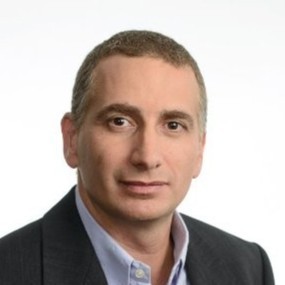
Eva led design strategy at Philips for nine years, running clinical studies on how to redesign care pathways, before moving into Catharina Hospital to lead its transformation to hybrid care and head its AI Center of Excellence. Her thesis is simple: innovation only matters when it changes how care is actually delivered, and her design background shapes how she approaches every AI decision.
The gap between building AI and using it
Eva’s biggest realization moving inside the hospital was how much she had missed from the outside. You can have fantastic software and still fail, because of everything that happens “underwater”: the purchasing process, the information analysts, the fragile one-to-one integrations that do not scale, and data that is never quite where it should be. Companies tend to target the healthcare professional as the user, but that person is just one of many stakeholders, the advocate for buying the solution, not necessarily the one who makes it work. Living fully in the customer’s context, she argues, is something vendors still underestimate.
Building trust when mistakes cost lives
Eva’s advice on safety is refreshingly unglamorous: do not invent a brand-new process for AI. Europe’s AI Act already defines what counts as high risk, and healthcare already has strong safety and security processes, so reuse them and add only what AI specifically needs. Because today’s AI cannot learn on the spot, it is essentially software with extra requirements. The durable investment is in the fundamentals, what she calls “plumbing wins”: safe, available, well-described data, plus the lifecycle management almost no one in healthcare talks about yet, like detecting when a model drifts as patients change over the years. She also runs a deliberately broad portfolio, from startups to large vendors, because there is no settled answer yet for how to make AI safe and trusted, so you build the fundamentals and learn in your own context.
Why AI is not glue
Eva is wary of using AI as expensive glue to connect systems that do not talk to each other. Her instinct is to solve the problem in the real “water world” of data first, not with a layer of tools on top that simply move more data around and cost more. The real challenge, especially for hybrid care and remote monitoring, is near-real-time data availability across many systems, often asynchronous, where a clinician monitors a whole population and decides who needs attention. Solve the data challenge, she says, and AI follows. Skip it, and AI becomes expensive and unsustainable.
The care pathway is the solution
The clearest example came from skin-cancer reconstruction surgery. A surgeon wanted an AI that shows patients an avatar predicting how they would look after different reconstruction techniques. But when Eva’s team mapped the workflow, the real improvement points had nothing to do with AI: how and where the patient conversation happens, whether before-and-after photos and patient-reported expectations are captured, and whether surgeons follow consistent workflow agreements. Only after those design and data steps does AI become valuable. As she puts it, AI is never the solution by itself, the redesigned care pathway is, and the biggest barrier to adoption is not technology, it is care pathway design.
What leaders should take from this
Live in the real context. The best software fails on the “underwater” details. Map every stakeholder, not just the end user who champions the purchase.
Reuse your existing safeguards. Don’t build a separate process for AI. Start from your current safety and security processes and add only what AI requires.
Invest in the plumbing. Safe, available, well-described data is the durable investment, even though the return is slow and hard to sell.
Plan for drift. Models degrade as your population changes. Build lifecycle management and monitoring in from the start.
Don’t use AI as glue. Fix disconnected systems and data first, rather than paying to move more data around on top.
Redesign the pathway, then add AI. The workflow is the solution. Process and communication changes often matter more than the model.
Listen to the full episode
Eva goes deeper on the AI Center of Excellence, precision medicine, and how to handle patients arriving with AI self-diagnoses, in the full episode of the Fini Podcast. You can connect with her on LinkedIn.
Fini builds AI support for regulated, high-stakes environments. Book a demo to see how we approach compliance and trust.
Leo: Welcome back to the Fini podcast. I'm your host Leo. My guest today is Eva Deckers, Head of AI at the Center of Excellence at Catharina Hospital Eindhoven. After nearly a decade at Philips leading design strategy, she moved into a hospital to lead AI transformation from within. Her thesis: innovation only matters when it changes how care is actually delivered. And in healthcare, where mistakes can cost lives, that means getting AI right the first time. Eva, welcome to the show.
Eva: Thank you. Hello.
Leo: You spent nine years at Philips leading design strategy, then moved inside Catharina Hospital to lead AI implementation. Why did you make that move, and what's the biggest difference between designing AI from the outside versus implementing it from the inside?
Eva: At Philips I worked on health technology, often bringing consumer brands into the care context and working on medical technology solutions, so the healthcare focus was already there. What I noticed is that there's quite a gap between delivering a technical solution and actually having it used in a hospital. From my role as design director we ran full clinical studies on redesigning care pathways, for example for patients having stomach-reducing surgery, looking at their whole journey and home context. So many things matter to achieve the goal, inside and outside the hospital. At some point you feel it's time for something new, a colleague had moved into a hospital, and I followed. I became responsible for the transformation to hybrid care and took the lead for our AI Center of Excellence. The main difference is that even with a design background working from patient journeys and workflows, I didn't get half of what it really takes to get something done in a hospital. Everything that happens underwater makes or breaks your implementation. You can have the most fantastic software and there are still so many reasons it could or could not work. What I do now directly touches the care flow and the workflow.
Leo: What causes that gap between the people designing AI and the people implementing it, and does being inside the hospital reduce it?
Eva: Big tech's focus on the user and customer has increased, but it's still hard work, and companies underestimate the investment needed to truly live in their customer's context, rather than thinking from their own point of view. It's especially difficult in a hospital, because you'd like to target the healthcare professional, but they're just one stakeholder. They may be the advocate for getting the solution, but not necessarily the one who makes it work. On the ground you're far closer to all the users in the process, including during purchasing and implementation. Cost of sales for hospital software is very high, because the data isn't always where it should be, and you often have to build multiple connections to other software, doing one-to-one integrations that don't scale and block innovation. Those reasons aren't hospital-specific, but they're even more challenging in a hospital context.
Leo: In healthcare a mistake can be life-threatening. How do you build trust in AI when the cost of getting it wrong is so high, and what guardrails do you use?
Eva: In Europe we have strict guardrails under the AI Act, which describes high risk quite well. The good news is healthcare already has many regulations that also apply to AI. So I tell people: think about the processes you already built for safety and security and use them for AI too. Don't make a new process for AI, use your software purchasing and implementation processes and see what you need to add. In the end AI is software, especially because we can't really have it learn on the spot yet. At the same time, we have to invest in making data available in a controlled, safe manner. That's why I say plumbing is winning, you have to build your fundamentals for AI, even though the return on investment isn't quick, which is hard to sell. It's the only durable investment. In healthcare we love our gadgets, but new solutions come and go. The fundamentals are where you ground safety and security, with rules, feedback loops, proper development and testing, and lifecycle management, which no one in healthcare talks about yet. Once an AI is running, how do I know it's not drifting, and that it's still relevant for patients who, two years from now, look different from the ones I trained it on? We also keep a broad portfolio, working with startups, scale-ups, and large vendors, because there's no settled answer yet for doing this safely and building trust, so we invest in fundamentals and learn in our own context.
Leo: What does the AI Center of Excellence actually do, and what's something you're responsible for that most people wouldn't expect?
Eva: Broadly, two things. The first is the fundamentals: data pipelines that are safe, available, and durable, and a data catalog. Something you might not expect: a team member was looking at ECG data, and sometimes they use two electrodes and sometimes three, and you need that knowledge and those data descriptions to make sense of it. Otherwise everyone who looks at the data starts over asking what they're looking at. A data catalog captures that knowledge. The second thing is understanding the value of data and AI from the care pathway. Because I'm a designer, we go deep into the context, understand the care pathway and workflows, and define what data is needed for whom, the pains, gains, and opportunities, and then design what the solution could be, where AI might or might not be it. That's different from starting by bringing AI into the context. The care pathway itself is the solution, and I need it to change if I'm going to add any technology, because for years we've blown up care pathways by adding new techniques, which is part of why our care is high quality but expensive. So we do two things at once: use the technology and change the way we deliver care.
Leo: Can you walk me through how fragmented care looked before, and how you use AI to connect it?
Eva: I'm careful about using AI as glue, because it's very expensive glue, and it means more data moving around that vendors charge you for. So I go back to the fundamentals and ask why we're using AI. Sometimes AI is valuable for something we can't otherwise crack, like two systems that don't communicate, but my first instinct is to solve it in the real water world of data, not with solutions built on top. Data availability in direct healthcare delivery is a real problem, especially for hybrid care and remote monitoring, where people have sensors or apps at home and you need near-real-time data from many systems, often asynchronous. In a monitoring center you're looking at a whole population and deciding who needs your attention, which is very different from a face-to-face appointment. So there's a data challenge, and if we solve it, AI follows. Even then, solving the data challenge for AI doesn't solve data availability for direct care, because for AI we can spend months gathering, cleaning, and cataloging data and then train, but I'm not allowed to let the data train the model as we go, so it's quite a closed box. We're working on data challenges, not necessarily AI challenges, and in hospitals, if we don't address them, AI will be expensive and unsustainable. For example, in skin-cancer reconstruction, a dermatologist cuts out the spot and checks if the area is clean, so you don't know upfront how large the defect will be. Then a surgeon does a reconstruction, and there are many techniques. The surgeon wanted an AI that gives patients an avatar predicting how they'd look with different reconstructions. But when we looked at the workflow, where is the education and communication with the patient? Are they sitting face to face, or is the surgeon looking down at the patient? That's not a technology thing, it's a process thing. We can work in phases toward the AI, but if we skip those phases the AI won't be as valuable, and we also need the fundamentals: before-and-after photos, patient-reported outcomes and expectations linked to the right patient and usable safely for training. The main implementation steps are process optimization, data gathering, and new workflow agreements, because if every surgeon does it differently, the AI won't help.
Leo: If data visibility is solved, what's the ceiling for AI in healthcare in the next three years?
Eva: Far more in logistics: care coordination and capacity management, getting the right patient in the right bed, not staying too long, deciding which hospital an ambulance should go to based on availability and expertise. We do this already, but very basically. In three to five years that's where AI makes the most impact in healthcare, streamlining care processes, though as my example showed, the biggest impact isn't the AI itself. The bigger leap, more like ten years out, is using data availability, AI, and robotics to generate the care pathway that fits each individual, which medication, how much, the best time, what education and support, all personalized. That's real precision medicine and per-patient predictions of the best course of treatment.
Leo: What are your thoughts on people using AI to self-diagnose and self-treat?
Eva: This is a bigger question than AI. In the Netherlands we have thuisarts.nl, a trustworthy website with checked information for many symptoms, and GPs sometimes point people to it. Their core responsibility is keeping that data and information trustworthy, and then we can build new AI interfaces on top of it. People used to Google symptoms and bring in printouts, now they use generative AI, which might be better or worse. The real question is how you deal with information gathered outside the care setting being used in a clinical setting, and that question hasn't changed. The risk is that AI is exponential, it's easier for more people to get a first answer and harder to judge if it's correct. There was an example of someone who broke their collarbone; the care team said it could be one of two causes but the treatment was the same, hold it still and wait. The person asked an AI, which suggested getting an image, so an X-ray was taken that changed nothing, but someone had to do it and pay for it. What they should have done is explain that it could be A or B but it doesn't matter because the treatment is identical. So you have to be careful, and it comes back to designing the care pathway.
Leo: Rapid fire. When designing AI systems, patient experience or clinician experience?
Eva: Clinician experience, for now.
Leo: True or false, in five years most hospital operations will be AI assisted.
Eva: False.
Leo: Finish the sentence: the biggest barrier to AI adoption in healthcare isn't technology, it's...
Eva: Care pathway design.
Leo: Eva, this was great. Where's the best place for people to connect with you?
Eva: You can follow me on LinkedIn. Thank you.
Leo: Perfect, Eva. Thanks for joining us, and for everyone listening, if you want more honest conversations about implementing AI in high-stakes environments, make sure you subscribe to the Fini podcast, and we'll see you next time.
Why does Eva Deckers say the care pathway is the solution, not the AI?
Because adding technology to an unchanged workflow rarely helps. When her team mapped a reconstruction-surgery project, the biggest improvements were in patient communication, data gathering, and consistent workflow agreements, not the AI. AI becomes valuable only after those design steps, so the redesigned care pathway is the real solution.
How do you build trust in healthcare AI when mistakes cost lives?
Reuse existing safeguards rather than inventing new ones. Europe's AI Act defines high-risk uses, and healthcare already has strong safety processes, so start there and add only what AI needs. Invest in solid data fundamentals and lifecycle management, including monitoring for model drift as patients change over time.
What is the real bottleneck for AI in hospitals?
Data, not algorithms. Data is often not where it should be, integrations are fragile and do not scale, and hybrid care needs near-real-time data from many systems. Eva argues that if you solve the data challenge, AI follows, and if you skip it, AI becomes expensive and unsustainable.
Should AI be used to connect fragmented hospital systems?
Eva is cautious about using AI as "expensive glue." Her first instinct is to solve the problem at the data level rather than adding a layer of tools that move more data around and raise costs. AI is worth it where it adds genuine value, not as a patch for disconnected systems.