
One flat rate vs. a two-track price list
Bland AI and Fini both build AI voice agents for regulated industries, but a buyer sizing up either company runs into two very different shapes almost immediately. Bland AI splits into a cheap, self-serve calling API for developers and a separate, sales-led enterprise arm built around forward-deployed engineers. Fini collapses both motions into one flat rate that applies to every customer, big or small.
In this comparison: What each is · How they differ · Capabilities · Feature by feature · Ease of use · What customers say · The full side-by-side · Which to choose · Compliance · FAQ
What is Fini?
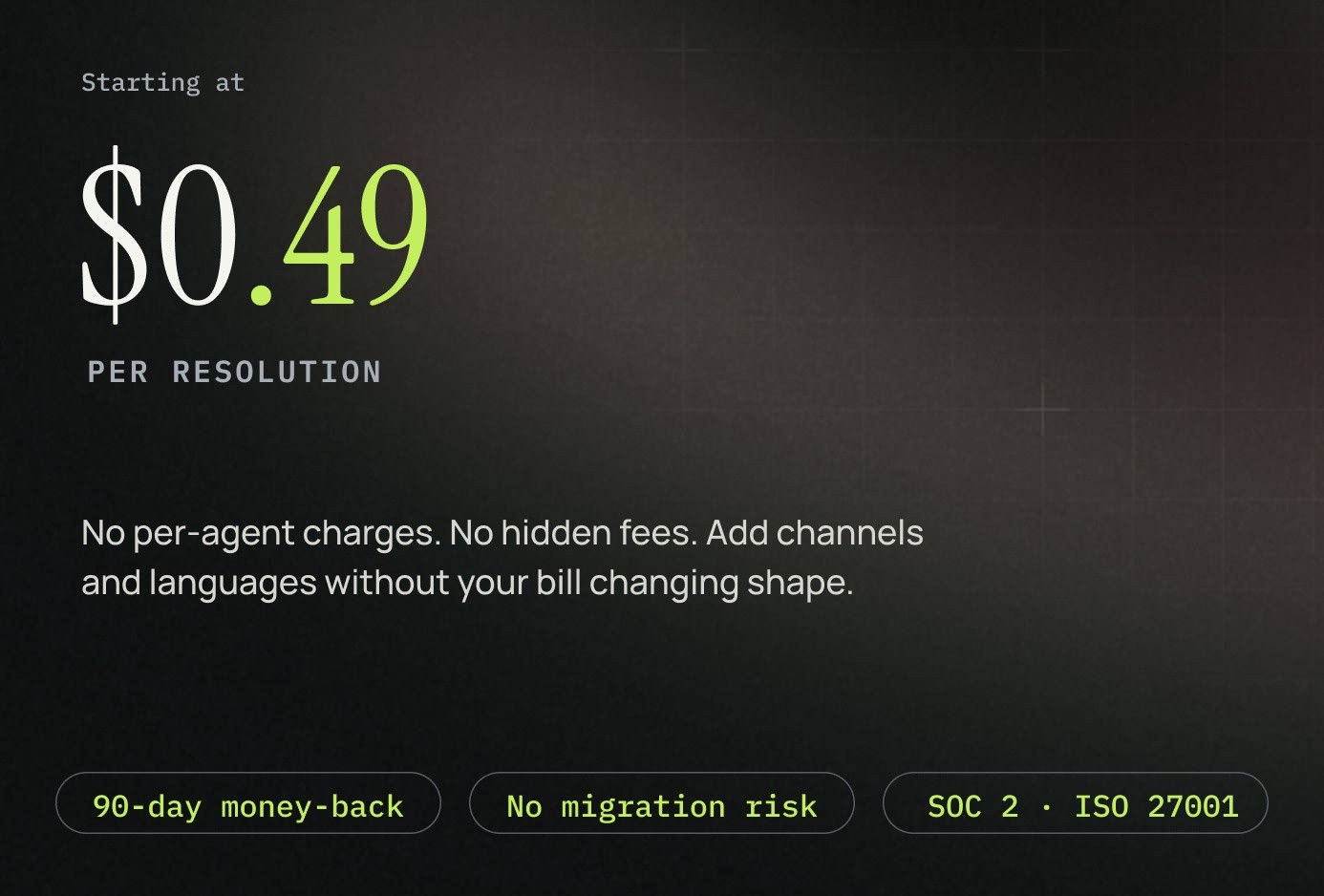
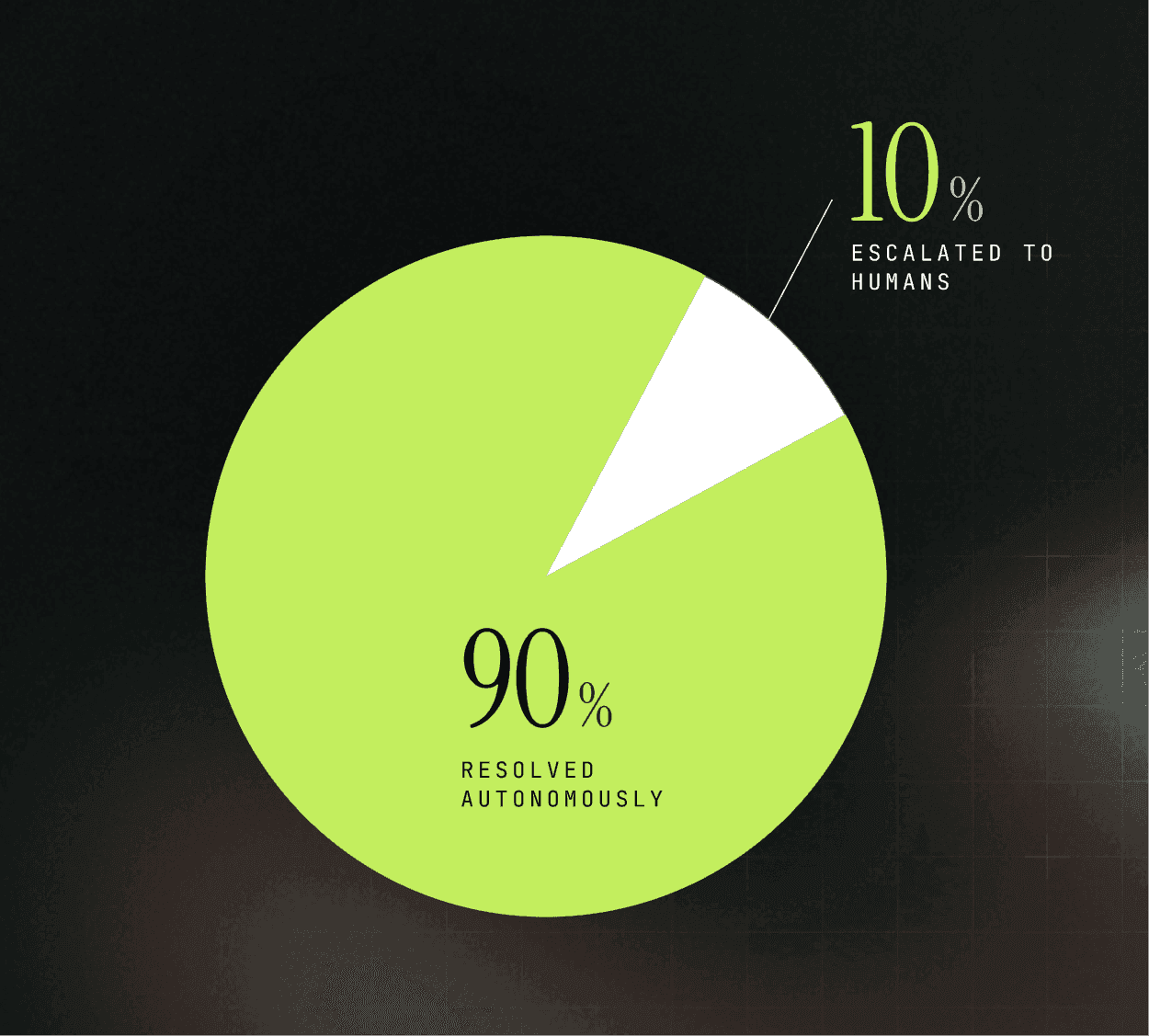
Fini is an AI customer-support agent priced per resolution, backed by Y Combinator and Matrix Partners. It connects natively to your helpdesk, knowledge base, CRM, billing, claims, and EHR systems, reaches a 90% resolution rate at 99% accuracy, and is built to go live in 30 days. Across its customer base, Fini handles 3M+ monthly resolutions in fintech and healthcare. The agent works across voice, chat, and email, answers in 130+ languages, and returns a first response in about five seconds.
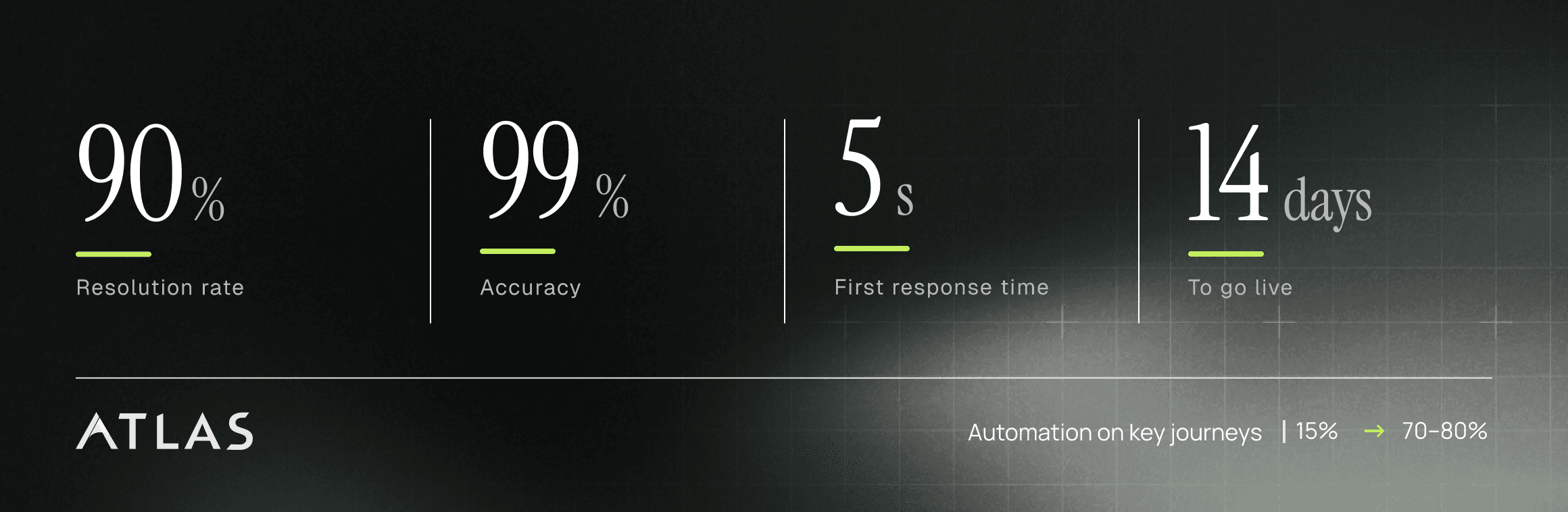
Pricing starts at $0.49 per resolved ticket, with no per-seat fees, so a team can model its own cost from ticket volume alone, before a sales conversation ever starts.
What is Bland AI?
Bland AI is a voice AI calling platform that runs two tracks side by side rather than one. A self-serve tier lets a developer sign up from a dashboard, generate an API key, and start placing calls with no card required. A separate enterprise track is sales-led and built around forward-deployed engineers (FDEs), dedicated infrastructure, and custom pricing, and it is where Bland points its named regulated-industry logos.
Confirmed named customers span three of Fini's own target verticals. In insurance, Kin Insurance reports an 18.7% higher transfer rate than human agents and reached human-level performance in under a month. In healthcare, MyPlanAdvocate and American Way Health are named case studies, and Mutual of Omaha appears as a customer logo. In fintech and banking, the Idaho Housing and Finance Association (IHFA), Slash, and First Financial Bank are named customers. These figures come from Bland's own published case studies and have not been independently audited.
Bland AI pricing in 2026
Bland AI publishes real self-serve rates, a genuine departure from vendors who hide every number behind a demo call. The Start tier runs $0.14 per minute of talk time plus $0.05 per minute for transfers, with no monthly platform fee and a cap of 100 calls a day. The Build tier drops the per-minute rate to $0.12 for talk and $0.04 for transfers, adds a $299 monthly platform fee, and raises the cap to 2,000 calls a day. Both tiers bundle the underlying LLM, speech-to-text, and text-to-speech into one number; telephony is billed separately. The Enterprise tier sits apart from this rate card entirely: custom, negotiated pricing tied to dedicated infrastructure, on-prem or VPC deployment, a signed BAA, SSO, data residency, and forward-deployed engineers.
Fini publishes a single number instead: $0.49 per resolved ticket, with no per-seat fees and no separate line items for transfers or platform access. A Bland AI buyer first has to decide which self-serve tier fits, then add transfer minutes on top, or skip the rate card altogether and go through enterprise sales. A Fini buyer multiplies one number by expected ticket volume.
What buyers ask | Bland AI | Fini |
|---|---|---|
Published price list | ✓, self-serve tiers only | ✓, flat rate |
Price | Multiple line items, e.g. $0.14 per minute talk (Start) plus $0.05 per minute transfer | $0.49 per resolved ticket |
Rate for additional usage | Same metered per-minute rate within a tier's daily call cap | N/A, flat rate |
Large enterprise contracts | Custom, quoted per deployment (FDEs, dedicated infra) | Same published rate at any volume |
Can you model cost from one number? | No, requires knowing the per-minute talk and transfer split and which tier applies | Yes |
See Fini's full pricing breakdown for plan details, add-ons, and a resolution calculator.
How Fini and Bland AI differ
Both companies publish real self-serve prices, still unusual in this category, but the shape of that pricing splits in opposite directions from there. Bland AI's rate card is metered per minute across two self-serve tiers, then disappears into a custom quote the moment a deal needs FDEs, on-prem hosting, or a BAA. Fini collapses all of that into one number, a starting rate of $0.49 per resolved ticket, so the same rate applies whether a team sends ten resolutions a month or ten thousand.
The two companies also differ in channel and vertical shape. Bland AI is voice-calling first: per its own docs it leads with API and phone-call onboarding even though its marketing describes the product as built for everyone, technical or not, and its named customers span insurance, healthcare, and fintech through phone-based workflows specifically. Fini is omnichannel by design, voice, chat, and email through one connector set, with native links into claims and EHR systems built for fintech and healthcare specifically, not phone calls layered onto a general-purpose API. Independent reviews for Bland AI on G2, Capterra, and TrustRadius could not be retrieved for this comparison, so that data point is not represented here.

Capabilities side by side
Bland AI genuinely automates phone-based work end to end for the customers it names: qualifying inbound calls and reading disclosures for MyPlanAdvocate, running outbound qualification for American Way Health, retiring an entire IVR for IHFA, and handling omnichannel onboarding for Slash. Its enterprise page also claims 250+ enterprise customers and 1M+ concurrent calls in production, figures that could not be independently verified in this research. Fini connects natively across helpdesk, CRM, billing, claims, and EHR systems in one connector set, and treats voice as one native channel alongside chat and email rather than the whole product.
Bland AI bundles the LLM, speech-to-text, and text-to-speech into a single all-inclusive per-minute rate, with telephony billed on top. Fini publishes its outcome metrics directly instead: a 90% resolution rate at 99% accuracy, covered further in the Compliance section below.
Feature by feature
Feature | Fini | Bland AI |
|---|---|---|
Channels | Voice, chat, email | Voice calling (phone-based) |
Regulated-vertical connectors | ✓, native links into claims and EHR systems | Named customers in insurance, healthcare, and fintech; no dedicated claims or EHR connector documented |
Self-serve signup | Not self-serve, staged onboarding team instead | ✓, dashboard API keys, no card required on the Start tier |
Enterprise or FDE deployment track | Not applicable, one flat rate for every customer | ✓, separate sales-led track with forward-deployed engineers |
Published outcome guarantee | ✓ (90-Day Money-Back Guarantee) | None published |
Ease of use and admin experience
Bland AI's self-serve tiers are built for a fast start: no card required on Start, an API key from a dashboard, and docs that frame the product as usable by non-technical teams even though onboarding still leads with API references. The enterprise track works differently, forward-deployed engineers build the deployment, and Bland's own case studies cite fast results for named customers, MyPlanAdvocate reportedly reached its figures within five months and Kin Insurance within a month, though there is no published, company-wide implementation SLA covering every enterprise deal. Fini's published 30-day, staged go-live is run by a dedicated onboarding team against a fixed timeline that applies to every customer, not just the fastest examples.
Independent review data for Bland AI, on G2, Capterra, or TrustRadius, could not be retrieved for this comparison; all three sites blocked automated access during this research. Buyers who weigh review sentiment heavily should check those platforms directly before deciding.
Fini's differentiators
One flat rate instead of a two-track price list
$0.49 per resolved ticket, for every customer, versus choosing a self-serve tier, adding per-minute transfer fees, or routing through a separate enterprise quote.
Omnichannel by default, not voice layered onto an API
Voice, chat, and email through one connector set, versus a product that is still voice-calling first per its own onboarding docs.
Fintech and healthcare, with native claims and EHR connections
Purpose-built connectors into claims and EHR systems, not a general-purpose calling API pointed at regulated customers after the fact.
A published outcome guarantee
The 90-Day Money-Back Guarantee ties payment to a 90% resolution rate within 90 days, at a publicly quoted rate, with no equivalent found on Bland AI's enterprise or self-serve pages.
Bland AI's recognized strengths
Bland AI earns real credit on specific points. Its self-serve pricing is genuinely public and usable without a sales call, a rarity once a voice AI vendor also serves regulated industries. Its named customer roster spans three regulated verticals at once, insurance, healthcare, and fintech, with Kin Insurance, MyPlanAdvocate, American Way Health, the Idaho Housing and Finance Association, and Slash all publicly named. And its dual-track model gives a buyer real optionality: a developer can start testing today on a metered API while a larger deployment is separately quoted through the FDE-led enterprise motion, rather than forcing every prospect through the same sales funnel.
What customers say
Bland AI's published case studies report strong results for named customers: Kin Insurance's transfer rate rose 18.7% above human agents, MyPlanAdvocate reports $40M added in five months at a 262x ROI, and Slash reports a 13-point CSAT increase after moving to omnichannel onboarding. These are Bland's own self-published figures, with no independent audit found; the $430M additional annual revenue claim attributed to American Way Health in particular is large enough relative to a single voice AI deployment that it should be read as unaudited marketing math rather than confirmed fact. Independent review data on G2, Capterra, and TrustRadius could not be retrieved for this comparison.
The full side-by-side
Fini | Bland AI | |
|---|---|---|
Pricing | $0.49 per resolved ticket, starting rate | Self-serve $0.12 to $0.14 per minute plus transfer fees, or a custom enterprise quote |
Outcome guarantee | 90-Day Money-Back Guarantee, 90% in 90 days | None published |
Go-live | 30 days, staged, every customer | Not published company-wide; named customers cite one to five months |
Channels | Voice, chat, email | Voice calling only |
Vertical scope | Fintech and healthcare | Insurance, healthcare, and fintech customers, voice-first delivery |
Compliance | SOC 2 Type II, ISO 27001, GDPR, HIPAA-BAA-eligible, CCPA under agreement | SOC 2 Type II, HIPAA, PCI DSS v4.0, and FedRAMP 20X Class A claimed; not independently confirmed |
Backing | Y Combinator, Matrix Partners | Not disclosed in available research |
Named customers | 3M+ monthly resolutions across fintech and healthcare | Kin Insurance, MyPlanAdvocate, American Way Health, Mutual of Omaha, IHFA, Slash, First Financial Bank |
Which should you choose?
Choose Fini if you want one flat, published per-resolution rate you can model from ticket volume alone, an omnichannel product across voice, chat, and email, and native connections into claims and EHR systems built for fintech and healthcare specifically. Choose Bland AI if your workload is phone calls first, you want to start testing on a cheap self-serve API today, and you are comfortable moving to a separately quoted, FDE-led enterprise deployment once the workflow proves out.
A useful gut check: if you need one number to budget against before any usage begins, or your support volume spans channels beyond the phone, Fini's flat rate and omnichannel connector set are built for exactly that. If your workload is voice-calling specific and you want to prototype cheaply before committing to a custom enterprise deal, Bland AI's two-track model is the more relevant comparison. See how Fini also compares against Hyro and Ushur, two other healthcare-focused platforms in this category.
Compliance
Fini publishes SOC 2 Type II, ISO 27001:2022, GDPR compliance, HIPAA-compliant BAA-eligible contracting, and CCPA availability under agreement, all listed together in one place. Bland AI's own site claims SOC 2 Type II, HIPAA, and PCI DSS v4.0 as audited, and FedRAMP 20X Class A as certified, alongside AES-256 encryption at rest, TLS 1.3 in transit, HSM-backed keys, role-based access control, and MFA. None of these Bland AI claims could be independently confirmed in this research: Bland's own Trust Center returned a blank, JS-rendered page, and no third-party audit report, BAA sample, or FedRAMP marketplace listing could be checked.
That gap matters for any team with a hard compliance requirement. Given Bland AI's real named healthcare and insurance customers, a working BAA is plausible, but it remains a claim rather than a confirmed certification until verified directly with Bland's sales team. Read more directly on Bland AI's own site and in Bland's developer documentation before relying on either company's compliance page alone.
Ready to compare on your own data?
The fastest way to know which platform actually fits your call volume and compliance requirements is to run the numbers against your own data rather than a vendor's published case studies. See Fini's plans or talk to the team about a side-by-side pilot. If you are also weighing another healthcare-focused platform, our Hyro vs Fini comparison covers a similarly healthcare-anchored alternative, and our explainer on KYC automation covers how onboarding-checks workflows work across this category.
Is Bland AI's pricing public?
Yes, for the self-serve tiers. Bland AI publishes Start ($0.14 per minute talk, $0.05 per minute transfer, no platform fee) and Build ($0.12 per minute talk, $0.04 per minute transfer, $299 monthly platform fee) rate cards. Enterprise deployments are custom-quoted and sales-led. Fini publishes a single flat rate instead: $0.49 per resolved ticket.
What are Bland AI's self-serve pricing tiers?
Start has no monthly platform fee, no card required, and a cap of 100 calls a day. Build adds a $299 monthly platform fee, lowers the per-minute rate slightly, and raises the cap to 2,000 calls a day. Both bundle the underlying LLM, speech-to-text, and text-to-speech into one per-minute rate; telephony is billed separately.
Who are Bland AI's named customers?
Confirmed named customers include Kin Insurance and Mutual of Omaha in insurance, MyPlanAdvocate and American Way Health in healthcare, and the Idaho Housing and Finance Association, Slash, and First Financial Bank in fintech and banking. These come from Bland's own published case studies and customer logos.
Is Bland AI voice-only or omnichannel?
Voice-calling first. Bland AI's own documentation leads with API and phone-call onboarding even though its marketing describes the product as built for everyone, technical or not. Fini is omnichannel by design: voice, chat, and email through one connector set.
Does Bland AI serve solo developers and large enterprises at once?
Yes, it runs both tracks side by side. A developer can sign up for the self-serve Start or Build tier from a dashboard with no card required, while a separate enterprise track uses forward-deployed engineers, custom pricing, and dedicated infrastructure for larger regulated-industry deployments.
Is Bland AI HIPAA, SOC 2, PCI, and FedRAMP compliant?
Bland AI's own site claims SOC 2 Type II, HIPAA, and PCI DSS v4.0 as audited, and FedRAMP 20X Class A as certified. None of these claims could be independently confirmed in this research; Bland's Trust Center returned a blank, JS-rendered page. Fini publishes SOC 2 Type II, ISO 27001:2022, GDPR, HIPAA-BAA-eligible contracting, and CCPA together on its own site.
Does Fini offer a guarantee Bland AI doesn't?
Yes. Fini's 90-Day Money-Back Guarantee ties payment to results, a 90% resolution rate within 90 days, at a publicly quoted rate. No equivalent outcome guarantee was found published on Bland AI's self-serve or enterprise pages.
How fast can each platform go live?
Fini publishes a 30-day, staged go-live for every customer. Bland AI's case studies cite results within one to five months for specific named customers, but there is no general, company-wide implementation SLA published.
What's the difference in vertical focus between Fini and Bland AI?
Fini has a consistent fintech-and-healthcare focus, with native connections into claims and EHR systems built for those two regulated industries. Bland AI's named customers span insurance, healthcare, and fintech, but the underlying product is a general-purpose voice calling API rather than industry-specific connectors.